Tokenized Deposits Risk Lending
Dallas Fed Study Warns Tokenized Deposits Could Reduce U.S. Bank Lending
Anonymous
Key Points
1
The Dallas Fed analysis underscores that deposits excluding large time deposits currently fund roughly 80% of the US banking system's long-term interest-rate exposure (about $5.8 trillion of the roughly $7 trillion), so a shift toward tokenized deposits that reduces deposit stickiness could materially shrink the capacity to absorb long-term rate risk.
2
Tokenized deposits could enable instantaneous, AI-driven fund-switching through smart contracts and agentic AI, allowing balances to move to higher-yielding banks with minimal or no manual action by depositors.
3
Instant settlement would compel banks to hold larger liquidity buffers—more reserves and Treasuries—to remain confident they can meet withdrawals, potentially raising funding costs and pushing greater use of term debt to maintain lending.
4
A real-world precedent cited in the coverage is Brazil’s Pix real-time payments system, which has been associated with banks holding more liquid assets and reducing lending activity as instant payments scale.
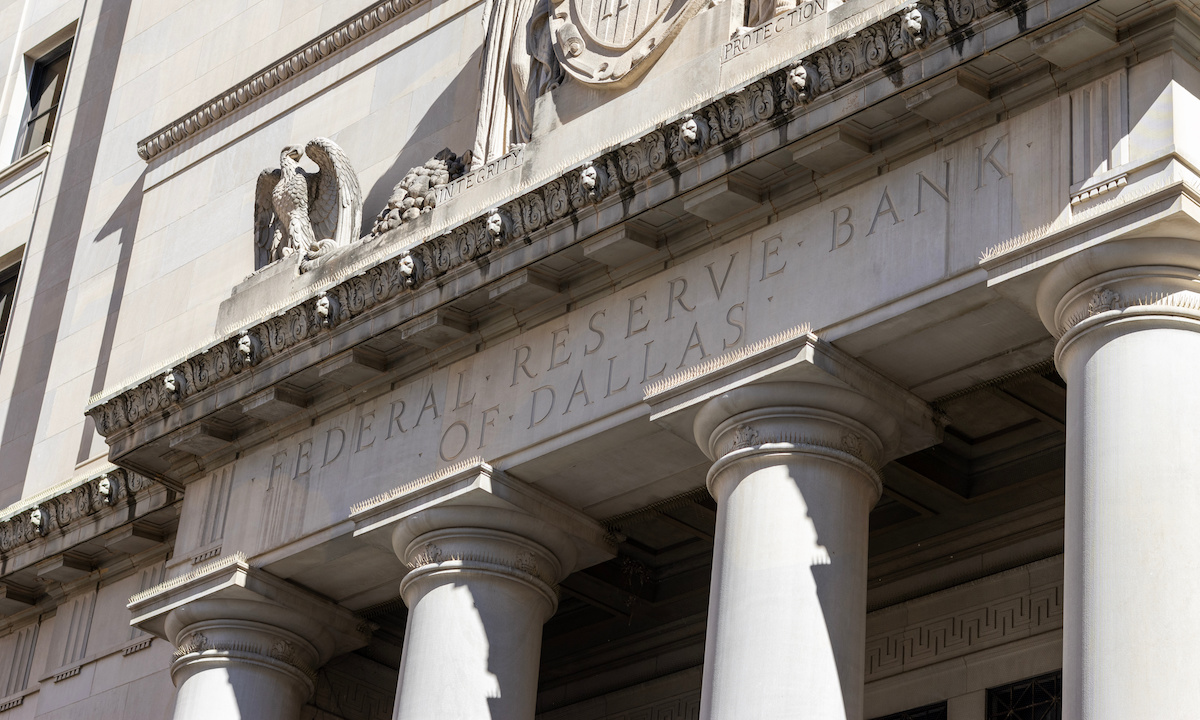
The Dallas Federal Reserve is warning that tokenized deposits could slice up to $700 billion from U.S. banks' lending capacity. PYMNTS The shift toward instant-settlement deposits would let depositors move money in seconds—potentially using AI-driven tools—undermining the sticky deposits that now fund long-term loans. Banks would need bigger cash buffers and higher funding costs to compensate, Yahoo Finance likely raising borrowing expenses for consumers and businesses.
The analysis examines how tokenized deposits could reshape bank balance sheets. Currently, ordinary deposits fund roughly 80% of the $7 trillion in long-term loans that U.S. banks hold. Decrypt If depositors become just 10% faster to switch banks chasing higher rates, lenders could lose $700 billion in rate-risk capacity. A second scenario—deposits leaving 10% sooner—suggests losses of $580 billion.
How Tokenized Deposits Enable Instant Switching
Tokenized deposits settle in real time on blockchain networks, not days. This speed opens the door to automated fund-moving. CryptoNews Smart contracts and AI agents could scan interest rates across banks and shift balances instantly—no human approval needed. A depositor might wake up to find their money moved overnight to chase an extra 0.1% yield.
Traditional deposits are 'sticky' because moving money takes effort and time. Tokenization removes that friction. PYMNTS The Dallas Fed economists Rosie Levy and Srini Ramaswamy modeled what happens if instant switching becomes the norm. The result: banks lose the predictability they need to back long-term lending.
Why Banks Need Deposits to Fund Long Loans
Banks borrow short and lend long. They take deposits (which can be withdrawn anytime) and use that money to fund 30-year mortgages and business loans. Yahoo Finance If deposits become less stable, banks must hold more cash and Treasuries on hand—earning little or nothing. That shrinks the money they can lend out.
The Dallas Fed estimates deposits now cover $5.8 trillion of the $7 trillion in long-term loans banks hold. Decrypt Lose that deposit cushion, and banks face a funding gap. They'd have to borrow more expensive money—term debt, bond sales—or simply make fewer loans. Either way, borrowing costs rise for customers.
Brazil's Instant Payments Show a Real-World Warning
The Dallas Fed researchers point to Brazil's Pix instant-payment system as a cautionary tale. Since Pix launched in 2020, banks there have had to hold more liquid assets and pull back on lending. CryptoNews The same pattern could unfold in the U.S. if tokenized deposits scale up. Instant settlement forces banks to keep larger safety buffers.
What Banks and Borrowers Face Ahead
Banks have options to survive tokenized deposits, but all carry costs. They can raise deposit rates to keep money in-house—sparking rate wars. PYMNTS They can rely more on term debt and bonds. Or they can simply shrink their loan books. None of these paths is painless.
The Dallas Fed stresses this is a 'potential' scenario, not a certainty. Yahoo Finance Large-scale tokenized deposit adoption could take years. But the research signals a fundamental shift: real-time settlement and programmable money will force banks to rethink how they manage deposits and funding. That reckoning, the economists warn, has already begun.
Sentiment
Mostly NegativeNEGATIVENEUTRALPOSITIVE
Publishers
10
Articles
9
Reach
19
A
AnonymousAuthor


