Expanding Heat Seasons
Global Heat Seasons Are Expanding Far Beyond Traditional Summer Periods Worldwide
Anonymous
Key Points
1
The study defined extreme heat as days in the hottest 5% of daily temperatures and assessed both dry heat and heat stress using measures that incorporate humidity and air temperature; the broader analysis also considered wet-bulb and globe temperatures, which account for humidity and solar radiation.
2
South Africa’s agricultural water buffer is substantial: the national average dam level was reported at 95.5% in August 2026, compared with 55.0% in August 2016 during the previous major drought cycle. The report also cited no-till farming as a practice that helps preserve soil moisture.
3
Europe’s heat episodes reportedly came in five rounds from late May through mid-August, with records broken in 18 countries and the highest-ever May temperatures recorded in parts of the continent, including France, Ireland and the United Kingdom.
4
Scientists cited a possible Arctic influence on Europe’s persistent heat domes: because the Arctic is warming faster than the rest of the planet, the reduced temperature contrast between the Arctic and the Equator can slow the movement of weather systems and prolong heat waves.
5
A local example of late-season heat occurred along South Carolina’s Grand Strand on September 14, where forecast highs near 90°F and humidity were expected to produce heat-index values of 100–103°F, before a cold front brought cooler and drier conditions.
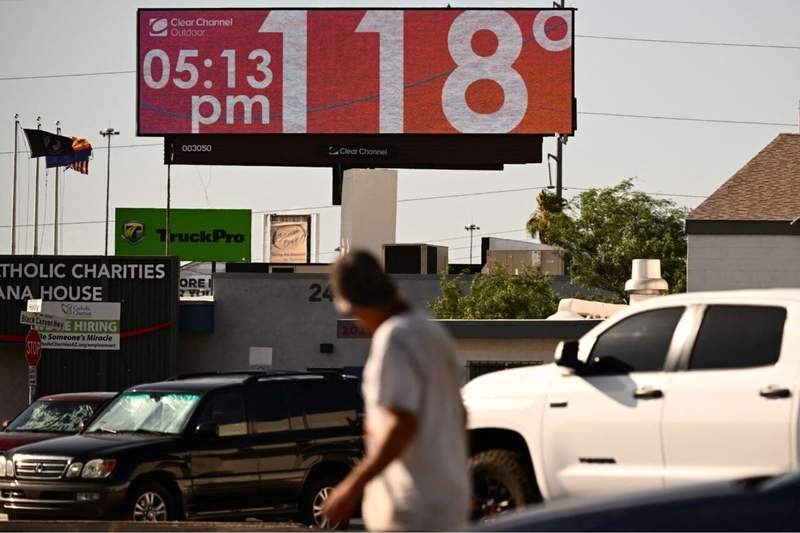
Extreme heat is spilling into spring and fall across half the world's inhabited continents, according to Newsy Today. A study comparing the 1980s with 2015–24 found heat seasons have shifted far beyond summer. Western Europe, southern Africa, and northwestern India now face extreme heat before summer arrives. Meanwhile, the western United States, eastern China, northern Africa, and eastern Europe are seeing dangerous heat stretch well into autumn.
The timing shift creates a serious problem: early-season heat strikes before people's bodies adapt, while late-season heat compounds months of exposure AOL. Seasonal heat alerts and cooling centers may be completely mistimed. Europe's repeated heat waves have shattered records in 18 countries, with the highest-ever May temperatures recorded in France, Ireland, and the United Kingdom.
Heat Seasons Shifted Across Half the Globe
Researchers used a precise measurement: days in the hottest 5% of temperatures, accounting for both dry heat and humidity stress Gizmodo. The study tracked extreme heat patterns over four decades and found uneven expansion. Western Europe, southern Africa, and northwestern India are getting heat before summer. The western United States, eastern China, northern Africa, and eastern Europe face heat after traditional summer ends.
This mismatch creates different dangers in each region. Early heat catches people unprepared and lacking acclimatization. Late heat wears people down after months of high temperatures and stress. Neither timing aligns with existing warning systems or cooling infrastructure, leaving millions vulnerable.
Europe's Record-Breaking Heat Dome Pattern
Europe experienced five separate heat episodes between late May and mid-August, with temperatures breaking records across the continent AOL. The highest-ever May temperatures hit France, Ireland, and the United Kingdom. Scientists point to a warming Arctic as a cause: because the Arctic heats faster than the Equator, the temperature gap shrinks, slowing weather system movement and trapping hot air over regions.
These persistent high-pressure systems—called heat domes—create dangerous conditions that stress agriculture and drain water supplies. The repeated cycles overwhelmed many nations' emergency response systems and tested cooling infrastructure beyond normal limits.
South Africa's Wet Reserves Shield Crops From Drought
South Africa faces a potentially drier 2026–27 growing season, but massive water reserves provide crucial protection. National dam levels averaged 95.5% in August 2026, compared with just 55.0% in August 2016 during the previous major drought Newsy Today. This ten-year improvement gives farmers a substantial buffer against seasonal rainfall shortfalls.
However, extreme heat during key crop-growth stages poses a greater threat than low rainfall alone. Farmers using no-till farming preserve soil moisture and reduce heat stress on plants. Yet intense heat can still damage crops even with adequate water available if temperatures spike during critical growing phases.
Late-Season Heat Brings Triple-Digit Feels Like Temperatures
On September 14, 2026, areas like South Carolina's Grand Strand experienced dangerous late-season heat with forecast highs near 90°F and humidity creating heat-index values of 100–103°F News Channel 5. These conditions mirror the broader pattern: autumn heat that's physically dangerous before cooler weather finally arrives.
A cold front eventually brought relief with cooler and drier conditions. But the delay illustrated how heat now extends into months when people expect relief, catching cooling infrastructure and public health systems unprepared for the extended season.
Sentiment
Mostly PositiveNEGATIVENEUTRALPOSITIVE
Publishers
19
Articles
5
Reach
24
Topics
A
AnonymousAuthor


