The 25-Year Counterterrorism Legacy
Twenty-Five Years After 9/11, Counterterrorism Powers and Security Risks Endure
Anonymous
Trending on X25th anniversary of 9/11 marked amid ongoing global conflicts
Key Points
1
The author recalls hearing the Pentagon impact from nearby and watching smoke from the fire reach the Woodrow Wilson Bridge while his wife drove their medically fragile son to Johns Hopkins Hospital; their daughter was at an elementary school a few blocks away.
2
The 2001 AUMF was enacted on Sept. 18, 2001, four days after Congress approved it, and has no expiration date—a feature that has allowed successive administrations to continue invoking it decades later.
3
Debate over the AUMF involves a constitutional clash between presidents’ reliance on the Commander in Chief authority in Article II and critics’ argument that extended military action implicates Congress’s Article I power to declare war and the War Powers Resolution.
4
The 2001 AUMF has been cited not only for overseas strikes but also for detention operations at Guantanamo Bay, strikes against ISIS in Nigeria, and operations in Iraq and Syria targeting ISIS and al-Qaida.
5
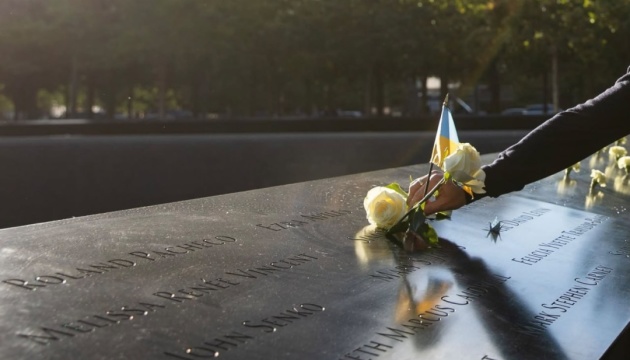
Coverage of the 25th-anniversary commemoration includes controversy over New York Mayor Mamdani’s attendance and the release of reports on post-9/11 air quality, as well as plans for multiple former presidents to attend the ceremony honoring victims.
As America marks 25 years since the September 11 attacks, the counterterrorism machinery built after that day remains fully operational. The 2001 Authorization for Use of Military Force, passed just four days after the attacks, has no expiration date and continues to justify military operations worldwide Fox News. Yet the threats have evolved: al-Qaida's central leadership has been weakened and scattered, but the organization survives as a decentralized network through regional branches that exploit unstable regions.
The 25th anniversary arrives as Congress grapples with the law's constitutional scope. In 2025, lawmakers repealed separate authorizations from the 1991 Gulf War and 2002 Iraq War, yet the 2001 AUMF persists without an end date. Presidents from both parties have invoked it for detention at Guantanamo Bay, strikes against ISIS in Nigeria, and operations across Iraq and Syria — a scope that critics say strains the original intent Fox News.
A Law With No Expiration Date
Congress passed the 2001 AUMF on September 18, just four days after the attacks killed nearly 3,000 people Ukrinform. The law granted the president broad authority to use military force against those responsible — but included no sunset provision. This omission has allowed every president since to cite it for operations that extend far beyond al-Qaida's original base in Afghanistan.
The ongoing legal debate centers on constitutional power. Presidents argue they wield Commander in Chief authority under Article II of the Constitution. But critics say extended military campaigns implicate Congress's Article I power to declare war. The War Powers Resolution adds another layer of tension, and legal scholars argue the AUMF's continued use without formal renewal stretches its original scope.
Al-Qaida Weakened But Still Decentralized
U.S.-led military campaigns over two decades severely damaged al-Qaida's central leadership and eliminated its primary safe haven in Afghanistan. Yet the organization did not collapse. Instead, it adapted by spreading into regional affiliates across the Middle East, Africa, and Asia that exploit ongoing conflicts and fragile states.
By 2026, al-Qaida remains a dispersed, resilient network. Competition from ISIS and shifting conditions in Afghanistan have reshaped the militant landscape entirely. The decentralized model makes the organization harder to track and strike, forcing counterterrorism strategy to evolve beyond the large-scale military operations that defined the post-9/11 era.
The Constitutional Clash Over Military Authority
The tension between presidential power and congressional oversight has intensified as the AUMF enters its third decade. Successive administrations have cited it not only for overseas strikes but also for detention operations, surveillance programs, and drone campaigns that extend across multiple continents. Each expansion pushes the law further from its original 2001 intent.
Reform efforts have stalled. Congress repealed the 1991 Gulf War authorization and the 2002 Iraq War authorization in 2025, yet the 2001 AUMF remains untouched. Lawmakers face political pressure: repealing it could appear weak on terrorism, while keeping it cedes long-term military authority to the executive branch. The 25th anniversary has reignited calls for Congress to either replace the law or reclaim its war powers.
Lessons Learned, Threats Evolving
The post-9/11 counterterrorism enterprise achieved significant results: al-Qaida's top leaders were killed or captured, its training camps were destroyed, and its Afghan sanctuary was seized. Intelligence sharing between agencies improved dramatically, and homeland security defenses were hardened across airports, borders, and critical infrastructure.
Yet the 25th anniversary serves as a reminder that terrorism adapts. As traditional state-based threats have declined, lone actors, small cells, and decentralized networks pose new challenges. Policymakers emphasize avoiding another "failure of imagination" — the phrase used to describe intelligence gaps before 9/11. The debate now centers not on whether America needs counterterrorism tools, but on whether those tools should remain under a law with no expiration date.
Sentiment
Mostly NegativeNEGATIVENEUTRALPOSITIVE
Publishers
22
Articles
11
Reach
33
A
AnonymousAuthor


