Starship launch delayed
SpaceX aborts Starship Flight 13 launch of Starlink V3 after engine shutdown.
Anonymous
Key Points
1
Flight 12's issues included an uncontrolled booster splashdown in the Gulf of Mexico, and the Ship upper stage couldn't relight in space, which contributed to the FAA mishap investigation and SpaceX's grounding of Starship tests.
2
Flight 13 carries 20 Starlink V3 satellites—the first wave for the V3 generation—and their deployment on Ship's suborbital trajectory is intended to test in-space performance before a broader orbital deployment; the satellites will crash back into the Indian Ocean.
3
Investors tracked SPX stock, with SpaceX parent company stock closing below its $135 IPO price for the first time around the Flight 13 event.
4
A 90-minute launch window was scheduled to begin at 6:45 p.m. local time from SpaceX's Starbase site on the Southeast Texas coast.
5
Elon Musk indicated that the next launch attempt would happen 'hopefully in a few days' after the abort.
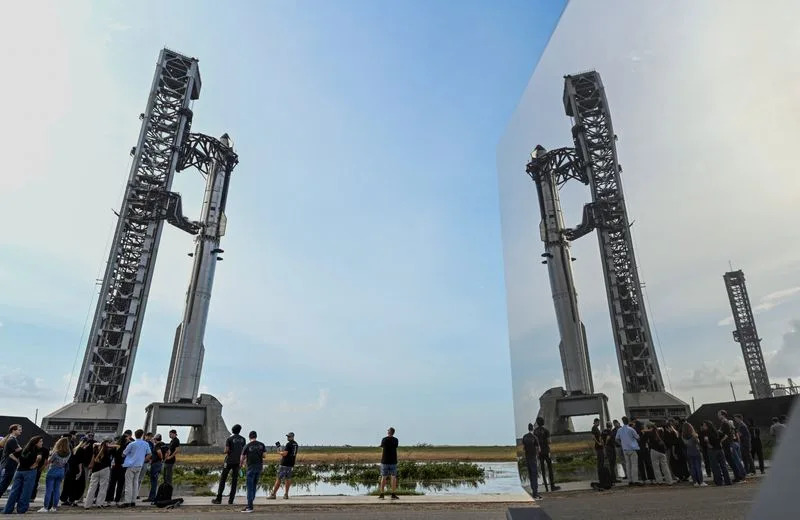
SpaceX scrubbed the 13th test flight of its Starship rocket Thursday after engines failed to ignite at the last second, triggering an automatic abort just as the countdown hit zero, according to Morning Journal. The company said it would offload propellants and try again in a few days. Elon Musk confirmed the abort was caused by the engine issue.
The scrub was a setback for a high-profile mission. Flight 13 is the first Starship test since SpaceX went public, and it was set to carry 20 next-generation Starlink V3 satellites on a suborbital trip over the Gulf Coast, according to WHEC.
Engines Cut Off Just as Countdown Reached Zero
The 90-minute launch window opened at 6:45 p.m. local time at SpaceX's Starbase site on the Southeast Texas coast. The Super Heavy booster's engines began to light — then shut down automatically before the rocket could leave the pad, according to Trentonian. SpaceX called it an automatic shutdown triggered by the engine start sequence.
Musk said the next attempt would come 'hopefully in a few days.' SpaceX did not give a specific date. Engineers will now review what triggered the abort before scheduling a new window, according to EP Trail.
Flight 13 Carries First Wave of Starlink V3 Satellites
The mission was set to be a major milestone. Starship would have carried 20 Starlink V3 satellites — the first of a new generation — on a suborbital path. The satellites were not meant to reach orbit. Instead, they would splash down into the Indian Ocean after testing performance in space, according to WHEC.
Flight 13 also aimed to test a new heat shield and an in-space engine relight. Those are the same goals SpaceX failed to complete on Flight 12, when the Ship's upper stage could not relight in space and the booster splashed down without control in the Gulf of Mexico.
FAA Cleared SpaceX After Flight 12 Mishap Investigation
SpaceX had to ground Starship after Flight 12's problems. The FAA launched a mishap investigation and reviewed what went wrong. The agency approved a return to flight only after SpaceX made several changes to hardware and software, according to Yahoo News.
Thursday's launch window was the first chance to fly since that clearance. The abort does not reset the FAA review process, but SpaceX will need to identify the engine fault before its next attempt. The company has not said how long that review will take.
SPX Stock Slips Below $135 IPO Price Around Launch Day
Investor attention followed the scrub closely. SpaceX stock, traded under the ticker SPX, closed below its $135 IPO price for the first time around the Flight 13 event. That put pressure on the company's post-IPO debut at a sensitive moment, according to Morning Journal.
Flight 13 was seen as a chance to show investors progress after a rocky run. The scrub adds uncertainty. SpaceX has not confirmed whether the engine fault is a minor fix or something that requires deeper inspection before the next launch window opens.
Sentiment
Mostly NegativeNEGATIVENEUTRALPOSITIVE
Publishers
14
Articles
93
Reach
107
A
AnonymousAuthor


