Pixel Tag: Find Anything
Google Launches Pixel Tag as AirTag Rival, Unveiling New Pixel Devices and AI Features
Key Points
Pixel Buds can trigger Gemini to help locate a Pixel Tag by querying the Find Hub, extending the Find feature to wearables and audio devices as part of Google’s ecosystem.
Google’s Find Hub network has been renamed from Find My Device to Android Find Hub in mid-2025, marking a branding shift for the location service across devices.
Pixel Watch 5’s Health Guardian features were expanded, adding Blood Pressure and Insulin Resistance trend monitoring as part of Google’s health-focused updates.
Pixel Tag uses a replaceable CR2032 coin-cell battery that lasts over a year, aligning with expectations for low-maintenance trackers.
The Pixel Tag accessory that enables attaching the tag to keys or bags is not included in the $29 base price, and Google has not disclosed its cost or release date.
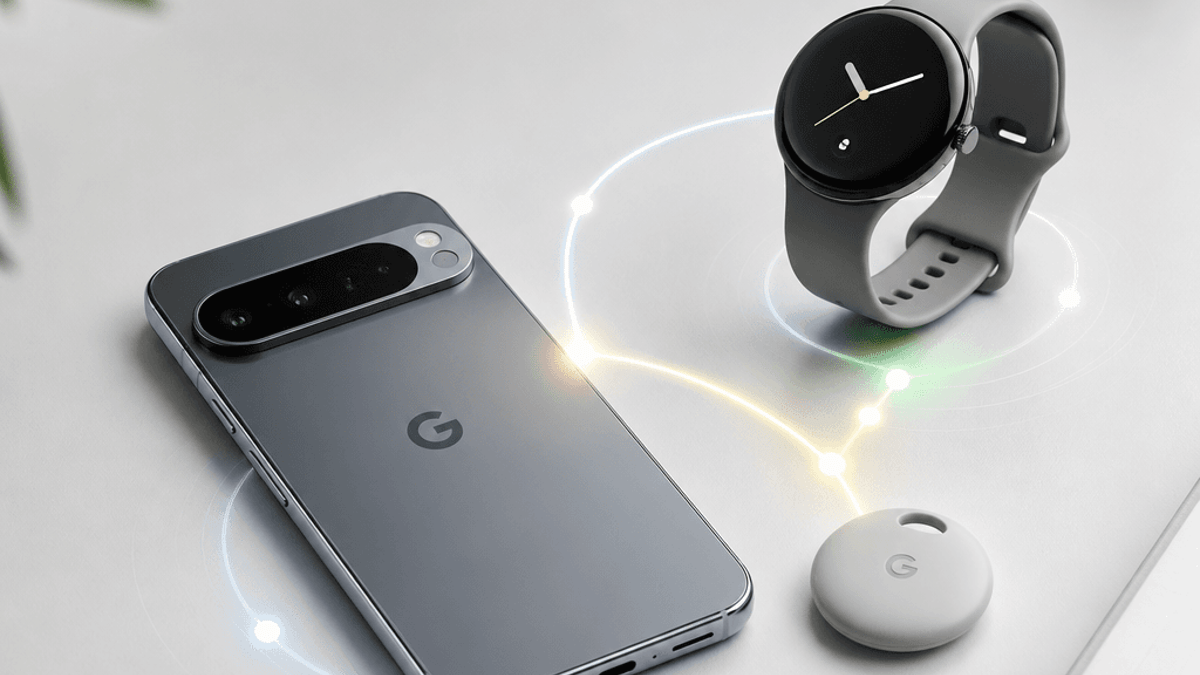
Google has launched the Pixel Tag, its first dedicated item tracker, putting it in direct competition with Apple's AirTag. Announced at the Made by Google 2026 event, the tag costs $29 each or $99 for a four-pack and ships in November, according to Archy Netys.
The Pixel Tag runs on Google's newly rebranded Android Find Hub network — formerly called Find My Device — which taps into billions of Android devices worldwide. It joins the Pixel 11 smartphone lineup and Pixel Watch 5 as the centerpiece of Google's 2026 hardware push, per TechBuzz.
Pixel Tag Hardware Specs and What's Missing
The Pixel Tag is IP67 water-resistant and built for everyday durability. It packs an accelerometer, a built-in speaker for audible alerts, and a replaceable CR2032 coin-cell battery that lasts over a year. That battery type costs just a few dollars at any hardware store, according to Archy Netys.
One catch: the tag ships without an attachment accessory. You need a separate clip or loop to hang it on keys or a bag. Google has not revealed the price or release date for that accessory. So the $29 sticker price does not cover everything you need to use it right away.
How Pixel Tag Finds Your Lost Items
Pixel Tag uses two technologies to pinpoint distance. Bluetooth 6.0 Channel Sounding gives precise distance readings on compatible devices. Ultra-Wideband (UWB) — a short-range radio tech used for very accurate location — works on newer Pixel phones. Neither tells you a direction, just how far away the tag is, per TechBuzz.
The tag also connects to the broader Android Find Hub network. That means any of the billions of Android devices nearby can silently relay the tag's location back to you. Pixel Buds add another layer: you can ask Gemini through your earbuds to query Find Hub and help locate a tagged item, according to Archy Netys.
Pixel 11 Starts at $899 With Thinner Camera Bar
The Pixel 11 lineup starts at $899 with 256GB of base storage — a higher entry price than its predecessor. Google slimmed down the camera bar and added durability improvements across the range. The Pixel 11 Pro XL comes in 12GB or 16GB RAM options with 256GB or 512GB storage, according to Android Headlines.
The top-end foldable, the Pixel 11 Pro Fold, starts at $1,899. Pre-orders are open now, but Google has not set a release date yet, Mashable reported. The premium price puts it squarely against Samsung's Galaxy Z Fold lineup.
Gemini Powers New Accessibility and Health Features
Google loaded Pixel 11 with several Gemini-driven tools. Live Transcribe now reads American Sign Language through the Pixel Camera. Rambler converts natural, unscripted speech into clean text. Circle to Search is built into the camera app, so you can identify or translate objects without switching apps, per Archy Netys.
On the health side, Pixel Watch 5 gained two new Health Guardian features: Blood Pressure trend monitoring and Insulin Resistance trend tracking. These additions push Google further into the health wearables space, where Apple Watch and Samsung Galaxy Watch are its main rivals, according to TechBuzz.
Sentiment
Mostly PositivePublishers
19
Articles
7
Reach
26


