Trump Coin Sells Out
Trump $1 Gold-Colored Coin Sells Out Nationwide on Launch Day
Anonymous
Key Points
1
The Trump $1 coin is gold-colored in appearance but is not made of gold. It uses a copper-based alloy that is 88.5% copper, with 6% zinc, 3.5% manganese, and 2% nickel, and weighs 8.1 grams.
2
A two-order household limit was imposed for purchases, with the cap lifted later in the day (2 p.m. ET) as more stock became available.
3
Trump becomes the second sitting U.S. president to appear on a coin intended for circulation, with the last living president on U.S. currency dating back to 1926 (Calvin Coolidge on a commemorative half-dollar).
4
Although the coin is legal tender, its sale is driven largely by collectors, with pricing above face value and rapid sellouts indicative of a numismatic focus rather than routine circulation.
5
The program is authorized by the Circulating Collectible Coin Redesign Act of 2020 and, with approval from the U.S. Commission of Fine Arts, forms part of the Semiquincentennial Coin program—designed to redesign circulating coins through 2030.
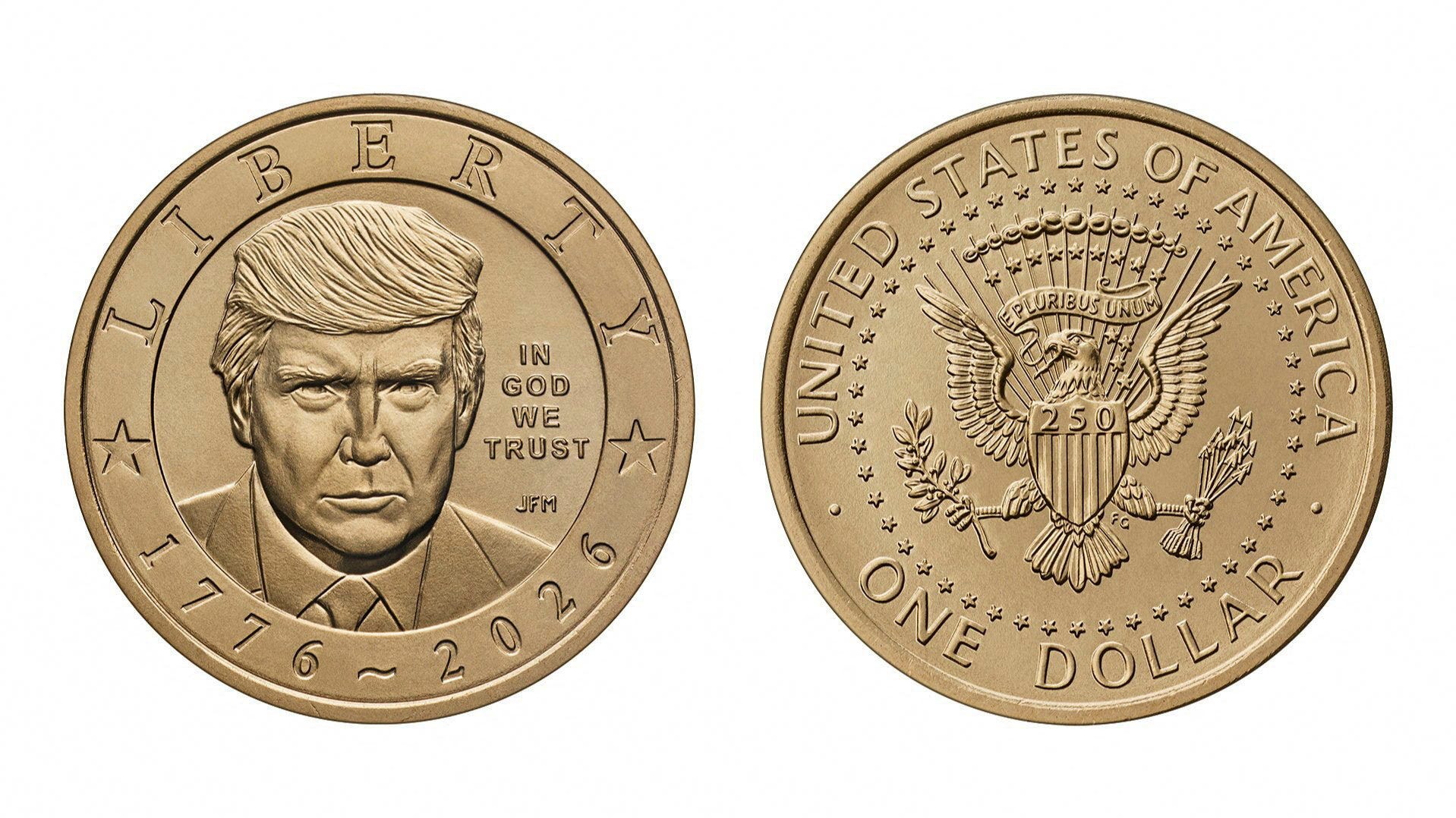
The U.S. Mint released a commemorative $1 coin featuring President Trump to mark America's 250th anniversary, and it sold out nationwide on launch day Hoka News. The gold-colored coins, priced at $61 for a roll of 25 and $154.50 for a bag of 100, flew off shelves as collectors rushed to buy them above face value. The coins are legal tender but made from copper-based alloy, not actual gold.
A household purchase limit of two orders was imposed initially but lifted later that day as inventory increased Iron Mountain Daily News. The coin marks a historic moment: Trump is only the second sitting U.S. president to appear on circulating U.S. currency, breaking a practice unchanged since 1926.
What's Actually Inside These Gold Coins
The Trump $1 coin is not made of gold despite its gold-like finish Minot Daily News. The coin uses a copper-based alloy: 88.5% copper, 6% zinc, 3.5% manganese, and 2% nickel. It weighs 8.1 grams and carries Trump's portrait on the front and the Presidential Seal on the back, with "1776–2026" and the number "250" marking the nation's semiquincentennial.
A Sitting President on U.S. Money—Legally Controversial
Federal law generally prohibits living people from appearing on circulating U.S. currency U Politics. The Trump coin breaks this longstanding rule, making him only the second sitting president ever to appear on a coin for circulation. The last living president on U.S. currency was Calvin Coolidge on a commemorative half-dollar in 1926—nearly 100 years ago.
The program received approval from the U.S. Commission of Fine Arts Minot Daily News and is authorized by the Circulating Collectible Coin Redesign Act of 2020. The law allows redesigns of certain circulating coins through 2030 as part of the broader Semiquincentennial Coin program. Critics have raised questions about the legality and symbolism of the initiative.
Why Collectors Pay Triple the Coin's Face Value
The Trump coins are sold as collector items, not for everyday spending Hoka News. A roll of 25 coins costs $61, working out to $2.44 per coin. A larger bag of 100 coins costs $154.50, or $1.55 per coin. Demand from numismatists—coin collectors—drove early stockouts, showing strong interest in the commemorative pieces despite their high markup above the $1 face value.
Although the coins are legal tender and carry a circulating finish, they were never released into general circulation News-Journal Online. Instead, the U.S. Mint sold them directly to buyers seeking collectible items. A batch of 250,000 special coins bearing a July 4th privy mark was randomly distributed among orders, adding another layer of rarity that could drive future resale prices higher.
Sentiment
Mostly NegativeNEGATIVENEUTRALPOSITIVE
Publishers
20
Articles
79
Reach
99
A
AnonymousAuthor


