Open Championship Controversy
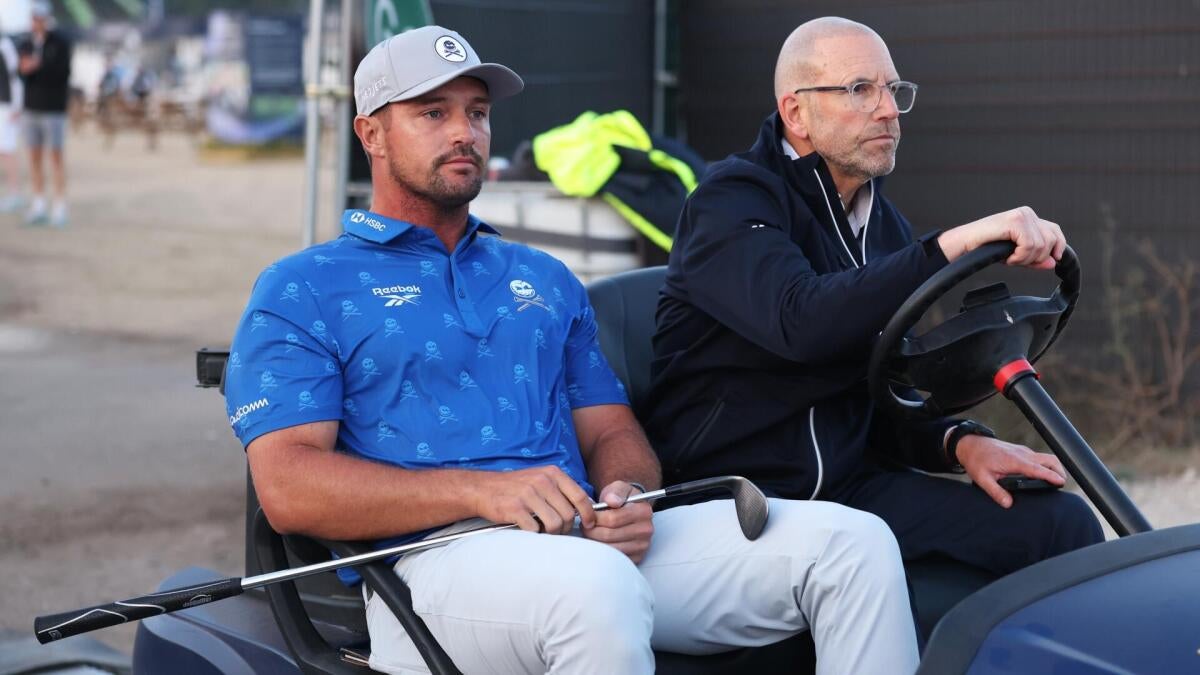
Bryson DeChambeau Receives Two-Stroke Penalty at Open Championship After Rules Debate
Anonymous
Key Points
1
The two-stroke penalty was explained by Grant Moir as being for 'inadvertently improving the area of his intended swing, his backswing, when he was playing his second shot' on the drivable fifth hole.
2
The infringement involved trampling down the fescue behind his ball as he tried to line up a recovery from a penalty area to the right of the drivable fifth, effectively altering the lie for his shot.
3
After the round, DeChambeau and officials walked back to the scene for discussion with Mark Litton and Grant Moir, and R&A rules official Charlie Maran indicated a formal statement would be released regarding the ruling.
4
Lucas Herbert led on eight-under after a 62, part of a day that included two 62s by Herbert and Sam Burns; DeChambeau trimmed any momentum with a 66 that featured a late birdie-birdie finish before the penalty dropped him to five under.
Bryson DeChambeau's second round at the 2026 Open Championship turned sour after officials handed him a two-stroke penalty for improving his lie on the drivable fifth hole. His score was changed from 66 to 68, dropping him to five under and a tie for fifth — three shots behind leader Lucas Herbert. Alloa Advertiser reported that DeChambeau left the scoring tent visibly frustrated after a heated exchange with rules officials.
Herbert stole the day's headlines for better reasons, shooting a bogey-free 62 to lead on eight under. Sam Burns also fired a 62 on the same day. DeChambeau had looked set for a weekend charge, finishing with back-to-back birdies, before the penalty erased much of his momentum.
How Stomping Fescue Cost DeChambeau Two Shots
The penalty came from an incident on the par-four fifth hole. DeChambeau hit his tee shot into a penalty area to the right. As he tried to line up a recovery shot, he trampled down long fescue grass behind his ball. That action — whether intentional or not — changed the conditions for his swing. Under golf's rules, that is not allowed.
R&A official Grant Moir explained the ruling clearly. DeChambeau was penalized for "inadvertently improving the area of his intended swing, his backswing, when he was playing his second shot," Moir said. The rule in question is Rule 8.1, which covers improving the conditions affecting a stroke. Officials reviewed the incident after the round before confirming the penalty. Herts Ad noted that R&A rules official Charlie Maran said a formal statement would follow.
DeChambeau Walked Back to Fifth Hole With Officials
After signing his scorecard, DeChambeau did not simply accept the ruling and walk away. He and rules officials physically walked back to the fifth hole to discuss the incident on-site. He met with Mark Litton and Grant Moir at the scene. The review was lengthy and the discussion was heated, according to Oxford Mail.
The debate centered on whether his actions truly changed the conditions enough to warrant a penalty. DeChambeau's frustration was clear. He had been playing well and looked dangerous on the leaderboard before the ruling changed everything. Officials held firm, and his score of 68 stood.
Herbert's Flawless 62 Puts Pressure on the Field
While DeChambeau's afternoon unraveled, Lucas Herbert had a day to remember. His bogey-free 62 put him at eight under, three clear of the field. Herbert did not drop a single shot. His round was one of two 62s on the day, with Sam Burns matching that score. It was a dominant display that set the pace for the weekend.
DeChambeau now sits tied for fifth, three strokes back. That gap is not impossible to close in two rounds, but it is much harder than it would have been without the penalty. He had birdied his last two holes before leaving the course. Two strokes are the difference between a tie for third and a tie for fifth entering the weekend.
Ruling Highlights Strict Enforcement of Lie Rules at Majors
The incident shows how closely officials watch for any change to a player's lie during a major. A post-round review — not a real-time call — led to the penalty. That means players can face consequences even after they leave the course. For DeChambeau, the lesson is costly. Two strokes at a major can be the margin between winning and finishing in the middle of the pack.
Rule 8.1 applies even when the improvement is accidental. That is the key word in Moir's explanation: "inadvertently." Intent does not matter under the rule. If the conditions for a shot change because of a player's actions, the penalty applies. The R&A promised a formal statement to clarify the ruling, suggesting the decision may face continued scrutiny over the weekend.
Sentiment
Mostly NegativeNEGATIVENEUTRALPOSITIVE
Publishers
29
Articles
114
Reach
143
A
AnonymousAuthor


