GSOL Staking Payouts
Grayscale Amends Solana Staking ETF (GSOL) for Quarterly Cash Payouts and Reduced Fees
Anonymous
Key Points
1
Distributions are taxable as ordinary income; investors should consult tax advisors because tax treatment may differ under the new cash-distribution structure.
2
Under the revised trust, staking rewards are liquidated into cash and distributed to shareholders at least quarterly, instead of the yield being reflected gradually in GSOL’s net asset value under the old structure.
3
The naming change to Grayscale Solana Staking ETF underscores the shift from pure price exposure to a cash-flow-oriented product.
4
A broad set of fee reductions is in play: sponsor fee cut from 0.35% to 0.19% and staking fee cut from 23% to 7%, which increases the portion of yield that can be distributed as cash.
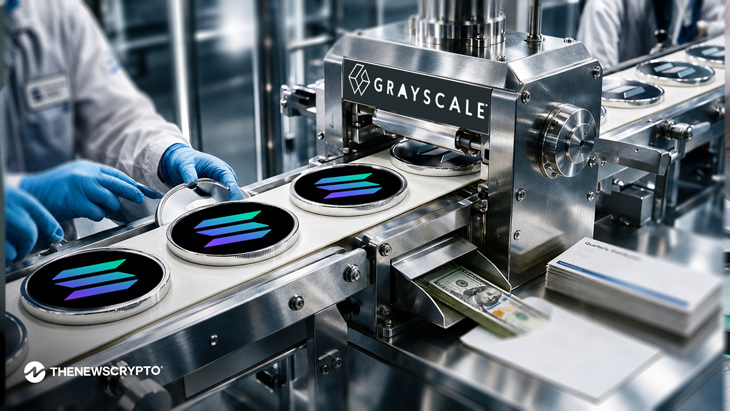
Grayscale has filed with the SEC to convert its Solana Staking ETF (GSOL) into a product that pays shareholders cash every quarter, according to Cryptopolitan. Instead of letting staking rewards build up inside the fund, the new structure converts those rewards into dollars and sends them directly to investors.
The filing also cuts fees sharply. The sponsor fee drops from 0.35% to 0.19%, and the staking fee falls from 23% to 7%, per CryptoNews. The fund currently earns roughly 6.1% gross yield from staking Solana.
Staking Rewards Become Quarterly Cash Checks
Under the old GSOL structure, staking yields slowly raised the fund's net asset value. Investors only captured those gains when they sold shares. The new structure changes that entirely, according to CryptoRank. Accumulated staking tokens get converted into USD and paid out to shareholders at least four times a year.
The first mandatory quarterly cash payout is expected around August 7, 2026, Cryptopolitan reported. Payouts are not fixed. They will vary based on validator performance and the prevailing staking yield each quarter. Expenses are deducted before any distribution goes out.
Deep Fee Cuts Boost the Yield Investors Actually Pocket
The fee reductions are significant. Grayscale cut the sponsor fee from 0.35% to 0.19% — nearly half. More importantly, the staking fee fell from 23% to just 7%, according to The News Crypto. That means a much larger slice of the 6.1% gross staking yield flows through to investors.
Under the old 23% staking fee, a 6.1% gross yield would net roughly 4.7% after that charge alone. Under the new 7% fee, investors keep far more of every dollar earned from validating Solana transactions. The sponsor fee cut adds further savings on top.
Name Change Signals a New Product Philosophy
Grayscale also renamed the fund the Grayscale Solana Staking ETF. The name shift is deliberate. It marks the move away from pure Solana price exposure toward a product built around regular income, CryptoNews noted. The change positions GSOL alongside traditional income-oriented funds that investors already understand.
The restructuring fits Grayscale's broader push to bring crypto products under clear SEC oversight. By framing staking as a regular cash yield rather than an accumulating asset, the fund becomes easier for both retail and institutional investors to evaluate and model.
Tax Warning: Distributions Count as Ordinary Income
Investors should be aware of one key trade-off. Quarterly cash distributions are taxable as ordinary income in the year they are received, according to CryptoRank. Under the old structure, unrealized gains inside the fund were not taxed until shares were sold. That timing difference matters, especially for investors in higher tax brackets.
Grayscale has urged investors to consult tax advisors before the changes take effect. Tax treatment could differ significantly depending on account type and jurisdiction. The new cash-flow model trades some tax efficiency for a cleaner, more visible income stream every three months.
Sentiment
Mostly NegativeNEGATIVENEUTRALPOSITIVE
Publishers
14
Articles
3
Reach
17
A
AnonymousAuthor


