Digital & Sustainable Banking Reshapes Global Finance
Global Banking Leaders Adopt Digital-First and ESG Strategies for Enhanced Customer Experience
Anonymous
Key Points
1
Emirates NBD mobilised USD 9.9 billion in sustainable finance in 2025, taking cumulative sustainable-finance mobilisation to over USD 20 billion (about 70% of its USD 30 billion target for 2030). The bank also completed the world’s first sustainability-linked loan (SLLB) under updated ICMA/LMA guidelines in December 2024 and, in August 2025, issued a sustainability-linked financing sukuk through Emirates Islamic—both independently assured by ISS Corporate Solutions.
2
Emirates NBD updated its disclosure framework to integrate IFRS S1 and S2, Taskforce on Nature-related Financial Disclosures (TNFD) and Global Reporting Initiative (GRI) requirements in a single report, extending ESG commitments from the balance sheet into operations, supply chains and community programmes.
3
Emirates NBD’s green financing reach includes AED 3.9 billion in green financing to the Dubai Metro Blue Line consortium (part of a AED 20.5 billion project with completion targeted for 2029) and a Siemens partnership to replicate a financing framework for large-scale green infrastructure aligned with the UAE’s Net Zero 2050 strategy.
4
Mashreq launched Pakistan’s first cloud-native digital bank, enabling paperless onboarding in under five minutes, more than 85% straight-through processing, AI-powered customer support and a modular API-driven architecture; within three months it onboarded over 100,000 customers, issued more than 70,000 debit cards, and processed nearly one million payments.
5
UOB, following its Citi-backed ASEAN expansion, has reached about 8.5 million customers and delivers a unified regional proposition across payments, cards, deposits and wealth via its TMRW platform, serving as the region-wide, single interface.
Africa's top banks are racing to match a global shift toward digital-first, sustainability-driven banking — and the gap with world leaders is narrowing fast. From the UAE to Southeast Asia, rival banks mobilised billions in green finance, launched cloud-native platforms, and reached tens of millions of customers through unified digital ecosystems, setting a new bar for what regional banking leadership means in 2026, according to Euromoney.
The common thread across every award winner: banks that combine technology, trust, and sustainability are growing faster and holding more deposits. African banks are watching — and several are already moving in the same direction.
Emirates NBD Sets the Pace on Green Finance
Emirates NBD mobilised USD 9.9 billion in sustainable finance in 2025 alone, pushing its cumulative total past USD 20 billion — roughly 70% of its USD 30 billion target for 2030, according to Euromoney. The UAE's largest bank by assets also completed the world's first sustainability-linked loan under updated ICMA and LMA guidelines in December 2024. In August 2025, it issued a sustainability-linked sukuk through Emirates Islamic.
The bank put green money to work at scale. It provided AED 3.9 billion in green financing to the Dubai Metro Blue Line — part of a AED 20.5 billion project due in 2029. Emirates NBD also updated its reporting to integrate IFRS S1 and S2, TNFD, and GRI standards into a single disclosure framework, extending ESG commitments across operations and supply chains.
Mashreq and UOB Show What Digital Scale Looks Like
Mashreq launched Pakistan's first cloud-native digital bank with paperless onboarding in under five minutes and more than 85% straight-through processing. Within three months, it onboarded over 100,000 customers, issued more than 70,000 debit cards, and processed nearly one million payments, per Euromoney. The bank built on a modular, API-driven architecture — meaning new products can be added fast without rebuilding the core.
UOB took a different route to scale. After its Citi-backed ASEAN expansion, the Singapore bank reached about 8.5 million customers across the region. It delivers payments, cards, deposits, and wealth services through one interface — its TMRW platform — giving every customer the same experience whether they are in Thailand or Vietnam.
BBVA's Customer-First Model Raises the Experience Bar
BBVA was named the world's best bank for customer experience at the 2026 Euromoney Awards for Excellence, according to BBVA. Its "Radical Client Perspective" programme rebuilds products from the customer's point of view — not the bank's. The approach pairs AI-powered tools with human insight to cut friction at every step of the customer journey.
Euromoney noted that BBVA's strategy in Latin America shows how deep customer focus can drive growth across diverse markets. The lesson for African banks is direct: digital upgrades that do not start with the customer's experience tend to underdeliver. CRDB Bank in Tanzania showed a version of this working in Africa — growing its retail base to 7.18 million customers and lifting retail deposits 32% in 2025 during a core banking migration.
African Banks Expand Selectively as Global Pressure Mounts
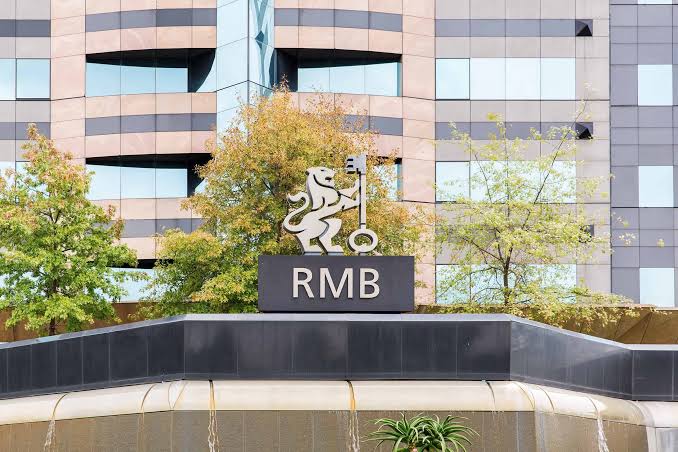
Africa's leading banks are not standing still. Zenith Bank made targeted moves across East, West, and Central Africa — including the Paramount Bank acquisition in Kenya. Rand Merchant Bank, named Africa's Best Bank for ESG in 2026, runs a multi-country footprint that supports cross-border deals and sustainable finance flows, according to African Sustainability Matters.
GoTyme Bank's phygital model — kiosks for biometric KYC plus fast card activation — shows one way African banks can match digital speed without losing the personal trust that branch networks built. The global picture is clear: banks that connect data, sustainability, and seamless digital access are pulling ahead. African institutions that move now have a real window to compete.
Sentiment
Mostly PositiveNEGATIVENEUTRALPOSITIVE
Publishers
25
Articles
0
Reach
25
A
AnonymousAuthor


