Clarks Gully Drilling Results
Larvotto Reports Multiple High-Grade Mineralization Zones at Clarks Gully Prospect
Anonymous
Key Points
1
Larvotto’s board unanimously rejected a US Antimony Corporation takeover offer valued at about A$723 million, saying the proposed six USAC shares for every 100 Larvotto shares materially undervalued the company. Because the consideration depended on USAC’s share price at completion, the deal’s value was also subject to market fluctuations.
2
The 16-hole drilling program was designed not only to test mineralisation below and along strike of the existing resource, but also to look for additional mineralised zones across the broader Clarks Gully system; the company said every hole intersected the targeted mineralised structure.
3
Several particularly high-grade intervals were reported beyond the headline results, including 1.5 metres at 29.0 grams per tonne gold equivalent in CLG133 and a separate 1-metre interval at 60.4 grams per tonne gold equivalent in CLG129.
4
The company described the high-grade, continuous plunging ore shoot as clearly defined and still open down plunge, adding a more specific exploration target to its broader interpretation that mineralisation remains open at depth and along strike.
5
The reported 100%-owned status of the Hillgrove project is an important ownership detail as Larvotto evaluates Clarks Gully as a potential near-term development and production asset.
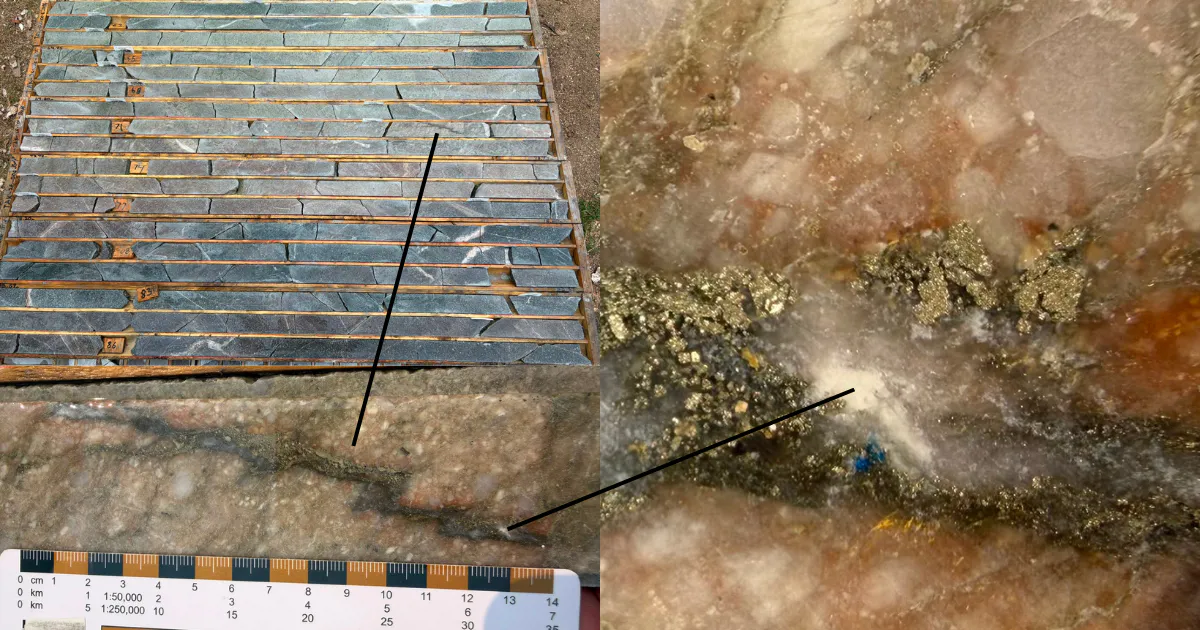
Larvotto Resources has extended high-grade gold, antimony and tungsten mineralization at its Clarks Gully prospect in New South Wales, with drilling results showing strong intersections below and south of the existing resource. The first 10 of 16 diamond holes delivered standout grades including 9.5 meters grading 8.07 grams per tonne gold equivalent, positioning the deposit as a stacked system of parallel lodes that remains open for expansion at depth and along strike.
Best High-Grade Intersections Found in Drilling
Larvotto's drilling program hit multiple zones of exceptional ore grades. Beyond the headline 9.5-meter intersection, CLG133 returned 1.5 meters at 29.0 grams per tonne gold equivalent. CLG129 showed a separate 1-meter interval at 60.4 grams per tonne gold equivalent. Tungsten zones also impressed, reaching 7.27% tungsten trioxide. All 16 holes intersected the targeted mineralized structure, validating the company's exploration strategy.
The high-grade, continuous plunging ore shoot is clearly defined and remains open down plunge, adding a concrete exploration target to the broader interpretation. This stacked lode system suggests significant upside potential as Larvotto plans to incorporate these results into an updated resource estimate for Clarks Gully.
Board Rejects US Antimony's Takeover Proposal
Larvotto's board unanimously rejected a takeover offer from US Antimony Corporation valued at approximately A$723 million. The deal terms—six USAC shares for every 100 Larvotto shares—were deemed to materially undervalue the company. A critical weakness: the deal's value was tied to USAC's share price at completion, exposing Larvotto shareholders to market risk with no floor on the final offer amount.
The rejection signals confidence in Clarks Gully's potential and the board's belief that standalone development offers better value. Larvotto now controls the 100%-owned Hillgrove project outright, a significant advantage as the company evaluates its path toward near-term production.
Project Advances Toward Potential Underground Production
Clarks Gully's current resource stands at 647,000 tonnes grading 1.6% antimony and 2.1 grams per tonne gold. Larvotto is now completing engineering, metallurgical and permitting work to assess underground mining feasibility. The company is using these new drilling results to refine resource estimates and move closer to a development decision.
Investor sentiment has turned positive following the drilling results, though Larvotto still carries material risks: cash needs, existing debt and lack of profitability. Advancing Clarks Gully toward production requires sustained funding and successful navigation of permitting hurdles in New South Wales.
Sentiment
Mostly PositiveNEGATIVENEUTRALPOSITIVE
Publishers
15
Articles
10
Reach
25
A
AnonymousAuthor


