Egyptian Princesses Were Warriors
Bone Analysis Reveals Ancient Egyptian Princesses Actively Practiced Martial Arts
Anonymous
Key Points
1
Among the six mummies, age estimates place Ita at 28–34 years, Itaweret at 20–34 years, and Noub-Hotep at 40–44 years, with bone analyses showing pronounced forearm muscle attachments consistent with regular weapon use.
2
X-ray and bone analysis reveal enlargement of the forearm radius in Noub-Hotep and Itaweret, a skeletal adaptation interpreted as a response to repeated bow-drawing.
3
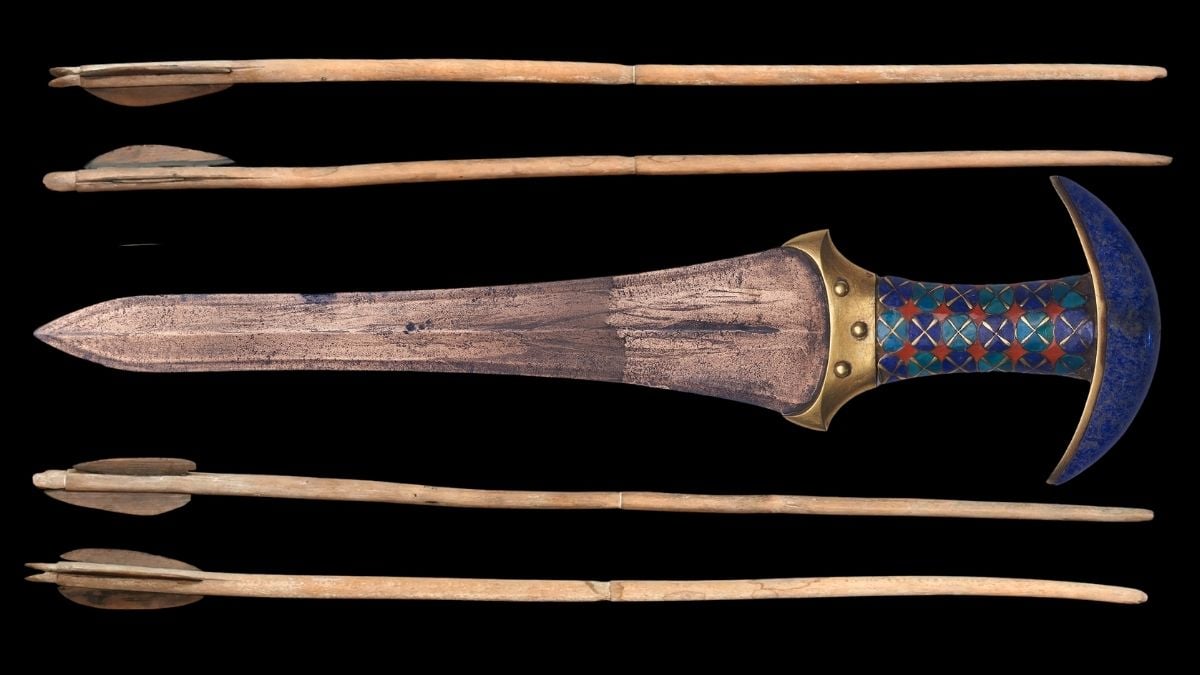
Ita’s burial assemblage includes an elaborate dagger crafted from gold and lapis lazuli, underscoring that weapons were personal items with practical and symbolic significance, not merely decorative.
4
A rare cluster of inherited spinal defects is shared by all six mummies, reinforcing close familial ties within the Dahshur group and suggesting they were related.
5
The assemblage includes a male mummy described as an obscure 13th Dynasty pharaoh, indicating the Dahshur group encompassed both royal women and a king.
Ancient Egyptian princesses buried nearly 4,000 years ago were not just royalty — they were trained archers who actually used their weapons, a new study finds. Bone analysis of six royal mummies from Dahshur shows forearm adaptations consistent with regular bow-drawing, according to Gizmodo.
The research, published in Frontiers in Environmental Archaeology, was led by Dr. Zeinab Hashesh of Beni-Suef University. It challenges the long-held idea that princesses in ancient Egypt lived sheltered, ceremonial lives — far from weapons and warfare, Mirage News reported.
Lost Mummies Rediscovered, Then Put Under X-Ray
The six mummies had been missing for decades before turning up again in 2020. Researchers then used X-ray imaging and bone measurements to study them closely. Four of the mummies are sisters — Ita, Khenmet, Itaweret, and Sathathormeryt — all daughters of pharaoh Amenemhat II of the 12th Dynasty, according to Yahoo News.
The group also includes Princess Noub-Hotep and a male mummy identified as King Hor, an obscure 13th Dynasty pharaoh. All six share the same rare cluster of inherited spinal defects, which confirms they were closely related. Age estimates put Ita between 28 and 34 years old, Itaweret between 20 and 34, and Noub-Hotep between 40 and 44, Gizmodo reported.
Forearm Bones Reveal a Life of Drawing the Bow
X-rays of Noub-Hotep and Itaweret show enlargement of the forearm radius bone. That enlargement is a known skeletal response to repeated stress — specifically the kind caused by pulling a bowstring over and over. Researchers also found strong muscle attachment marks on the forearms of the princesses, Head Topics reported.
These physical changes are not random. They appear consistently across the group, which suggests a shared practice, not a coincidence. Dr. Hashesh concluded the princesses engaged in hunting and archery as real activities — not just rituals, according to Mirage News.
Gold Daggers and Bows Buried as Personal Weapons
The burial chambers held bows, arrows, daggers, and maces. Princess Ita was buried with an elaborate dagger made from gold and lapis lazuli. Researchers say these were personal items — not decoration. The weapons reflected skills the women actually had in life, Newsy Today reported.
Lapis lazuli was one of the most prized materials in the ancient world, imported from modern-day Afghanistan. Its use on a weapon signals both high status and personal meaning. The combination of rich burial goods and skeletal evidence makes a strong case that these women were more than ceremonial figures, according to Yahoo News.
Study Reshapes How Scholars View Royal Egyptian Women
Historians have long debated whether weapons in royal female burials were symbolic or practical. This study tips the argument toward practical. The bone evidence shows these women's bodies changed over time in response to weapon use — something that cannot be faked by burial customs alone, Gizmodo noted.
The findings add to a growing body of research re-examining gender roles in ancient Egypt's royal courts. Warriors and hunters were not exclusively male, at least not among the elite. Modern imaging techniques applied to long-lost mummies are making these discoveries possible, Mirage News reported.
Sentiment
Mostly NegativeNEGATIVENEUTRALPOSITIVE
Publishers
26
Articles
136
Reach
162
Topics
A
AnonymousAuthor


