Historic Ship Mast Recovery
WWII Bomb Ship Masts to be Removed for Conservation in Kent Amid Explosives Risk
Anonymous
Key Points
1
Public assessments of the mast condition will be carried out in front of visitors at the Historic Dockyard, Chatham, so people can observe the initial conservation work as it happens.
2
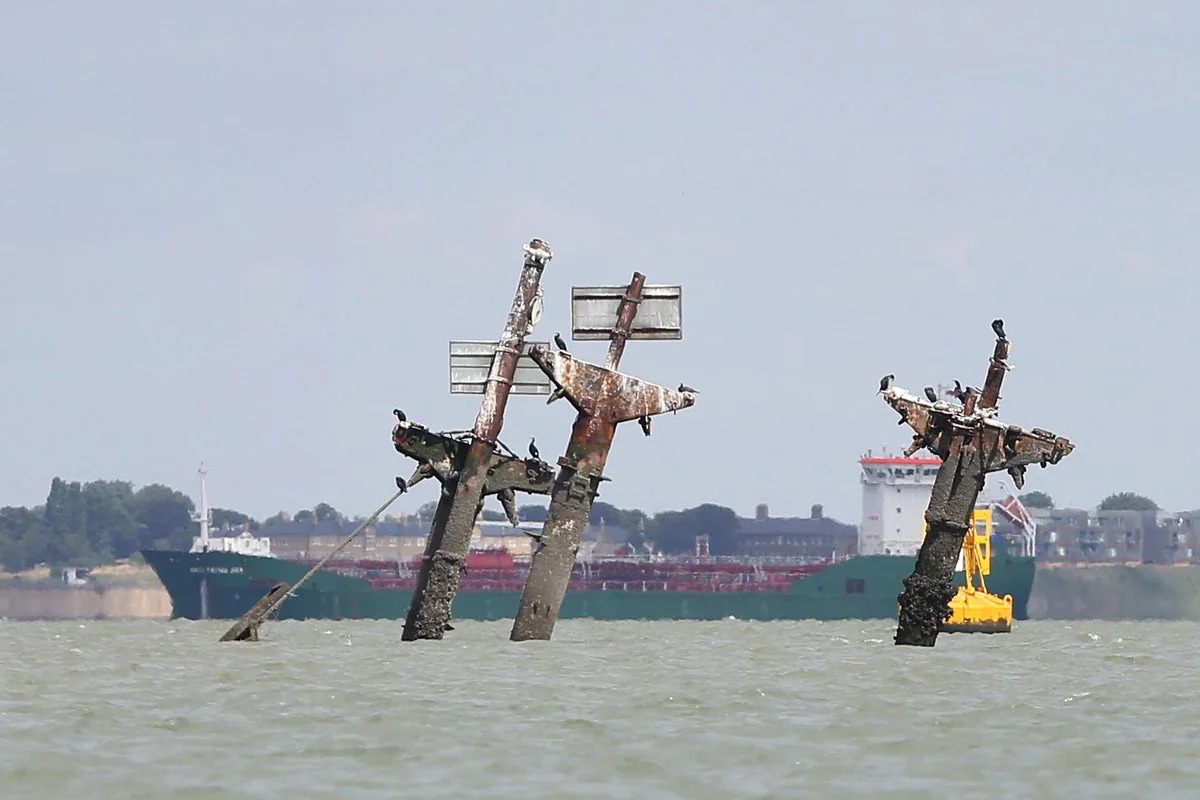
About half of each mast is currently out of the water while the other half remains submerged, meaning the conservation process may need to account for different conditions along the mast.
3
The SS Monty (Richard Montgomery) was loaded with around 7,000 tonnes of munitions in 1944, and roughly 1,400 tonnes of explosives remain in the forward holds today, underpinning the ongoing need for careful handling during mast removal.
4
Specialist contractor Resolve Marine will carry out the mast-removal work, with explosives advice from Robin Rickard of Exord Ltd, and the masts have been loaned to the UK by the US government for conservation.
The rusting masts of the SS Richard Montgomery — a World War II wreck sitting in the Thames Estuary with roughly 1,400 tonnes of explosives still on board — will be cut away starting in September, according to The Independent. The £9.5 million operation marks the first major physical intervention on the ship since it sank off Sheerness, Kent, in 1944.
The three masts will be conserved at Chatham Historic Dockyard after the US government loaned them to the project. Independent experts have confirmed the work can go ahead without raising the danger from the munitions still inside the wreck's forward holds, Yahoo News reported.
How Engineers Will Cut the Masts Away Safely
Specialist contractor Resolve Marine will carry out the removal work. Engineers will first build an underwater platform next to the wreck. From there, they will cut the three masts free from the ship. Explosives adviser Robin Rickard of Exord Ltd will guide the team throughout, according to The Independent.
About half of each mast sits above the waterline while the other half remains submerged. That means conservators will need to treat wood and metal that has aged in very different conditions. A permanent exclusion zone around the wreck will stay in place during and after the operation.
1,400 Tonnes of Explosives Still Demand Extreme Caution
The SS Richard Montgomery was loaded with around 7,000 tonnes of munitions when it ran aground and broke apart in 1944. Roughly 1,400 tonnes of explosives remain in the forward holds today, according to Yahoo News. That has made the wreck one of the most closely watched hazards on the UK coast for decades.
The Department for Transport is overseeing the project. Officials say independent experts reviewed the mast-removal plan and confirmed it will not increase the risk from the remaining munitions. The exclusion zone and careful underwater work are designed to keep disturbance to the explosives as low as possible.
Masts Head to Chatham Dockyard for Public Conservation
Once removed, the masts will go to Chatham Historic Dockyard in Kent. The US government has loaned them to the UK for conservation. Local officials say the project highlights the UK-US wartime partnership and the area's role in the World War II effort, according to Yahoo News.
Members of the public will be able to watch part of the conservation process in person. Initial condition assessments of the masts will be carried out in front of visitors at the dockyard. That gives people a rare chance to see a piece of wartime history being preserved up close.
Previous Delays Finally Overcome Before September Start
The mast-removal plan has faced delays in the past. The September 2025 start date is the latest target set by the Department for Transport. The £9.5 million budget covers the full operation, from the underwater platform construction to the conservation work at Chatham, The Independent reported.
The wreck has been monitored for decades because of the explosion risk it poses near a busy shipping lane. Officials stress that removing the masts does not change the long-term status of the explosives below. The remaining munitions will stay in place, with the exclusion zone continuing to protect the area.
Sentiment
Mostly NegativeNEGATIVENEUTRALPOSITIVE
Publishers
12
Articles
18
Reach
30
A
AnonymousAuthor