Huawei Pura X View Launch
Huawei Launches The Pura X View As A Wide Nonfoldable Smartphone
Anonymous
Key Points
1
Huawei says the Pura X View uses a full-area vapor-chamber cooling system and a ring-type gain antenna to help control heat and maintain connectivity during extended use. It also adds Huawei Share remote sending, which lets users transfer photos, videos, documents and compressed files to contacts who are not nearby.
2
The display is protected by Huawei’s proprietary Kunlun Glass, adding a durability feature not included in the summary.
3
Beyond its headline camera specifications, the phone is reported to include optical image stabilization on the 200MP main sensor, a 3.7× optical periscope zoom, and a multispectral sensor intended to improve color accuracy.
4
The Pura X View reportedly supports dual physical SIM cards and eSIM, along with IP68/IP69 water resistance, Wi‑Fi 7 and Bluetooth 6, giving it a broader connectivity and durability package than the summary describes.
5
Huawei is positioning the device as a premium alternative to foldables: outlets describe it as the world’s first non-foldable wide smartphone, offering the foldable-style wide viewing format without a hinge or folding mechanism.
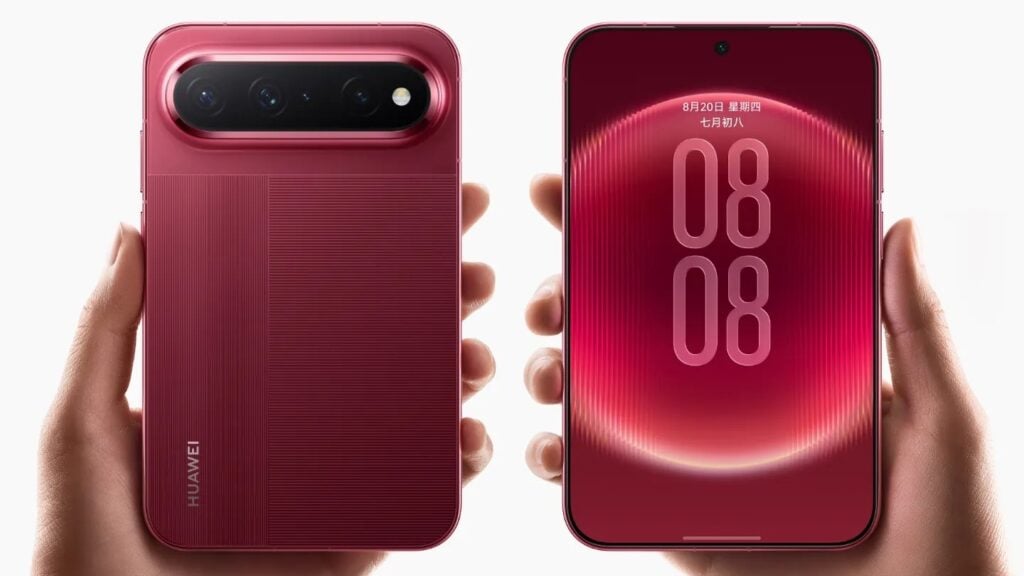
Huawei has launched the Pura X View, a conventional smartphone with an unusually wide 16:9.5 display designed to deliver foldable-like screen space without the hinge. Android Headlines reports the phone hits Chinese shelves on September 9, starting at 5,999 yuan (roughly $825) for 12GB RAM and 256GB storage, with 512GB and 1TB options at 6,999 yuan and 8,499 yuan respectively.
The 6.39-inch 120Hz OLED display reaches 6,500 nits of peak brightness and sits behind Kunlun Glass for durability. TBreak confirms the phone packs a Kirin 9030S chipset, HarmonyOS 7, and a 7,000mAh battery in a slim 6.68mm frame weighing just 201 grams. A 200MP main camera with optical image stabilization and 3.7× periscope zoom lead the rear camera system.
A Wide Flat Screen Replaces the Foldable Formula
Huawei Pura X View News describes the phone as the world's first non-foldable wide smartphone, solving the foldable formula by stretching a single flat display instead of bending one. The 16:9.5 aspect ratio gives more viewing space for videos, games, books and documents — mirroring the benefit of foldables without mechanical complexity or a crease down the middle.
The move signals Huawei's bid to shift competitive dynamics in premium handsets. Archynetys notes the design offers a different viewing experience from traditional flat phones, appealing to users who want wide-screen immersion without paying foldable prices or accepting foldable durability risks.
Premium Hardware Packed Into a Slim Design
The Pura X View stuffs flagship specs into a 6.68mm-thick, 201-gram frame. A Kirin 9030S processor runs HarmonyOS 7, while a full-area vapor-chamber cooling system and ring-type gain antenna manage heat and connectivity during long sessions. The phone supports dual physical SIM cards plus eSIM, Wi-Fi 7, Bluetooth 6, and IP68/IP69 water resistance.
The 6,500-nit OLED screen reaches extreme brightness for outdoor use, protected by proprietary Kunlun Glass. Zamin.uz highlights the 7,000mAh battery as a standout feature for extended use. The rear camera system pairs a 200MP main sensor with telephoto and ultrawide options, plus a multispectral sensor to boost color accuracy.
International Availability Remains Unclear as Google Services Gap Looms
Huawei has not announced pricing or launch dates for the U.S., U.K., UAE or other overseas markets. The absence of Google Mobile Services — a major limitation outside China — could significantly hamper its appeal to international buyers accustomed to Gmail, Google Maps and the Play Store.
In China, Huawei is sweetening the deal with optional cases, student discounts and gift bundles to early buyers. The company offered the Pura X View in four color options. Without clearer international strategy and the GMS barrier resolved, the phone may remain largely confined to its home market despite its innovative wide-screen approach.
Huawei Share Adds Wireless File Transfer to the Feature Set
The Pura X View introduces Huawei Share remote sending, a feature that lets users transfer photos, videos, documents and compressed files to contacts who are not physically nearby. This differentiator reflects Huawei's push to build an ecosystem beyond hardware alone.
Sentiment
Mostly PositiveNEGATIVENEUTRALPOSITIVE
Publishers
12
Articles
1
Reach
13
Topics
A
AnonymousAuthor


