Dorset's Puffin Comeback
Dorset's Purbeck Cliffs Celebrate First Puffin Chick Sighting in Three Decades
Anonymous
Key Points
1
On July 7, after anchoring a boat in the optimal position, the puffling emerged behind its parent just after 7 p.m.
2
The puffling is estimated to be about 38 days old, based on the observed period during which parents were feeding it from around May 29 to July 5.
3
A team of 13 volunteers monitored the Purbeck cliffs for 15 weeks, contributing roughly 150 hours of observation from the Dancing Ledge area with support from the Purbeck Natural History Forum.
4
Most fish deliveries to the nests ceased after 12 June, and only one nest appeared to produce a chick, underscoring ongoing uncertainty about the colony's survival.
5
In March 2026, the National Trust intensified monitoring with motion-sensor trail cameras aimed at peering into deep crevices to determine whether predation is hindering chick production.
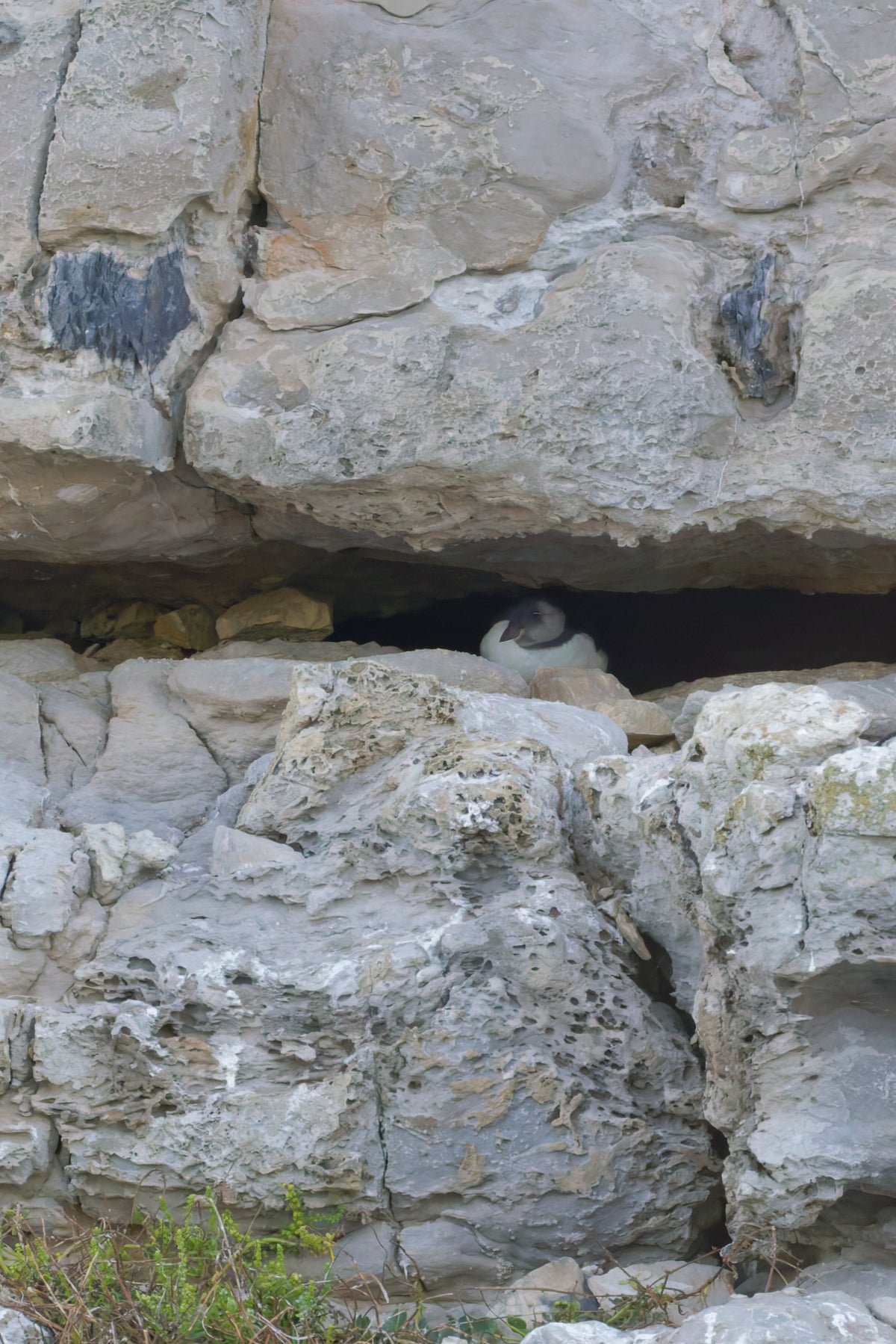
A puffin chick has been spotted on Dorset's Purbeck cliffs for the first time in more than 30 years, marking a rare moment of hope for one of England's most threatened seabird colonies. The Independent confirmed that volunteers watching the site near Swanage caught the puffling emerging from a rocky crevice just after 7 p.m. on July 7.
The Purbeck colony once held more than 40 breeding pairs in the 1950s. Today, only about three pairs remain, making these birds among the rarest on the entire south coast of England. Yahoo News reported that this is the first confirmed puffling sighting at the last puffin colony on the UK's south coast in over three decades.
How Volunteers Caught the Historic Moment
A team of 13 volunteers, led by Dr. Richard Caldow, spent 15 weeks watching ledges and nests along the Purbeck cliffs. They logged around 150 hours of observation from the Dancing Ledge area, supported by the Purbeck Natural History Forum. On July 7, the team anchored a boat in the best position to watch. The puffling appeared behind its parent just after 7 p.m.
The chick is estimated to be about 38 to 40 days old. Researchers based that estimate on when parents were first seen bringing fish to the nest — around May 29 — and when deliveries stopped, around July 5. That window lines up with the minimum age a puffin needs to reach before it can fledge, or leave the nest.
Most Nests Failed — Only One Chick Survived
The breakthrough came with a sobering caveat. Most fish deliveries to nests stopped after June 12, a sign that most eggs or chicks did not survive. Yahoo News Australia reported that only one nest appeared to produce a chick this season. Observers note that not every nest succeeds, and the colony's future remains uncertain.
The Purbeck colony is tiny and fragile. With just three breeding pairs left, every failed nest matters. Researchers do not yet know why so many nests produce no chick. Predation is one possible cause, but the full picture is still unclear.
Motion Cameras Set to Peer Into Hidden Nests
In March 2026, the National Trust stepped up its efforts to find answers. The team installed motion-sensor trail cameras aimed at deep crevices in the cliffs. The goal is to catch predators — or other threats — on film before they can take a chick. The Independent reported that the cameras are designed to peer into spots that human eyes simply cannot reach.
Conservationists see the 2025 puffling sighting as a possible turning point. But they stress that one chick does not save a colony. The new camera data, expected to build through the 2026 season, could finally reveal what is stopping the Purbeck puffins from bouncing back after 70 years of decline.
Sentiment
Mostly NegativeNEGATIVENEUTRALPOSITIVE
Publishers
11
Articles
28
Reach
39
A
AnonymousAuthor


