Detainees Held in Cages
DHS Watchdog Finds Florida Immigrant Detainees Held in Metal Cages
Anonymous
Key Points
1
The facility was rapidly built by Florida in summer 2025 on the runway of the Dade-Collier Training and Transition Airport in the Everglades, less than 50 miles west of President Donald Trump’s Miami Beach resort. Its location drew opposition from Democratic lawmakers, immigrant-rights groups, environmentalists and nearby tribal groups.
2
The inspector general found it was unclear which detention standards Florida was applying at the facility, adding to broader questions about oversight and responsibility for day-to-day operations under the federal-state 287(g) arrangement.
3
The report emerged amid wider criticism of the facility’s conditions: lawmakers who toured it described hundreds of migrants in cages, sweltering heat, insect infestations and meager meals, while ICE defended the site as offering higher detention standards than many U.S. prisons.
4
President Donald Trump visited the facility and joked that its remote setting meant detainees would have to learn “how to run away from an alligator,” a remark that became associated with the center’s public image.
5
The enclosures were not merely described as restrictive: investigators documented at least one case in which staff used one to discipline a detainee who “failed to comply with a lawful command,” despite staff’s broader characterization of the spaces as voluntary calming areas.
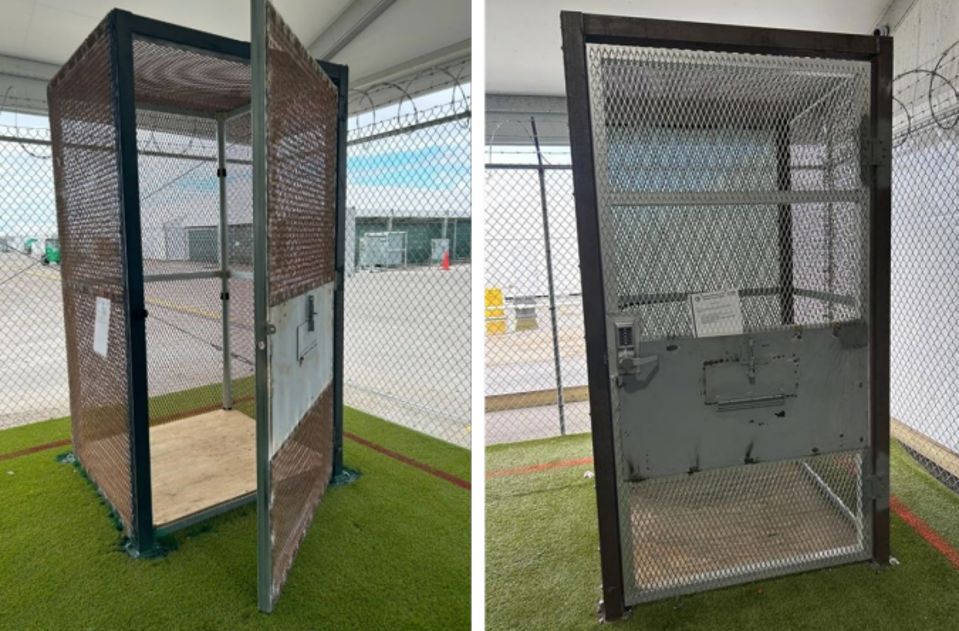
A federal watchdog found that 79 immigrant detainees at Florida's now-closed "Alligator Alcatraz" facility were held in metal cages as small as phone booths for up to two hours at a time, Yahoo News reported. The Department of Homeland Security inspector general called the practice unprecedented, inhumane, and a violation of federal detention standards. The outdoor cages measured 4-by-4 feet, while indoor enclosures were roughly 18 square feet — smaller than most bathrooms.
The facility, built rapidly by Florida in summer 2025 on an Everglades airport runway, closed in June 2026 after mounting criticism over conditions, costs, and legal challenges. BBC News reported that detainees described extreme heat, insects, limited water, and shackling, while federal investigators documented at least one case in which an enclosure was used to punish a detainee who disobeyed a staff order.
Cages Called 'Calming Areas' Held Detainees for Hours
The DHS inspector general found that 79 detainees were placed in the metal enclosures for periods ranging from several minutes to nearly two hours, averaging just under 60 minutes, Forbes reported. Staff labeled the spaces "calming areas," suggesting they were voluntary de-escalation tools. But investigators discovered the practice was unlike anything found in other immigration detention facilities inspected by federal authorities.
The outdoor cages measured only 4-by-4 feet — roughly the size of a phone booth. Indoor enclosures were roughly 18 square feet. Both posed significant health and safety risks, the watchdog concluded. Detainees reported extreme heat, insect infestations, and limited access to water while confined in the spaces.
Facility Used Cages to Punish Detainees, Not Just Calm Them
Federal investigators documented at least one case in which staff used an enclosure as discipline against a detainee who "failed to comply with a lawful command," BBC News reported. This contradicted the facility's characterization of the spaces as voluntary calming zones. The finding blurred the line between treatment and punishment, raising questions about whether the spaces were truly meant to help detainees or to control them through confinement.
The watchdog also found it unclear which federal detention standards Florida was applying at the facility. This ambiguity created accountability gaps. Federal immigration authorities were involved in the operation, but they disputed responsibility for day-to-day conditions. The state-federal arrangement under the 287(g) program left no clear guardian of detainee welfare.
Remote Everglades Location Sparked Early Opposition
Florida built the facility in summer 2025 on a runway at the Dade-Collier Training and Transition Airport in the Everglades, less than 50 miles west of President Donald Trump's Miami Beach resort. Democratic lawmakers, immigrant-rights groups, environmentalists, and local tribal nations opposed the location from the start. Trump visited and joked that detainees would need to learn "how to run away from an alligator" — a remark that stuck to the facility's public image.
The facility closed in June 2026 after criticism mounted over conditions, legal challenges, and mounting costs. ICE had defended the site as meeting higher detention standards than many U.S. prisons. But lawmakers who toured it described hundreds of migrants in cages, sweltering heat, and meager meals. The inspector general's report validated those concerns with federal findings.
Sentiment
Mostly NegativeNEGATIVENEUTRALPOSITIVE
Publishers
59
Articles
335
Reach
394
A
AnonymousAuthor


