787 Efficiency Tests
Boeing, Lufthansa, Rolls-Royce Partner on 787 EcoDemonstrator Tests for Efficiency and Noise Reduction
Anonymous
Key Points
1
Boeing's current financial context is highlighted by a weak financial strength rating tied to high debt, with a market capitalization around $172 billion and a P/E of about 105.88x, suggesting investors are pricing in strong growth despite near-term challenges.
2
Rolls-Royce’s Trent 1000 XE upgrade includes a redesigned High Pressure Turbine blade and a comprehensive cooling-system redesign, delivering a 40% increase in cooling flow and lower blade temperatures.
3
The XE engine package increases time on wing to about three times that of the Trent 1000 TEN, providing potential reductions in hot-section overhauls, parts/labor costs, and aircraft ground time.
4
Trent 1000 XE is slated as the production standard for all future Boeing 787 deliveries, meaning benefits will roll out across new aircraft, including those destined for airlines like Lufthansa.
5
The flight-test program is part of the ecoDemonstrator Explorer 2026 and aligned with the FAA’s CLEEN Phase 3, intensifying efforts to improve fuel efficiency and reduce noise via new inlet designs and optimized operating procedures.
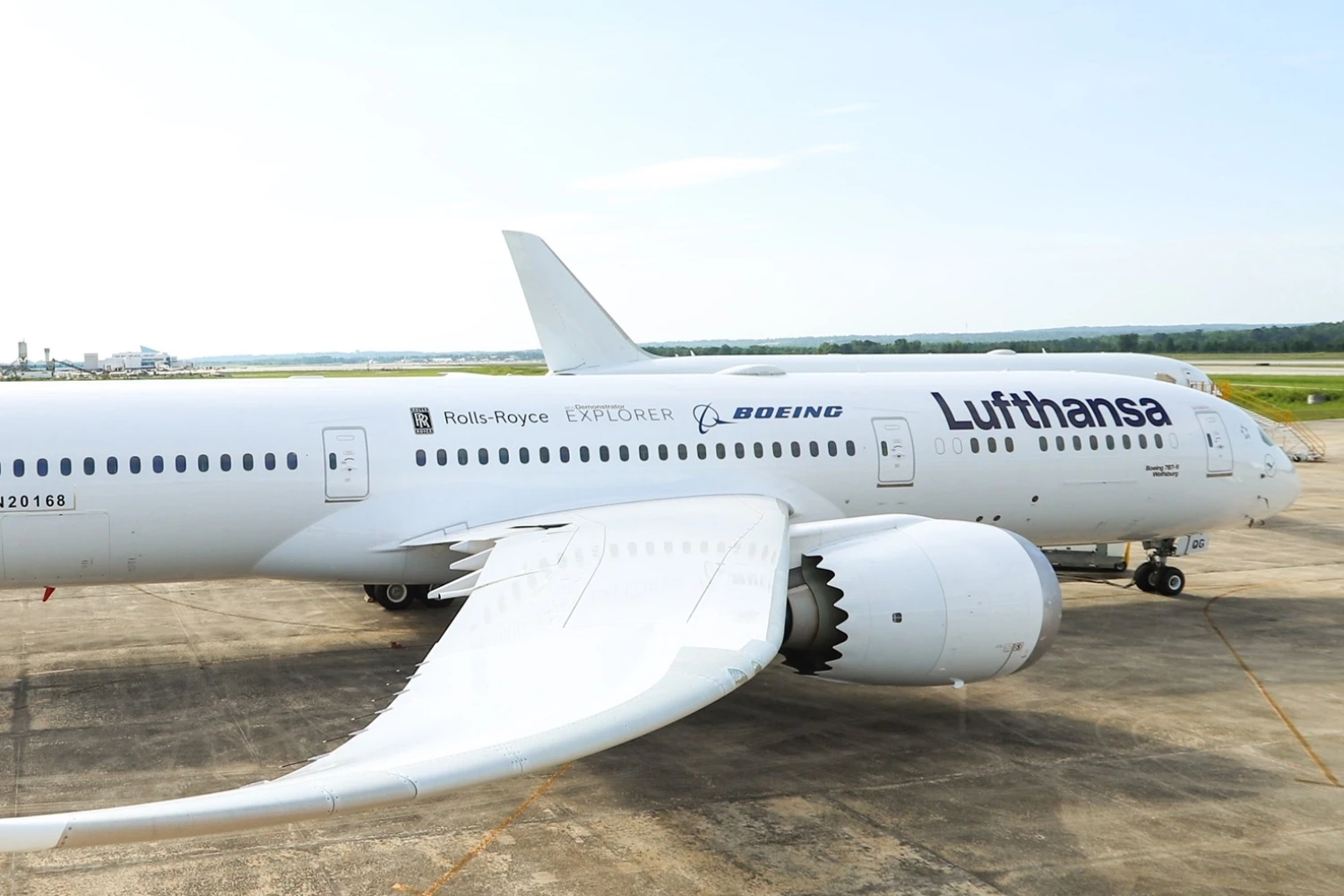
Boeing, Lufthansa, and Rolls-Royce are teaming up to fly a 787-9 Dreamliner out of Glasgow, Montana later this month through mid-August, testing technology designed to burn less fuel and make less noise at airports, according to AirData News and GuruFocus.
The tests are part of Boeing's ecoDemonstrator Explorer 2026 program and are tied to the FAA's CLEEN Phase 3 initiative — a government effort to push airlines toward cleaner, quieter flight. The results could shape how future 787s are built and flown.
New Engine Inlet Promises Lighter, Quieter Takeoffs
The centerpiece of the flight tests is something called the Next Generation Inlet. It is a shorter, lighter version of the standard engine inlet — the cone-shaped opening at the front of a jet engine. According to Market Screener, the new inlet is designed to reduce noise on takeoff and landing while also cutting the engine's overall weight.
The tests will also try out algorithm-optimized procedures for takeoff and landing. In plain terms, that means software tells pilots the most fuel-efficient way to climb and descend. Both changes target the same goal: less energy used, less noise made, fewer emissions released.
Rolls-Royce Trent 1000 XE Gets a Cooling Overhaul
Rolls-Royce is bringing its upgraded Trent 1000 XE engine to the tests. The biggest change is inside the High Pressure Turbine — the hottest, most stressed part of any jet engine. AskTraders reports the redesigned turbine blade features a 40% increase in cooling flow, which keeps blade temperatures lower and reduces wear.
That cooling upgrade matters for airlines in a very practical way. The XE engine stays on the wing roughly three times longer than the older Trent 1000 TEN model before needing a major overhaul. Fewer overhauls means fewer days the plane sits on the ground — and lower maintenance bills.
XE Engine Set as Standard for All Future 787 Deliveries
The Trent 1000 XE is not just being tested — it is already set to become the production standard for every new 787 Boeing delivers, according to GuruFocus. That means airlines ordering new Dreamliners, including Lufthansa, will get the upgraded engine as the default option.
Lufthansa's role in the program goes beyond being a customer. The airline is an active partner in the tests, lending its real-world operational expertise. The collaboration frames this as a three-way strategic push — manufacturer, engine maker, and airline — to make sustainable aviation the norm rather than the exception.
Boeing Bets on Green Tech While Carrying Heavy Debt
The ecoDemonstrator push comes as Boeing faces real financial pressure. The company carries high debt and holds a weak financial strength rating. Its market capitalization sits around $172 billion, and its price-to-earnings ratio is about 105.88x — a sign that investors are betting heavily on future growth, according to GuruFocus.
Against that backdrop, programs like the ecoDemonstrator serve a dual purpose. They show airlines that Boeing is investing in efficiency gains that cut operating costs. And they signal to regulators and investors that the company is serious about meeting tighter environmental standards — even while it works to stabilize its finances.
Sentiment
Mostly PositiveNEGATIVENEUTRALPOSITIVE
Publishers
10
Articles
17
Reach
27
A
AnonymousAuthor


