Nepal Rebuilds Flood-Destroyed Roads, 41 Bridges
Nepal Rebuilds Flood-Destroyed Roads, 41 Bridges
Anonymous
Key Points
1
Authorities report that 13,396 people have been rescued so far, even as 4,994 remain missing.
2
The Department of Roads says only about 1.5 kilometers of track remains to be reopened between Dhunge Bazar and Betrawati in Nuwakot before a Bailey bridge can be installed; officials say seven Bailey bridges, ranging from 30 to 70 meters, are immediately needed between Rasuwagadhi and Syafrubesi.
3
Nepal’s Loss and Damage Response Fund appeal is being treated as an unprecedented test: eight board members from Africa, Asia and least-developed countries have called for an extraordinary meeting, although the fund’s existing process consists of 11 stages and has only one funding cycle.
4
The preliminary damage estimate does not include indirect losses to livelihoods, tourism, markets, ecosystems and essential services; authorities estimate that emergency recovery during the first four months alone will require an additional $52.6 million.
5
Of the roughly 20,000 homes needing reconstruction, at least 7,500 were completely destroyed, according to Nepal’s disaster agency.
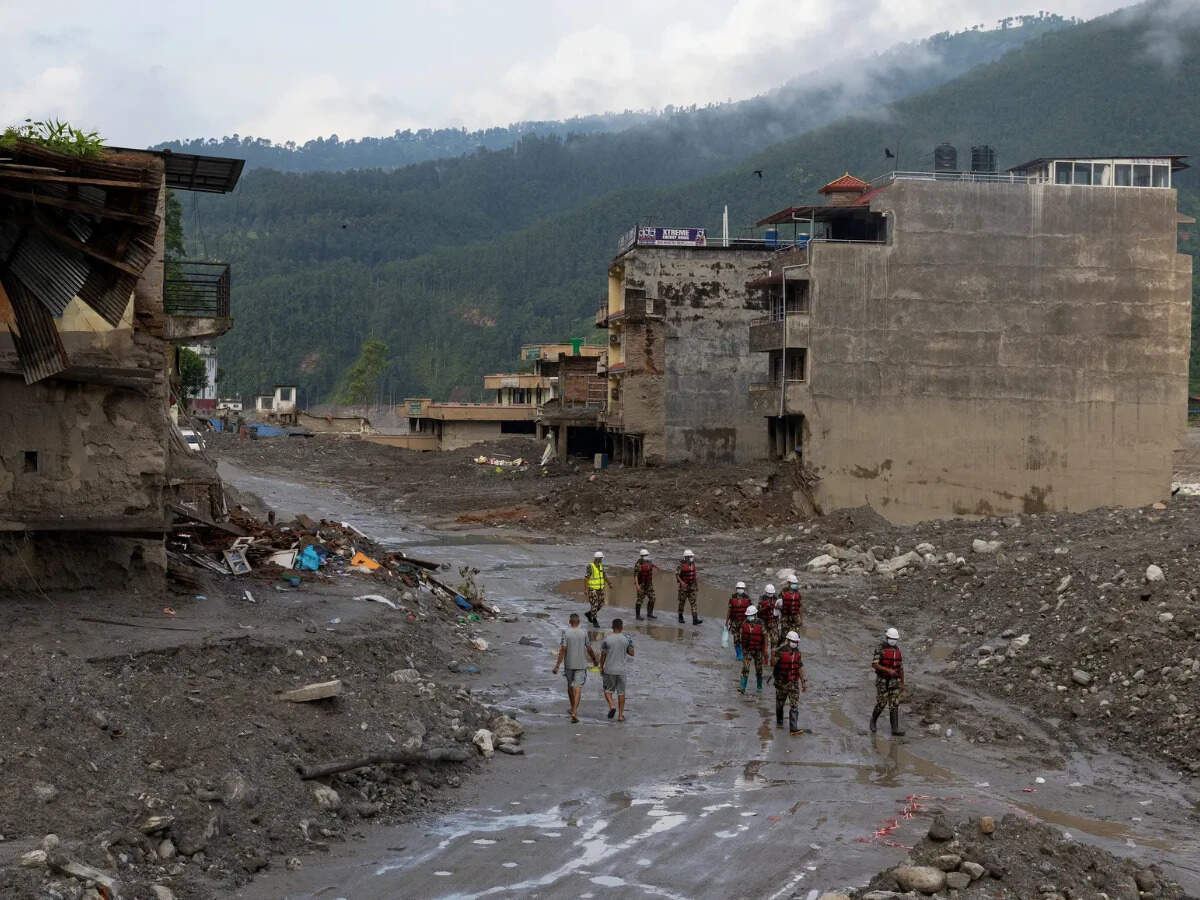
Nepal is racing to restore critical road and bridge networks after flash floods triggered by an ice-and-rock avalanche killed 1,356 people and left nearly 5,000 missing. Economic Times reports that authorities have destroyed 41 motorable bridges between Rasuwa and Chitwan, leaving only 18 of 63 bridges intact and isolating several communities. The disaster damaged roads, homes, and hydropower plants across the region, prompting Nepal to seek temporary bridges from India and China to reconnect devastated areas.
Nepal's Department of Roads estimates damage to roads and bridges alone at 30 billion Nepalese rupees, with reconstruction expected to cost roughly 50 billion rupees. Total preliminary damage to homes, property and infrastructure reaches approximately 387.5 billion rupees, according to Hamro Patro. About 20,000 homes require rebuilding, and roughly 901 megawatts of hydropower capacity has been disrupted across the affected regions.
Authorities Install Temporary Bridges to Reconnect Isolated Areas
Nepal is clearing roads and installing temporary Acrow and Bailey bridges to restore connectivity. Economic Times reports that China has already delivered two 100-meter Bailey bridges to support relief efforts. Officials say seven additional Bailey bridges—ranging from 30 to 70 meters—are immediately needed between Rasuwagadhi and Syafrubesi to restore critical trade routes.
Transporting bridge structures remains a major challenge because many access roads were washed away in the initial flooding. The Department of Roads reports only about 1.5 kilometers of track remains to be reopened between Dhunge Bazar and Betrawati in Nuwakot before a Bailey bridge can be installed. So far, 13,396 people have been rescued, though 4,994 remain missing.
Reconstruction Costs Dwarf Initial Damage Estimates
The true cost of recovery far exceeds bridge and road repairs. Hamro Patro notes that Nepal's disaster agency says at least 7,500 homes were completely destroyed out of roughly 20,000 needing reconstruction. Emergency recovery during the first four months alone will require an additional $52.6 million beyond the preliminary 387.5 billion rupees in total damage.
The preliminary damage estimate does not include indirect losses to livelihoods, tourism, markets, ecosystems and essential services—costs that could double or triple the total bill. Chico Enterprise-Record reports that the floods tested Nepal's new government after months of political upheaval. Financing reconstruction through grants or loans remains a critical challenge for the country.
Nepal Tests Global Disaster Fund With Urgent Appeal
Nepal's request for assistance from the Loss and Damage Response Fund marks an unprecedented test of the fund's ability to provide rapid disaster support. Eight board members from Africa, Asia and least-developed countries have called for an extraordinary meeting to expedite the process. The fund's existing procedures involve 11 stages and typically follow only one funding cycle per year.
Truthdig reports that the disaster exposed entire communities, hydropower and border-trade workers, security personnel and downstream populations to severe, rapidly cascading risks. Whether the Loss and Damage Response Fund can adapt its slow procedures to deliver emergency support remains an open question as Nepal races to rebuild.
Sentiment
Mostly NegativeNEGATIVENEUTRALPOSITIVE
Publishers
19
Articles
30
Reach
49
A
AnonymousAuthor


