RTS Link Reshapes Spending
RTS Link to Drive S$1.05 Billion Singaporean Spending in JB, Intensifying Retail Competition
Anonymous
Key Points
1
34% of Johor Bahru respondents said they intend to visit Singapore once the RTS Link opens, and annual visits by public-transport users are projected to rise by 57% on average; those who previously drove into Singapore are expected to switch to the RTS Link, with overnight stays and entertainment spending increasing as a result.
2
The study’s methodology includes surveying about 1,700 Singapore consumers and 400 Johor Bahru consumers in March 2026, supplemented by Mastercard historical spending data and government statistics, and it estimates a daily RTS ridership of about 39,700 trips.
3
Singapore’s net outbound spend from the RTS Link is projected at about S$290 million annually, with Singapore residents expected to spend S$1.05 billion in JB and JB visitors spending S$756 million in Singapore, equating to roughly 0.4% of Singapore’s projected 2025 total retail and F&B sales.
4
Non-central regions of Singapore are anticipated to experience the greatest net spending outflows, with the western region highlighted in the regional breakdown.
5
Industry voices stress that the RTS Link will heighten competitive pressure in Singapore’s retail and F&B sectors, but call for collaboration between industry and government to focus on service, experience and productivity to compete in a more connected cross-border market, beyond competing on price alone.
Singaporeans are set to spend an extra S$1.05 billion every year in Johor Bahru once the RTS Link rail connection opens in January 2027, according to Singapore Business Federation. The figure dwarfs the S$756 million that JB visitors are expected to spend in Singapore, leaving the city-state with a net outbound spend of about S$290 million annually.
The joint study, which surveyed roughly 1,700 Singapore consumers and 400 JB consumers in March 2026, projects that Singaporean trips to JB will jump 51%, hitting about 11.2 million round trips per year. Daily ridership on the link is estimated at around 39,700 trips, according to Headtopics.
Groceries and Beauty Dominate the Cross-Border Spending Shift
Groceries, drug stores, dining, and beauty services top the list of categories where Singaporeans plan to spend more in JB, according to Newsy Today. These everyday items are significantly cheaper across the causeway. The shift reflects a practical calculation: the RTS Link makes it far easier to pop over for a haircut or a supermarket run.
JB visitors coming into Singapore are expected to spend mostly on dining and entertainment. Those who previously drove into Singapore are likely to switch to the RTS Link. Once they do, they are projected to stay overnight more often and spend more on entertainment, boosting Singapore's inbound tourism receipts in those categories.
Western Singapore Faces the Steepest Spending Outflows
Not all parts of Singapore will feel the impact equally. Non-central regions are expected to see the biggest net spending outflows, with the western region hit hardest, according to Headtopics. Residents there live closest to the JB crossing and already have established shopping habits across the border.
The S$290 million net outflow sounds large, but in context it equals roughly 0.4% of Singapore's projected 2025 total retail and F&B sales, according to Business Today. Still, for neighbourhood shops and suburban malls in the west, the competitive pressure will be very real and very local.
Singapore Retailers Urged to Compete on Experience, Not Price
Industry groups are not waiting for 2027 to act. Leaders warn that the RTS Link will sharpen competition in retail and food-and-beverage sectors. They say Singapore businesses cannot win a price war against JB. Instead, they are calling on companies to compete on service quality, unique experiences, and better productivity.
Policymakers and trade groups are also pushing for closer collaboration between industry and government to tackle rising costs and manpower shortages. The study used Mastercard historical spending data alongside government statistics to build its projections, giving the findings a strong empirical base, according to Business Today.
34% of JB Residents Plan to Visit Singapore After the Link Opens
The study also reveals strong interest on the Malaysian side. Some 34% of JB respondents said they intend to visit Singapore once the RTS Link is running, according to Headtopics. Annual visits by public-transport users are projected to rise by 57% on average. That surge could bring meaningful new foot traffic into Singapore's malls, restaurants, and attractions.
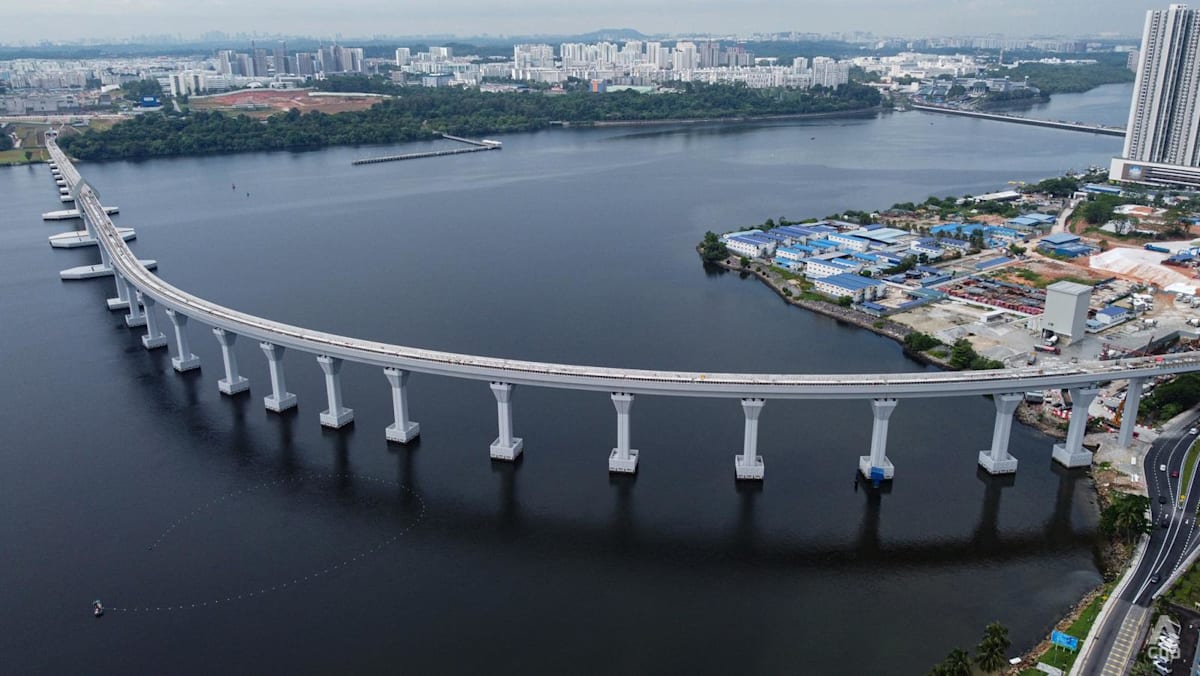
The RTS Link is still roughly a year away from its January 2027 launch. But the study's findings are already prompting businesses on both sides of the causeway to rethink their strategies. The rail link will not just move people faster — it will redraw the retail map of the entire southern Malaysia-Singapore corridor.
Sentiment
Mostly PositiveNEGATIVENEUTRALPOSITIVE
Publishers
16
Articles
7
Reach
23
A
AnonymousAuthor


