Berlin Businesswoman Charged Over Alleged Russian Espionage
Berlin Businesswoman Charged Over Alleged Russian Espionage
Anonymous
Key Points
1
Ilona W. ran a Berlin marketing agency and chaired a lobbying group, giving her an extensive network in military and political circles that prosecutors say she used in the alleged operation.
2
Prosecutors allege that W. supplied the Russian contact with tips about high-profile events and helped him attend them under a false name so he could build his own intelligence network; she also attended events to identify possible contacts and targets.
3
German authorities searched the homes of two former Federal Ministry of Defence employees at the time of W.’s arrest, indicating that investigators were examining her alleged contacts within the ministry as well as her own activities.
4
Investigators identified W.’s alleged Russian contact as a GRU military-intelligence officer operating under diplomatic cover as a deputy attaché; the man, identified as Andrej M., was required to leave Germany at the beginning of the year.
5
The charges were formally filed on Sept. 6, according to the Associated Press, while W. had been arrested on Jan. 21, providing a more precise timeline for the case than the summary’s general reference to her January arrest.
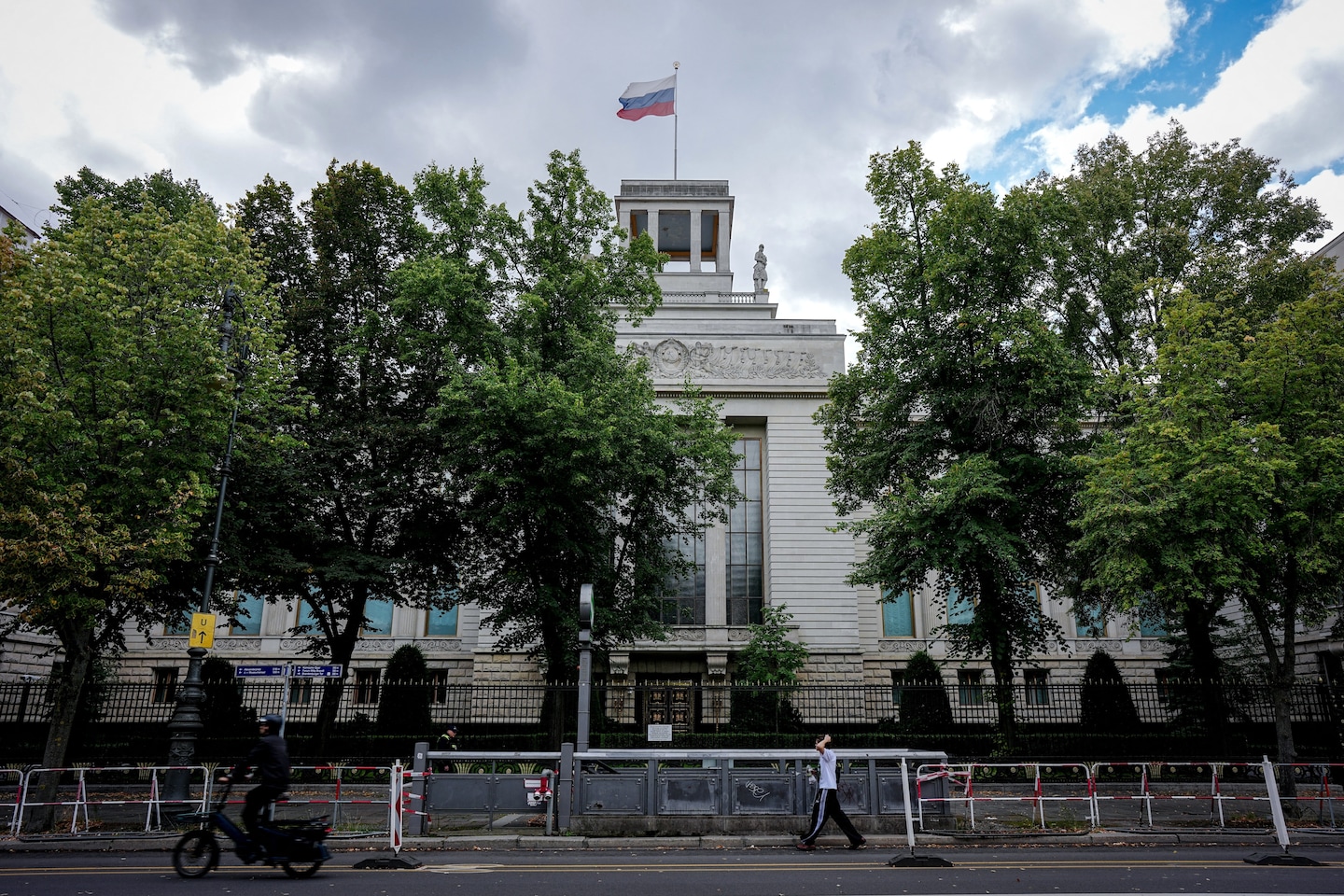
German federal prosecutors have charged Ilona W., a 57-year-old marketing executive, with conducting espionage for Russia. According to The Washington Post, W. maintained contact with a Russian intelligence officer at the embassy in Berlin and used her extensive business and lobbying networks to gather information on German defense policy. She was arrested in January and remains in pretrial detention while charges were formally filed in September.
The case highlights intensified Russian intelligence operations in Germany, particularly efforts to penetrate the Defense Ministry and defense sector. German authorities say W. helped the Russian contact access political and military events, sometimes under a false name, and attempted to identify potential recruits within Germany's defense establishment.
How a Berlin Executive Allegedly Aided Russian Intelligence
Prosecutors allege W. supplied her Russian contact with tips about high-profile events and helped him attend them under an alias to build his own intelligence network. According to The Washington Post, she also attended events herself to identify possible targets and contacts for recruitment within German political and military circles.
W. ran a Berlin marketing agency and chaired a lobbying group, giving her access to influential networks in military and political circles. German prosecutors say she leveraged these positions and connections to facilitate the alleged intelligence operation over an extended period.
Russian Intelligence Officer Operating Under Diplomatic Cover
Investigators identified W.'s alleged Russian contact as Andrej M., a GRU military-intelligence officer working under diplomatic cover as a deputy attaché at the Russian embassy. The Washington Post reports that German authorities required him to leave the country at the beginning of the year as part of their response to the espionage operation.
The use of diplomatic cover allowed the officer to operate in Berlin with official status while conducting intelligence activities. Prosecutors say W. became instrumental in helping him expand his contacts and gather sensitive information on German defense matters.
Defense Ministry Employees Under Investigation
German authorities searched the homes of two former Federal Ministry of Defence employees when W. was arrested in January. These searches suggest investigators were examining W.'s alleged contacts within the ministry and whether others may have been involved in the intelligence operation.
The scope of the investigation points to concerns about broader vulnerabilities in Germany's defense sector. Prosecutors allege W. specifically sought to identify or recruit contacts within both the Defense Ministry and the broader defense industry.
Intensifying Russian Spy Operations Against Germany
This case reflects Germany's growing concerns about Russian espionage and hybrid warfare aimed at undermining Western support for Ukraine. German authorities have warned of escalating intelligence operations targeting defense institutions and political decision-makers.
The W. case demonstrates Russia's use of civilian operatives with legitimate business cover to conduct intelligence work. By recruiting businesspeople with access to political and military networks, Moscow can gather sensitive information while maintaining plausible deniability about state-sponsored espionage.
Sentiment
Mostly NegativeNEGATIVENEUTRALPOSITIVE
Publishers
13
Articles
44
Reach
57
Topics
A
AnonymousAuthor


