Bihar Temple Tragedy
Seven Dead, Dozen Injured in Ashok Dham Temple Stampede During Sawan Gathering
Key Points
Casualty tallies differ across outlets: seven deaths are reported by ANI/News18, while Economic Times cites six fatalities, underscoring evolving figures as investigations proceed.
Ashok Dham Temple is a major Shiva temple in Lakhisarai that attracts large crowds during Sawan, with local administration listing it among the district’s prominent religious sites.
Injured devotees were moved to Sadar Hospital, with reports indicating several in serious condition and, in some accounts, that all the injured were women.
Authorities and experts have proposed concrete crowd-management measures to prevent future tragedies, including stricter barricading, designated crowd zones, controlled entry, real-time density monitoring, and even online token systems.
Coverage places the Ashok Dham incident within a broader pattern of deadly crowd crushes at temples, railway stations, and other mass gatherings in India, highlighting ongoing crowd-control challenges.
A deadly crowd crush at the Ashok Dham Temple in Bihar's Lakhisarai district killed at least seven people and injured more than a dozen on Monday morning, as roughly 50,000 devotees packed the site for a sacred Sawan ritual. ANI and News18 reported seven deaths, while Economic Times cited six, with casualty figures still evolving as authorities investigate.
The tragedy struck between 6:30 and 6:45 AM, when two trains arrived near-simultaneously at the adjacent Ashok Dham Halt station. The sudden surge of pilgrims buckled temporary bamboo barricades. A falling electricity pole then sparked rumors of electrocution, sending the densely packed crowd into a fatal panic. Most of the dead and injured were women.
Two Trains, a Falling Pole, and a Fatal Panic
Lakhisarai District Magistrate Shailendra Kumar said the crowd swelled "in an unprecedented manner" when two local trains discharged pilgrims directly into the queue's tail end. The pressure collapsed bamboo barricades. Devotees fell on top of one another. "An electricity pole fell and a rumor spread that a live wire had fallen on the devotees," Kumar said. "This triggered pressure on the women's queue and women fell on top of each other."
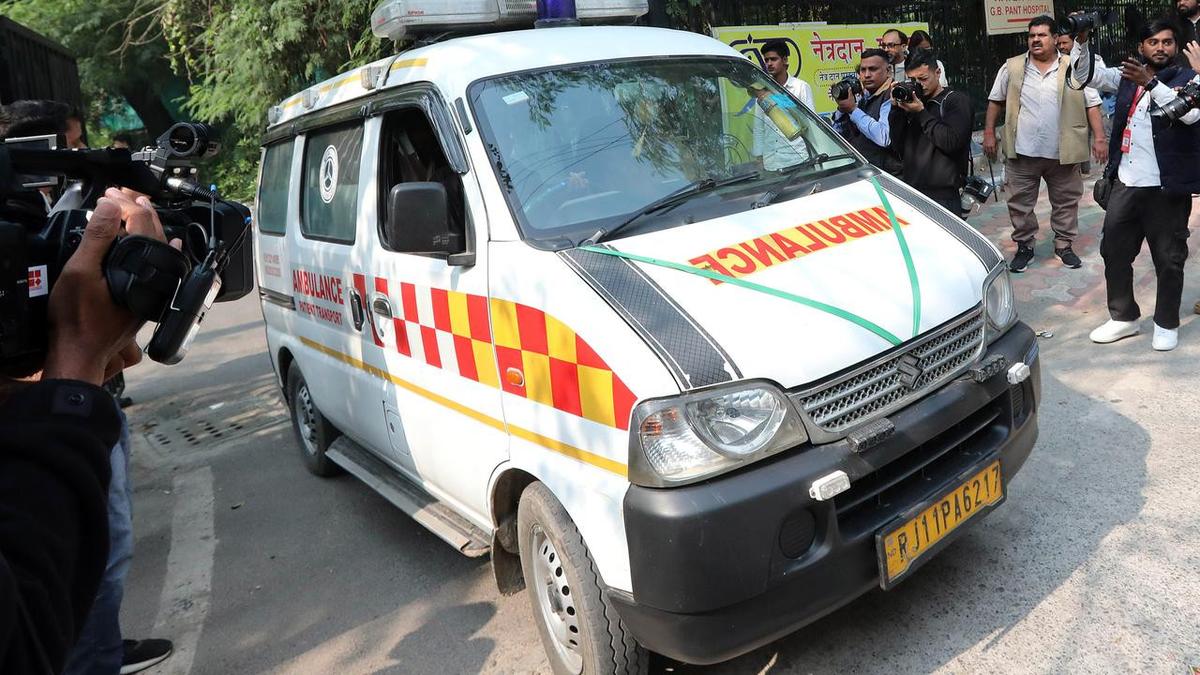
Sub-Divisional Police Officer Shivam Kumar confirmed at least six deaths in early statements, adding: "It is being said that people were electrocuted, which led to a stampede-like situation. We can tell you the exact reason only after verifying everything." Injured devotees were rushed to Sadar Hospital, with several reported in serious condition. Newsonair specifically noted that all seven of the deceased were women.
Bamboo Barricades and 50,000 Pilgrims: Why the Setup Failed
The Ashok Dham Temple — formally the Shri Indradamaneshwar Mahadev Temple, a 12th-century Shiva shrine — draws massive crowds every Sawan Monday. This was the third Monday of the holy month. Sawan is the most auspicious period for Shiva devotees, who travel long distances to perform the Jalabhishek, a ritual water offering. Witnesses told News Mobile that relying on flimsy bamboo barriers to contain 50,000 people was "fundamentally negligent."
This is not the first time the site has turned deadly. A stampede at the same temple in August 2019 killed one person and injured 15. Just months before this incident, in March 2026, a crowd crush at the Sheetla Mata Temple in nearby Nalanda killed eight women under nearly identical conditions — severe overcrowding and rumor-driven panic, according to NDTV.
Bihar Chief Minister Issues Condolences, Opposition Sharpens Attack
Bihar Chief Minister Samrat Choudhary, who took office in April 2026, called the incident "extremely tragic and heart-wrenching" on X. He said: "Necessary instructions have been issued to the administration for the proper and expeditious treatment of the injured." It is the first major public-safety crisis for Choudhary's BJP-led cabinet. Opposition leader Tejashwi Yadav and the RJD are expected to use the tragedy to press the government on administrative failures.
The broader political context is tense. The RJD was already planning protests over recent exam paper leaks in Bihar. The Lakhisarai deaths add weight to opposition claims of governance lapses. Sociologists who study Indian crowd disasters note that women's queues are consistently "more physically confined, less policed, and highly vulnerable" when barriers fail — a pattern seen at Hathras in July 2024, where 121 people died at a religious gathering in Uttar Pradesh.
Experts Push for Steel Barriers, Train Coordination, and Digital Ticketing
Safety experts are calling for urgent reforms at high-footfall temples. Top proposals include replacing bamboo barricades with permanent steel grilles, coordinating with Indian Railways to stagger train arrivals during peak morning prayer hours, and deploying AI-driven CCTV systems for real-time crowd density monitoring. myrtlebeachonline.com and tri-cityherald.com, citing wire reports, noted that officials acknowledge investigations are ongoing before finalizing any policy response.
Analysts also point to Tirupati's digital ticketing model — where daily entry is capped through an online token system — as a blueprint for sites like Ashok Dham. Without structural reforms, experts warn, the pattern of deadly Sawan-season crushes will continue. The Hathras disaster prompted similar calls in 2024. Those reforms were never fully implemented, and Bihar is now counting the cost again.
Sentiment
Mostly NegativePublishers
29
Articles
145
Reach
174


