Liberty Financial Earnings Update
Liberty Financial Reports Profit Growth and Announces New Special Dividend
Key Points
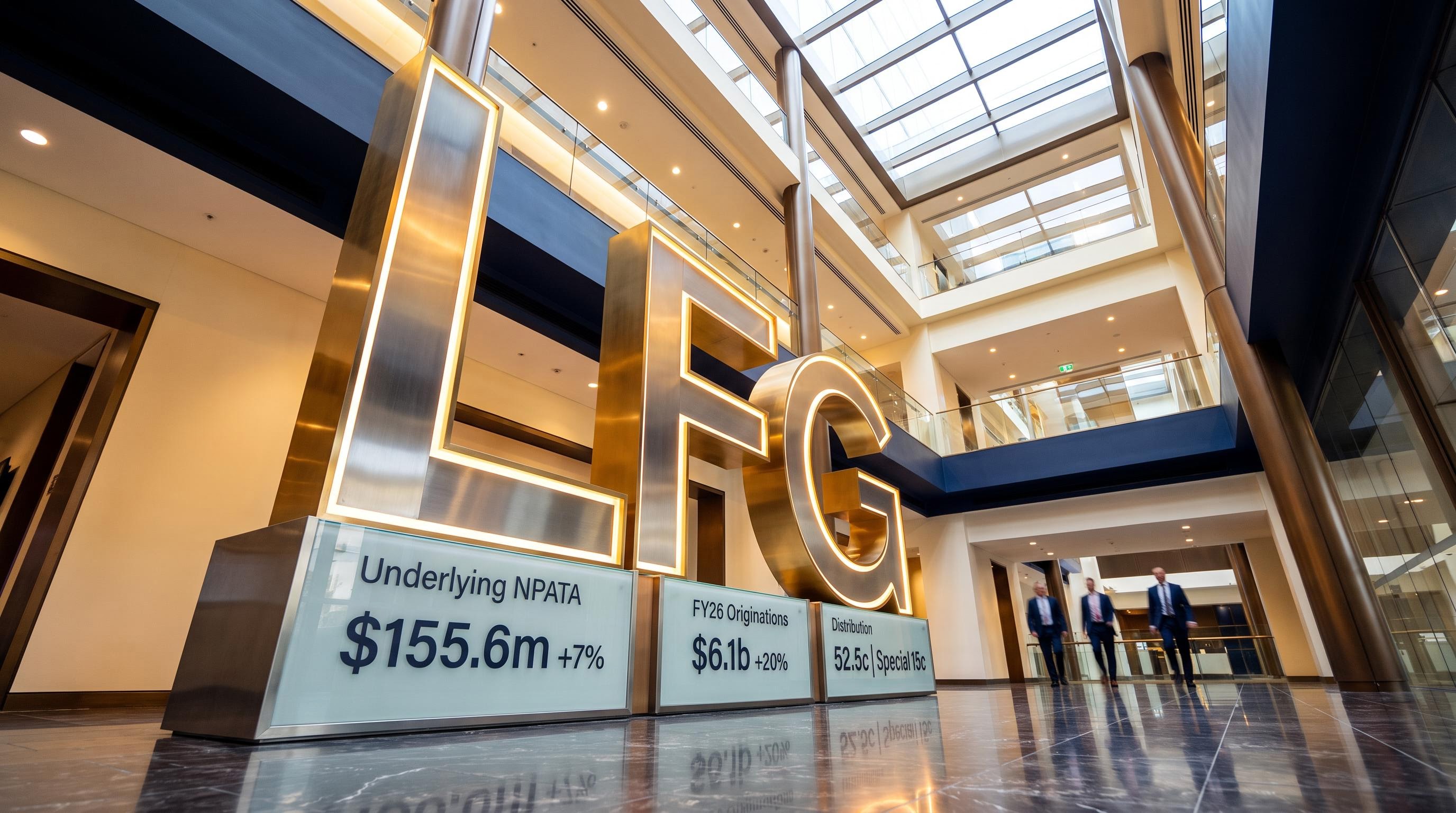
Liberty originated about $6.1 billion in new financial assets in FY26, up from $5.1 billion the prior year, helping assets under management rise to $15.2 billion.
The group reported a market-leading net interest margin of 2.50%, with return on equity of 13.1% and leverage around 14.0x, underscoring profitable growth in a competitive lending market.
Liberty raised about $4.7 billion in new funding during the year and maintained its BBB investment-grade rating, reinforcing balance-sheet strength to support growth.
The dividend announcements include an actual final unfranked distribution of 7.498564 cents per security for the June 2026 period, an interim quarterly unfranked distribution of 8 cents for the quarter ending 30 September 2026, and a fully franked special dividend of 15 cents, all payable on 21 September 2026.
FY26 revenue fell 3.5% to about $1.441 billion, while net profit after tax rose 7.8% to $143.8 million, aided by higher average assets and tighter cost management despite a softer revenue base.
Liberty Financial Group reported strong FY26 results, with net profit after tax jumping 7.8% to A$143.8 million despite revenue declining 3.5% to A$1.441 billion Kalkine. The Australian lender boosted assets under management to A$15.2 billion and announced a fully franked special dividend of 15 cents per security, rewarding shareholders with generous payouts TipRanks.
Liberty originated A$6.1 billion in new financial assets during the year, up from A$5.1 billion previously Kalkine. The company maintained its BBB investment-grade rating and plans continued growth across Australia and New Zealand, backed by disciplined cost control and strong capital management.
Strong Profit Growth Amid Softer Revenue Base
Liberty's statutory net profit after tax climbed 8% to A$143.8 million from A$133.3 million in FY25 Kalkine. This growth occurred despite a 3.5% revenue drop. The company achieved this through higher average assets and tighter cost management, demonstrating disciplined execution in a competitive lending market.
Return on equity improved to 13.1%, reflecting efficient capital deployment Summary. The company reported a market-leading net interest margin of 2.50%, helping offset weaker top-line growth and drive bottom-line profitability despite challenging market conditions.
Record Loan Origination Pushes Assets Higher
Liberty originated A$6.1 billion in new financial assets during FY26, a 20% jump from A$5.1 billion the prior year Summary. This strong origination activity lifted total assets under management to A$15.2 billion, positioning the company for sustained growth in its core lending business.
The company raised A$4.7 billion in fresh funding during the year, maintaining balance-sheet strength Summary. Strong capital generation supported the lender's ability to fund growth while maintaining its BBB investment-grade credit rating, a key metric for financial stability and future fundraising capacity.
Generous Dividend Payout Highlights Capital Strength
Liberty announced a fully franked special dividend of 15 cents per security and a final distribution of 7.5 cents, reflecting strong capital returns TipRanks. An interim quarterly distribution of 8 cents will be paid in September 2026, plus an additional quarterly payout of 0.23 cents per security Summary.
All distributions are scheduled for payment on 21 September 2026 Summary. The generous payouts underscore Liberty's confidence in earnings stability and capital position. Analysts rate the stock as a Hold with a A$3.35 price target, suggesting shares trade near fair value despite the attractive dividend yield.
Leverage and Growth Ambitions in Dual Markets
Liberty's leverage stands at around 14.0x, supporting profitable growth in a competitive lending landscape Summary. The company maintains disciplined gearing levels while investing in expansion across Australia and New Zealand, the two key markets driving its strategy.
The company's BBB rating and strong capital management position Liberty to pursue growth opportunities Summary. Management remains focused on controlled cost increases and disciplined capital deployment as it navigates an increasingly competitive financial services environment across its geographic footprint.
Sentiment
Mostly PositivePublishers
12
Articles
8
Reach
20