Student Immigration Protests
Colorado Students Walk Out at Over 160 Schools to Protest Immigration Policies
Anonymous
Key Points
1
Student Yuri Novac compared the walkout to historic civil-rights campaigns, citing the Selma-to-Montgomery march, the March on Washington and Montgomery bus boycotts as examples of protests whose participants could not know their immediate impact. His father, Andrei, who immigrated to the United States as a toddler, also attended and said, “You have people getting pulled off the street. That’s not something that should happen in this country.”
2
The Denver Gazette reported that no ICE raid on a Colorado school campus had been reported since the Trump administration began its deportation campaign, even as students said friends had been detained and carried signs comparing ICE with the KKK and Gestapo.
3
Walkout organizers urged students to ignore the adult counterprotester with the “I love ICE” sign, saying he was trying to provoke them; despite that warning, students chased him, threw water bottles and one struck him in the back of the head with a metal bottle.
4
In Greeley, students from rival schools Greeley West and Greeley Central coordinated their walkout and protest together, highlighting cross-school cooperation in the local demonstration.
5
Bre Kennedy, a 16-year-old Grandview High School junior and Colorado Youth Coalition co-founder, said the protest was driven by students seeing online reports of families being separated and children deported, describing those reports as “sickening.”
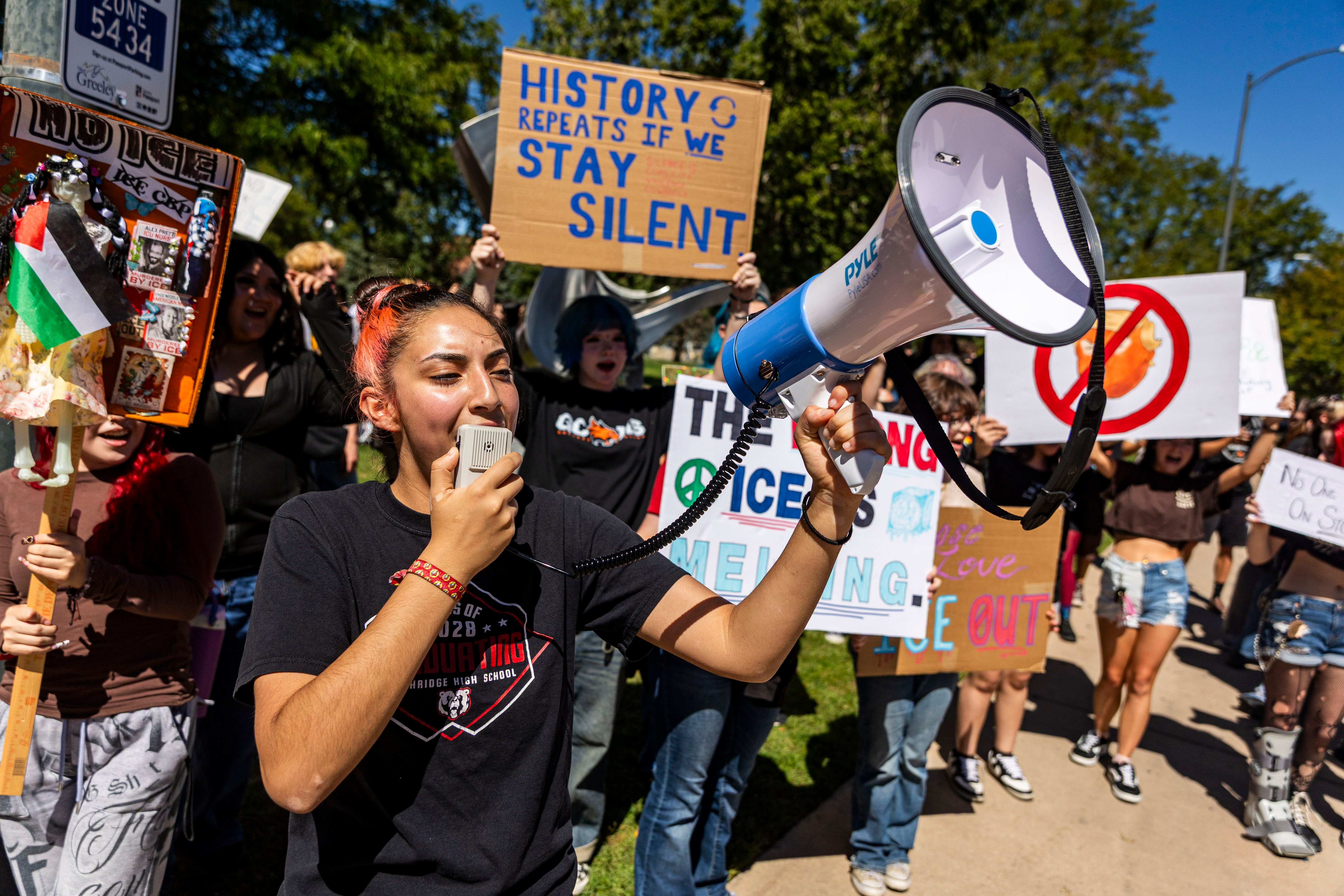
More than 160 Colorado schools saw student walkouts on September 4, with organizers claiming over 200 participated. CBS News reported that students left classrooms to protest federal immigration enforcement and alleged raids targeting their classmates and families. Demonstrations occurred across Denver, Boulder, Greeley and other communities, organized by groups like the Colorado Youth Coalition and 50501 Colorado.
Students demanded safety, dignity, and an end to family separations. Denver 7 noted that while school districts acknowledged First Amendment rights, they warned that absences could be unexcused. The Denver protest became tense when students confronted counterprotesters, resulting in The Denver Gazette reporting five assaults, three hospitalizations, and two graffiti citations.
Students Compare Walkout to Civil Rights History
Yuri Novac, a student demonstrator, connected the protest to landmark moments. He cited the Selma-to-Montgomery march, the March on Washington, and Montgomery bus boycotts as examples where participants couldn't predict immediate impact. His father Andrei, who immigrated as a toddler, also attended and told CBS News: "You have people getting pulled off the street. That's not something that should happen in this country."
Krystal 93 reported that Bre Kennedy, a 16-year-old Grandview High School junior and Colorado Youth Coalition co-founder, said students were driven by seeing online reports of family separations and children being deported. She described those reports as "sickening." The walkouts reflected growing opposition among young people to Trump administration immigration policies.
Greeley Schools Unite Across Rival Lines
In Greeley, a key moment showed cross-school unity. Students from rival schools Greeley West and Greeley Central coordinated their walkout and protest together, AOL reported. This cooperation highlighted how shared concerns about detention and family separation transcended typical school rivalries. The joint action helped convert separate walkouts into a statewide mobilization.
Confrontation With Counterprotester Turns Violent
Denver's demonstration became tense when students encountered adult counterprotesters, including one carrying an "I love ICE" sign. The Denver Gazette reported that organizers urged students to ignore the provocation. Despite warnings, students chased him, threw water bottles, and one struck him in the back of the head with a metal bottle.
The confrontation shifted public attention from immigration-policy demands to questions of protest discipline and public safety. The Denver Gazette documented five assaults, three hospitalizations, and two graffiti citations, with investigations ongoing. Organizers emphasized that maintaining nonviolent discipline was essential to preserving the movement's credibility and broadening support.
No Campus ICE Raids Reported Despite Student Fears
The Denver Gazette reported that no ICE raid on a Colorado school campus had occurred since the Trump administration began its deportation campaign. Yet students held signs comparing ICE to the KKK and Gestapo, reflecting their fears about enforcement. Many organizers said students or people they knew had been directly affected by immigration enforcement actions.
Sentiment
Mostly NegativeNEGATIVENEUTRALPOSITIVE
Publishers
15
Articles
25
Reach
40
A
AnonymousAuthor


