Senkaku Islands Dispute Escalates
Japan Expels Chinese Coast Guard Vessels from Senkaku Waters Amid Rising East China Sea Tensions
Anonymous
Key Points
1
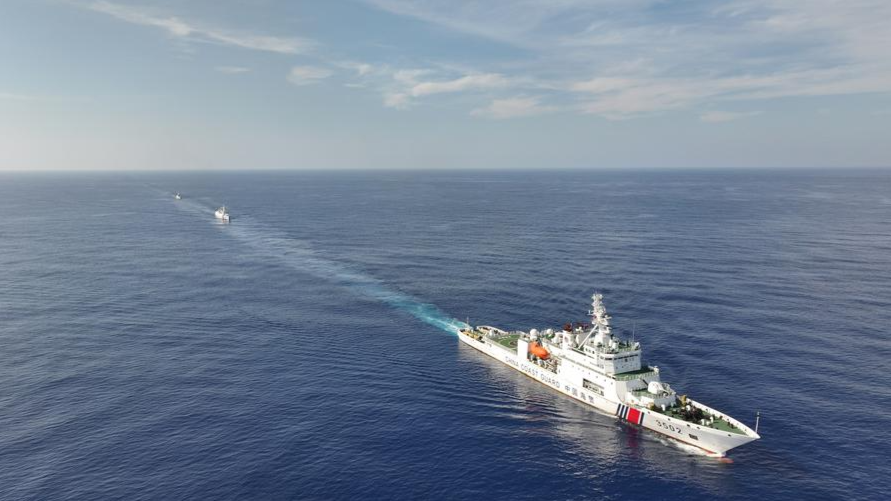
Two Haijing (China Coast Guard) vessels penetrated into Japanese territorial waters off Taisho Island in the Senkaku/Diaoyu chain around 2:25 a.m., and had withdrawn by about 9:20 a.m., as Japan deployed coast guard assets to protect a nearby fishing vessel.
2
The Japanese fishing vessel involved was named Zuihou Maru; Beijing’s coast guard later asserted that Zuihou Maru intruded into Chinese waters and that Chinese vessels warned and expelled it.
3
The incident is framed within a broader, long-running Senkaku/Diaoyu dispute and is cited as part of a pattern of frequent maritime patrols by both sides in the East China Sea.
4
Beyond the immediate clash, China’s broader Taiwan-related stance is highlighted by reports that Beijing has tightened trade restrictions and travel advisories against Japan in response to Tokyo’s Taiwan-related remarks.
Japan forced two Chinese coast guard ships out of waters near the disputed Senkaku Islands on July 7, after the vessels entered Japanese territorial waters around 2:25 a.m. local time. The ships withdrew by about 9:20 a.m., according to Ratopati. Japan deployed extra coast guard assets to protect a nearby Japanese fishing boat during the standoff.
China immediately disputed Tokyo's account. Beijing said its coast guard had done the expelling — not Japan. The China Coast Guard claimed it had warned and driven out the Japanese fishing vessel, named Zuihou Maru, from Chinese waters, according to Global Times.
Two Ships Enter Japanese Waters Off Taisho Island
Four Chinese coast guard vessels were operating near the Senkaku Islands on the morning of July 7. Two of them crossed into what Japan considers its territorial waters off Taisho Island, according to Head Topics. Japan's coast guard issued repeated warnings before the ships finally turned back. The entire intrusion lasted roughly seven hours.
Tokyo called the entry a clear violation of international law. Japan pledged what it described as a calm but firm response to protect its waters. Japanese coast guard ships stayed close to the Zuihou Maru throughout the incident to keep the fishing vessel safe, Ratopati reported.
Beijing Flips the Story: China Says It Did the Expelling
China's coast guard released a sharply different version of events. The CCG said the Japanese fishing boat Zuihou Maru was the intruder, and that Chinese vessels had lawfully warned and expelled it from waters near Chiwei Yu — China's name for the same island, according to China Daily Asia.
The date added a symbolic edge to Beijing's statement. July 7 marks the 89th anniversary of the Marco Polo Bridge Incident, the start of Japan's full-scale invasion of China in 1937. Global Times noted that timing in its coverage, framing the CCG's action as lawful enforcement.
First Intrusion Since June 10 in a Long-Running Dispute
This was the first time Chinese official ships entered Japanese-claimed waters near the Senkakus since June 10, according to 24 News HD. But it fits a well-worn pattern. Both Japan and China run frequent maritime patrols in the East China Sea. Each side regularly accuses the other of illegal entry.
Japan controls the uninhabited Senkaku Islands. China calls them the Diaoyu Islands and claims them as its own. The dispute has simmered for decades and shows no sign of resolution. Both governments have coast guard ships in the area on a near-constant basis.
Taiwan Tensions Add Fuel to Japan-China Friction
The Senkaku clash does not stand alone. Tokyo-Beijing relations have grown sharper in recent months over Taiwan. China has reportedly tightened trade restrictions against Japan and issued travel advisories in response to Tokyo's remarks supporting Taiwan, according to Ratopati.
That broader friction gives incidents like this one more weight. A routine fishing boat dispute near a remote island now lands inside a much larger argument over regional security, trade, and who controls the waters of the East China Sea.
Sentiment
Mostly NegativeNEGATIVENEUTRALPOSITIVE
Publishers
11
Articles
25
Reach
36
Topics
A
AnonymousAuthor


