SDF dissolves after merging with Syrian army
SDF dissolves after merging with Syrian army
Anonymous
Key Points
1
Damascus appointed a former SDF official as deputy defense minister for the eastern region, signaling deeper integration and new command arrangements within the Syrian military.
2
A January 16 decree signed by President Ahmad al-Sharaa enshrined Kurdish national rights and recognized Kurdish as a national language in Syria.
3
The January 29 agreement formalized the merger by folding the SDF’s civilian, security, and military institutions into Syrian state structures.
4
Mazloum Abdi announced the dissolution at a news conference held at the presidential palace in Damascus.
5
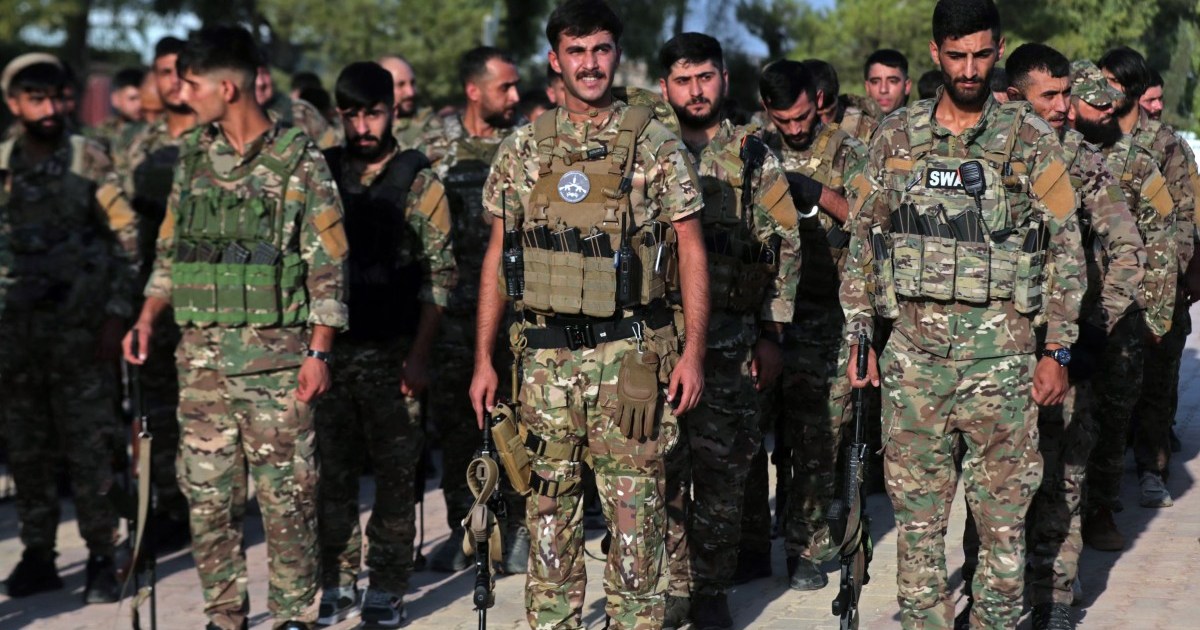
Even before the formal dissolution, several brigades had already been formed within the Syrian army for SDF members who had joined its ranks.
Syria's Kurdish-led Syrian Democratic Forces has formally dissolved after merging with the country's military, marking the end of a de facto autonomous zone that operated in the northeast for over a decade. Al Jazeera reported that Mazloum Abdi, the SDF's leader, announced the dissolution at a news conference held at the presidential palace in Damascus, signaling the group's complete integration into Syrian state structures.
The move follows a January 29 agreement that formalized the merger of the SDF's civilian, security, and military institutions into Damascus's control. Reuters noted that the SDF, which once fought the Islamic State with U.S. backing and held significant territory in northern Syria, will no longer operate as an independent force. The dissolution reflects a dramatic shift in Syria's political landscape and the region's security dynamics.
From Autonomous Zone to State Integration
The SDF controlled a de facto autonomous region in Syria's northeast for more than a decade, operating largely independently with U.S. military support. The group built civilian institutions, schools, and security forces while managing oil fields and key infrastructure. Yahoo News reported that the new Islamist-led government in Damascus moved quickly to absorb these structures into the state, eroding the SDF's autonomous status.
The integration involves folding the Autonomous Administration of North and East Syria into Syrian state institutions. Former SDF officials have taken new positions within the Syrian military hierarchy. Damascus appointed a former SDF official as deputy defense minister for the eastern region, signaling deeper structural integration within the military command.
Constitutional Rights and a New Framework
A January 16 decree signed by President Ahmad al-Sharaa established new protections for Kurdish rights in Syria. The order recognized Kurdish as a national language alongside Arabic and enshrined Kurdish national rights in the country's legal framework. Al Jazeera reported that Abdi described the move as entering a new phase that secures constitutional protections for Kurds while building a unified Syrian state.
The formal January 29 agreement completed the legal framework for the merger. Several brigades have already been formed within the Syrian army for SDF members joining its ranks. The arrangement creates a structured pathway for former SDF fighters to transition into the national military while maintaining organizational units based on their prior service.
U.S. Realignment and Regional Shifts
The SDF's dissolution reflects wider changes in Syria following the fall of the Assad regime and Washington's diplomatic realignment with Damascus. Reuters noted that the Kurdish group, which once operated with strong U.S. military and political backing, faced mounting pressure as regional security dynamics shifted. Government offensive operations had already eroded the SDF's territorial control before the formal agreement.
The integration marks a major reconfiguration of Syria's security and political map. The transition consolidates state control over territories and institutions that operated semi-independently for years. Analysts view the move as the final chapter of Syria's post-2011 fragmentation, replacing multi-faction governance with unified state authority under Damascus's command.
Sentiment
Mostly NegativeNEGATIVENEUTRALPOSITIVE
Publishers
14
Articles
72
Reach
86
A
AnonymousAuthor


