Annual Bridge Walk Tradition
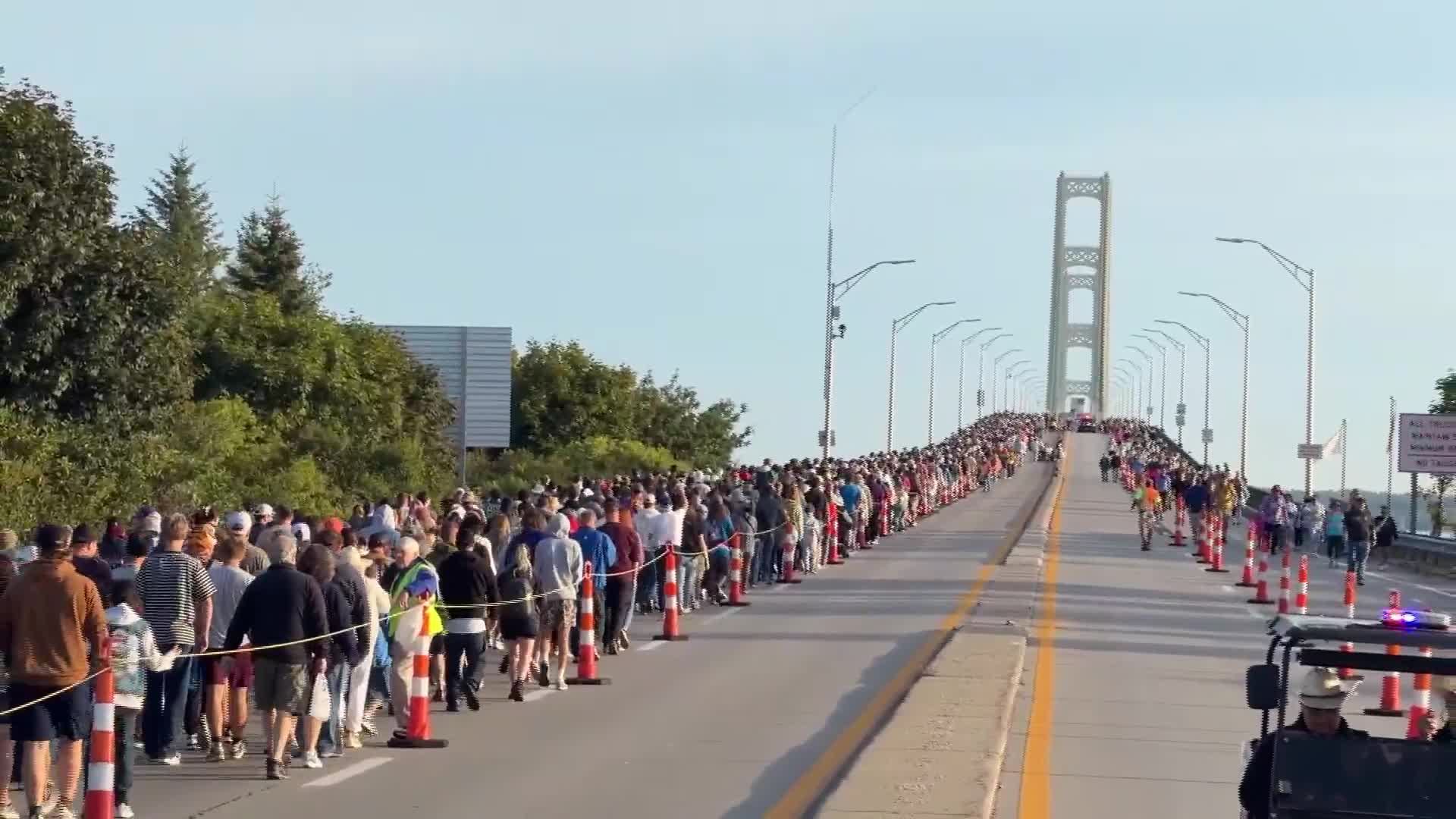
About 34,000 People Join Michigan's Annual Labor Day Mackinac Bridge Walk
Anonymous
Key Points
1
The Mackinac Bridge Authority estimates attendance using certificates distributed to walkers who complete the crossing.
2
The average participant takes about two hours to walk across the bridge.
3
Because of the event’s timing, early starters could walk the entire bridge—and potentially make a round trip—while later participants were turned around at roughly the halfway point.
4
The bridge’s main span between its two towers is 3,800 feet long, making it the third-longest suspension-bridge main span in the United States, behind the Golden Gate and Verrazzano-Narrows bridges.
5
The first walkers began at 7 a.m. and reached the suspended span around 7:30 a.m.; before the event, the bridge authority had expected approximately 35,000 participants.
Roughly 34,000 people walked across Michigan's Mackinac Bridge on Labor Day, slightly topping last year's 33,000 walkers and marking one of the highest turnouts in recent years. Soo Leader reported the free, unregistered event let participants cross the roughly five-mile bridge connecting Michigan's two peninsulas, with the structure closed to all vehicle traffic from 6:30 a.m. until noon. Gov. Gretchen Whitmer, whose term ends in January, joined the walk for her final time as governor.
The Mackinac Bridge Authority estimates attendance by counting certificates given to walkers who complete the crossing. WKZO noted the turnout placed 2026 among the upper end of recent years, continuing a pattern of stable participation between roughly 21,000 and 35,000 since 2018.
A Five-Mile Walk Across the Straits
The bridge stretches approximately five miles across the Straits of Mackinac, with a main suspension span of 3,800 feet—the third-longest in the United States, behind the Golden Gate and Verrazzano-Narrows bridges. 9and10news reported that walkers could start from either Mackinaw City or St. Ignace and had roughly two hours to cross. Early starters who began at 7 a.m. reached the suspended span around 7:30 a.m. and could walk the entire bridge, while later participants were turned around at roughly the halfway point.
A Civic Ritual Held Annually Since 1958
The Mackinac Bridge Walk has become a Michigan tradition, held every year since 1958 except for 2020. The consistent turnout—ranging from about 21,000 to 35,000 participants over the past several years—shows the event functions as a durable civic ritual rather than a fleeting tourism draw. Each Labor Day, the bridge transforms from a vehicle corridor into a pedestrian gathering place, temporarily reversing its primary function to serve the community.
Infrastructure Becomes Public Space for One Morning
For roughly five and a half hours each Labor Day, the Mackinac Bridge closes entirely to vehicle traffic. The bridge authority stops all cars at 6:30 a.m., allows pedestrians from both peninsulas to begin their crossing, and reopens the bridge to vehicles at noon. Walkers must arrange their own return transportation after making a one-way crossing. This carefully managed schedule turns a critical infrastructure link into shared public space while maintaining strict access and reopening procedures to handle the large crowds.
Sentiment
Mostly PositiveNEGATIVENEUTRALPOSITIVE
Publishers
22
Articles
32
Reach
54
A
AnonymousAuthor


