Widespread CrossCountry Rail Disruptions
Birmingham Power Cut Disrupts CrossCountry Rail Services Across England and Wales
Key Points
Cardiff Central to Nottingham route details: the service runs via Newport, Severn Tunnel Junction, Caldicot, Chepstow, Lydney, Gloucester, Cheltenham Spa, Birmingham New Street and Derby before reaching Nottingham.
"A power cut in Birmingham city centre has affected the building where our control centre is located. As a result, many of the systems our control teams use to manage the railway are currently unavailable."
West Midlands disruption: Express & Star reports that all CrossCountry routes will be withdrawn in the West Midlands, with the exception of the Peterborough–Cambridge–Stansted Airport corridor.
Near-normal service is expected on the Peterborough–Cambridge–Stansted Airport corridor, while the rest of the CrossCountry network experiences significant reductions.
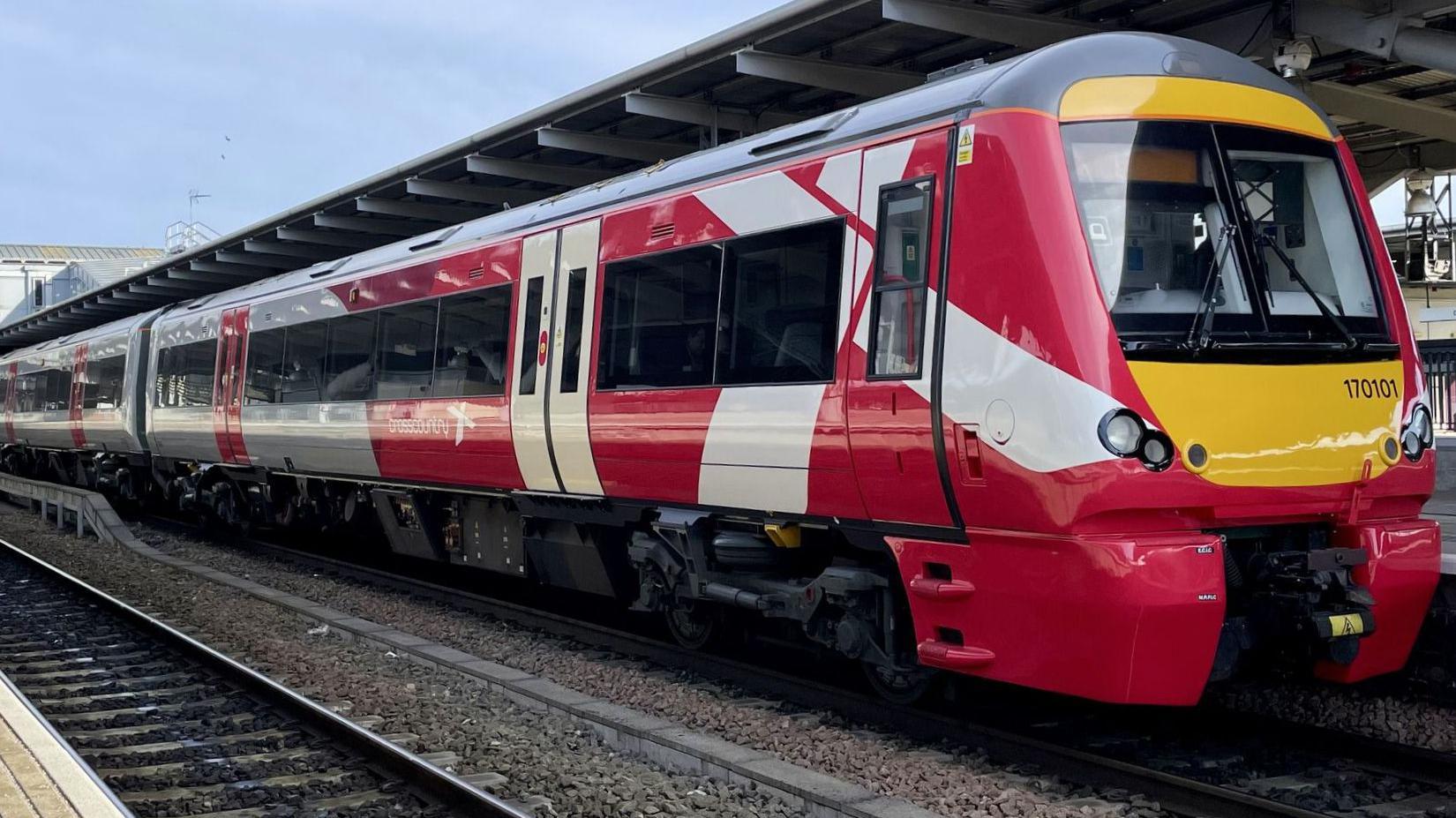
A power outage in Birmingham city centre on Saturday knocked out CrossCountry's control centre, crippling train operations across Wales and the Midlands on Sunday, August 23. Bournemouth Echo reports that almost all CrossCountry routes were withdrawn until further notice, with only the Peterborough–Cambridge–Stansted Airport corridor expected to run near normally. The operator said Bournemouth Echo that "many of the systems our control teams use to manage the railway are currently unavailable."
Passengers traveling on routes like Cardiff Central to Nottingham and Cardiff to Cheltenham Spa faced significant cancellations and reductions. AOL reports that CrossCountry urged travelers to check journeys before traveling, with ticket acceptance available through other operators and Delay Repay compensation for delays of 30 minutes or more. The disruption affected train services across England and Wales as the operator worked to restore systems.
How a Birmingham Power Cut Shut Down the Network
The power outage struck the building housing CrossCountry's control centre in Birmingham city centre on Saturday. Cedar News reports this caused many critical railway management systems to become unavailable, forcing the operator to withdraw services across almost its entire network. The control centre handles operations for routes spanning Wales, England, and connections to Scotland.
This single point of failure exposed how dependent modern rail networks are on centralized control systems. When those systems go dark, trains cannot be safely dispatched or managed across the entire network. Northern Echo reported that CrossCountry had no alternative processes ready to handle full operations without these central systems.
One Route Escapes the Worst of the Disruption
While nearly every CrossCountry route faced withdrawal, one corridor remained largely unaffected. Express and Star reported that the Peterborough–Cambridge–Stansted Airport corridor was expected to run near normally on Sunday. This route's independence from the Birmingham control centre allowed it to continue operations using alternative management processes.
The preserved corridor connects major transport hubs and serves one of England's busiest airports. CrossCountry prioritized this route because of its importance to national rail connectivity. Passengers on other routes faced far more severe disruptions, with many services cancelled entirely throughout the day.
Passengers Left Scrambling for Alternative Travel Plans
Travelers faced chaos across Wales and the Midlands as cancellations cascaded through the Sunday schedule. Yahoo reports that CrossCountry urged passengers to seek refunds or alternative arrangements through their original point of purchase and National Rail Enquiries. Ticket acceptance with rival operators provided some relief but could not accommodate all displaced passengers.
The operator promised to operate as many trains as possible using alternative processes as systems came back online. Passengers were advised to check real-time updates before traveling, as restoration times remained uncertain. Compensation through Delay Repay was available for those experiencing 30-minute delays, though many faced complete service cancellations rather than delays.
System Recovery and Gradual Service Restoration Underway
CrossCountry and its partners worked to restore the control centre's systems throughout Sunday. The company expected to provide regular updates as power was restored and systems came back online. Full restoration of services across all routes depended on getting the Birmingham control centre fully operational.
This incident highlighted the risks of relying on a single control centre for an entire rail operator's network. Without backup systems or distributed control, a single power failure could paralyze hundreds of daily services. Industry observers noted that network resilience improvements may follow this major disruption.
Sentiment
Mostly NegativePublishers
43
Articles
140
Reach
183


