Open Middle Seat
United Airlines Introduces Open Middle-Seat Economy Plus on New A321XLR Flights
Anonymous
Key Points
1
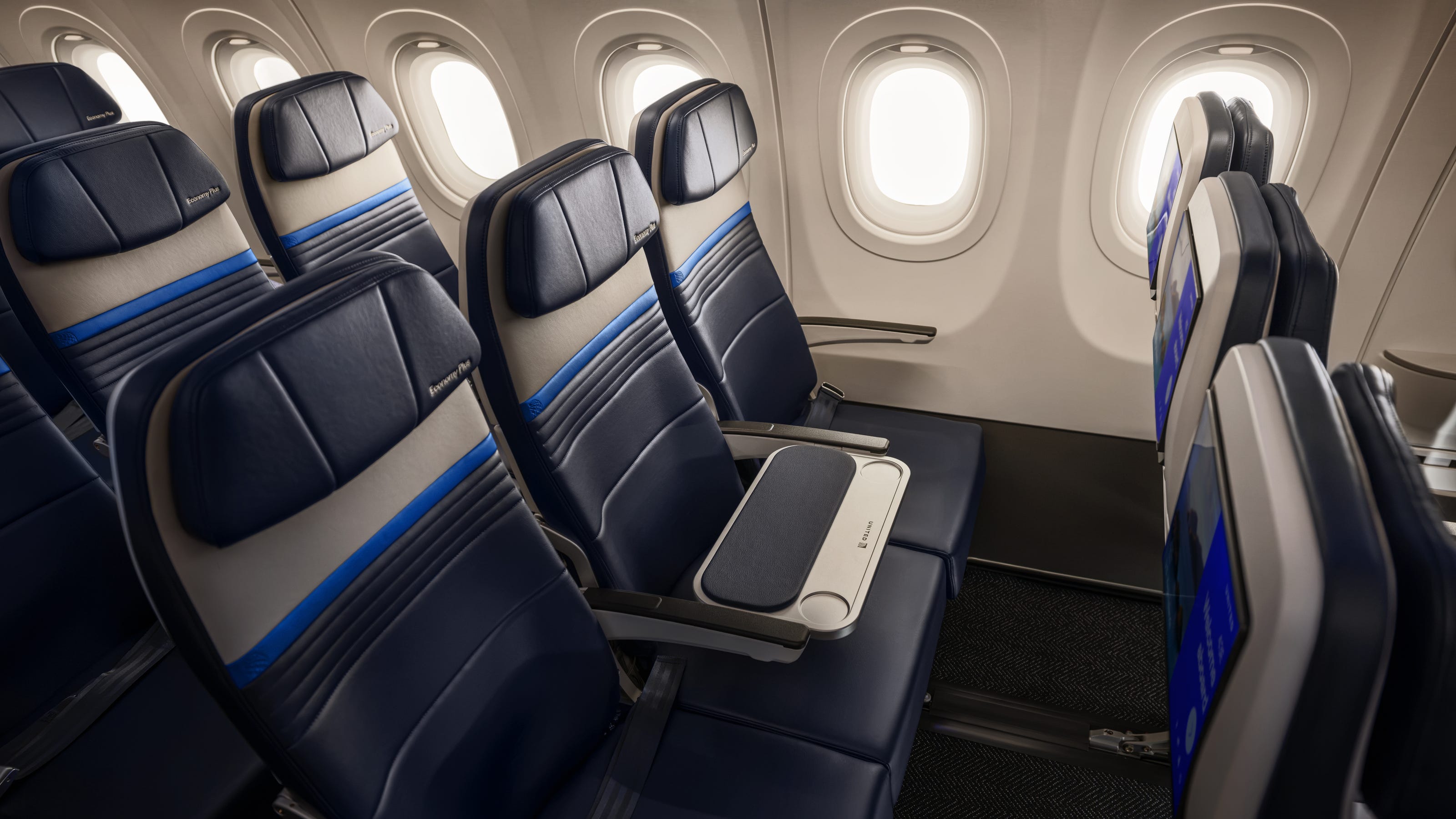
The fixed middle-seat table spans armrest-to-armrest across the open gap in the middle of the row, is permanently fixed, has a soft leather-like surface, and includes two indentations to hold cups.
2
In addition to the elbow room, the row features a dedicated entertainment element with a 13-inch 4K in-flight display integrated per seat area.
3
The A321XLR will include Polaris Studio business-class suites with sliding privacy doors, complemented by a cabin that includes 32 premium seats on the aircraft.
4
United’s XLRs are described as part of a broader fleet modernization effort, with the cabin upgrade accompanied by universal high-end displays (4K OLED screens) planned for passenger entertainment.
United Airlines is removing the middle seat from select Economy Plus rows on its new Airbus A321XLR, replacing it with a fixed shared table that gives window and aisle passengers extra elbow room. The airline says it will be the only U.S. carrier to offer this option, and plans to install it across all 50 of its A321XLRs. Business Travel Executive reports the seats go on sale later this year, with domestic service starting this fall and international routes launching by early 2027.
The table sits permanently in the middle gap, spans armrest-to-armrest, has a soft leather-like surface, and includes two cup-holder indentations. It cannot be booked as a seat. Passengers on either side still get the standard three extra inches of legroom that come with Economy Plus.
How the Open-Middle Table Actually Works
The fixed table replaces just one row per cabin — not the whole Economy Plus section. CW39 reports the middle position is marked as non-bookable, so passengers buying window or aisle seats in that row automatically get the open gap. The surface is described as leather-like and includes two small indentations designed to hold cups or drinks.
Each seat in that row also gets a dedicated 13-inch 4K in-flight entertainment screen. That is the same high-resolution display technology United plans to roll out across the entire A321XLR cabin. The setup mirrors what European airlines call "Eurobusiness" — a business-class feel at economy prices.
A321XLR Cabin Has More Than Just the Open Row
The A321XLR is not just about the middle-seat table. United is fitting the plane with Polaris Studio business-class suites that have sliding privacy doors. The forward cabin holds 32 premium seats total. Newsy Today describes the aircraft as a "premium, flexible narrowbody" built for longer international routes that smaller planes have not traditionally served.
United is also introducing what it calls a "Relax Row" on other aircraft as part of a broader push to give passengers more seating choices. The XLR rollout is framed as part of a larger fleet modernization, with 4K OLED screens planned across cabins. Pricing for the open-middle row has not yet been disclosed.
Staffing Math May Have Driven the Middle-Seat Decision
There is a practical reason behind blocking the middle seat beyond passenger comfort. GURUfocus notes the change is tied to staffing logic — removing bookable seats from a row can reduce the number of flight attendants required per aircraft under FAA crew-ratio rules. Fewer seats can mean fewer required crew members, which lowers operating costs.
United has not publicly emphasized this angle, instead focusing on passenger experience and the "extra elbow room" benefit. But the dual benefit — better optics for travelers and lower staffing costs for the airline — makes the open-middle concept more financially appealing than it might first appear.
United Claims a First Among U.S. Airlines
United says no other American airline is offering this kind of built-in open-middle configuration on a narrowbody jet. The 50 A321XLRs on order give it a significant head start. CW39 reports the airline expects to begin selling tickets for these seats before the end of this year, with the first domestic flights coming this fall.
International routes using the XLR are not expected until early 2027. Destinations have not yet been announced. The A321XLR's extended range — longer than standard A321s — opens up thinner transatlantic and transpacific routes that previously required larger, more expensive widebody aircraft.
Sentiment
Mostly PositiveNEGATIVENEUTRALPOSITIVE
Publishers
47
Articles
104
Reach
151
A
AnonymousAuthor


