Korean Temple Matchmaking
South Korean Buddhist Temple Hosts Matchmaking Retreats to Combat Nation's Record Low Birthrate
Anonymous
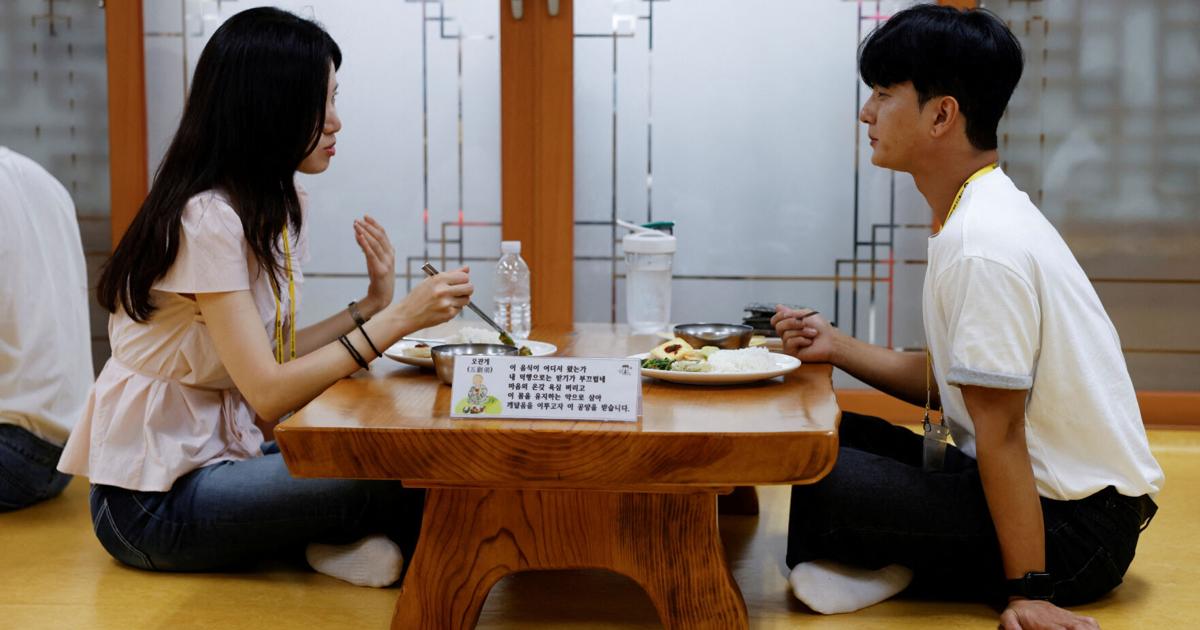
A Buddhist temple in South Korea has produced its first baby from a matchmaking retreat program — a milestone that has grabbed national attention amid the country's record-low birthrate. The child was born on July 16, 2026, to a couple who met at Naksansa Temple in August 2024, married in October 2025, and are now parents of a healthy boy, according to Bismarck Tribune.
The program, called "Naneun Jeollo" (I'm Going to the Temple), is run by the Jogye Order of Korean Buddhism. It pairs 10 men and 10 women for a two-day retreat filled with trust-building exercises. South Korea recorded a total fertility rate of just 0.72 births per woman in 2023 — the lowest of any country in the world. The program is one small but symbolic attempt to change that, The Eagle reported.
4,225 Applicants Compete for Just 20 Spots
Demand for the July 11–12, 2026 retreat at Naksansa Temple was staggering. A total of 4,225 people applied for just 20 spots — 10 men and 10 women. That means an overall competition rate of 211 to 1. Women faced even tougher odds: 2,570 women competed for 10 spots, a ratio of 257 to 1, according to Fremont Tribune.
The results at Naksansa were strong. Five out of 10 pairs chose each other as couples — a 50% match rate. Across three major 2026 events, 19 couples formed out of 64 total participants. The program has now produced 3 confirmed marriages, with 5 to 6 more couples actively talking about getting married, Auburn Pub reported.
Blindfolded Walks and Beach Yoga Replace Bars and Apps
The retreat is built around trust, not small talk. Participants take blindfolded walks along Naksansa's "Wish-Granting Path," where one partner must safely guide the other. They also do beach plogging — jogging while picking up litter — along the Yangyang coast. One-on-one tea conversations and beach yoga help break down social anxiety, according to Press of Atlantic City.
Choi Ye-ri, a 30-year-old participant at the July 2026 event, said young Koreans do want to date and marry. What they want is a way to screen out untrustworthy partners first. The temple setting strips away the usual pressure of South Korean dating culture, where salary, education, and family background are often the first things evaluated, WCF Courier reported.
South Korea Has Spent $270 Billion and Still Shrinking
South Korea's population crisis is severe. The country of 51.8 million people is projected to shrink by one third by 2072. Over half the population will be 65 or older by then. For 20 years, the government has spent more than 360 trillion won — roughly $270 billion USD — on housing subsidies, cash payouts, and childcare leave. None of it has reversed the trend, according to Elko Daily.
There are small signs of hope. South Korea's fertility rate rose from 0.72 in 2023 to 0.75 in 2024, then to 0.80 in 2025 — the first back-to-back rise in years. But the rate is still far below the 2.1 needed to keep the population stable. Young Koreans continue to cite high housing costs, brutal work culture, and gender tensions as reasons to skip marriage, Wisc News reported.
Temple's First Baby Signals a New Role for Buddhism
Yoo Cheol-ju, a spokesperson for the Jogye Order Social Welfare Foundation, called the July 16 birth a landmark moment. "As 'Naneun Jeollo' is a project to overcome the low birthrate, the birth of the first baby is more joyful and welcome than anything else," he said, according to Helena Independent Record.
Venerable Doryun, the program's lead coordinator, said he hopes the retreat becomes "a time to reflect on the low birthrate issue and to think about alternatives for our future." The Jogye Order now plans to expand the program beyond Seoul, taking it to regions across the country. The program is open to people of any faith — or no faith at all, Billings Gazette reported.
Sentiment
NeutralNEGATIVENEUTRALPOSITIVE
Publishers
26
Articles
27
Reach
29
A
AnonymousAuthor


