Campaign Finance Shift
Supreme Court Ends Federal Limits on Coordinated Campaign Spending, Reshaping Election Finance
Anonymous
Key Points
1
The Supreme Court’s ruling was accompanied by official support from the FEC under the Trump administration, which sided with the challengers seeking to overturn the coordinated spending caps.
2
The challenge was brought by the National Republican Senatorial Committee and the National Republican Congressional Committee, backed by the campaigns of JD Vance and Steve Chabot, in a case centered on coordination with candidates.
3
FECA—the Federal Election Campaign Act enacted in 1974 to curb fundraising and spending by parties—has now been undermined by the Court, which sits within a broader conservative trend away from campaign-finance restrictions since Citizens United.
4
Before the ruling, coordinated spending caps could reach roughly $3.95 million for Senate races and about $127,200 for House races in certain states; the decision eliminates those caps for coordinated party expenditures in connection with candidates.
5
Analysts characterized the decision as a major political victory for Republicans, with observers noting the party’s enhanced leverage in funding and advertising; for example, Sean Cooksey of the BGR Group told The Post that Republicans are in the driver’s seat because of their cash advantage.
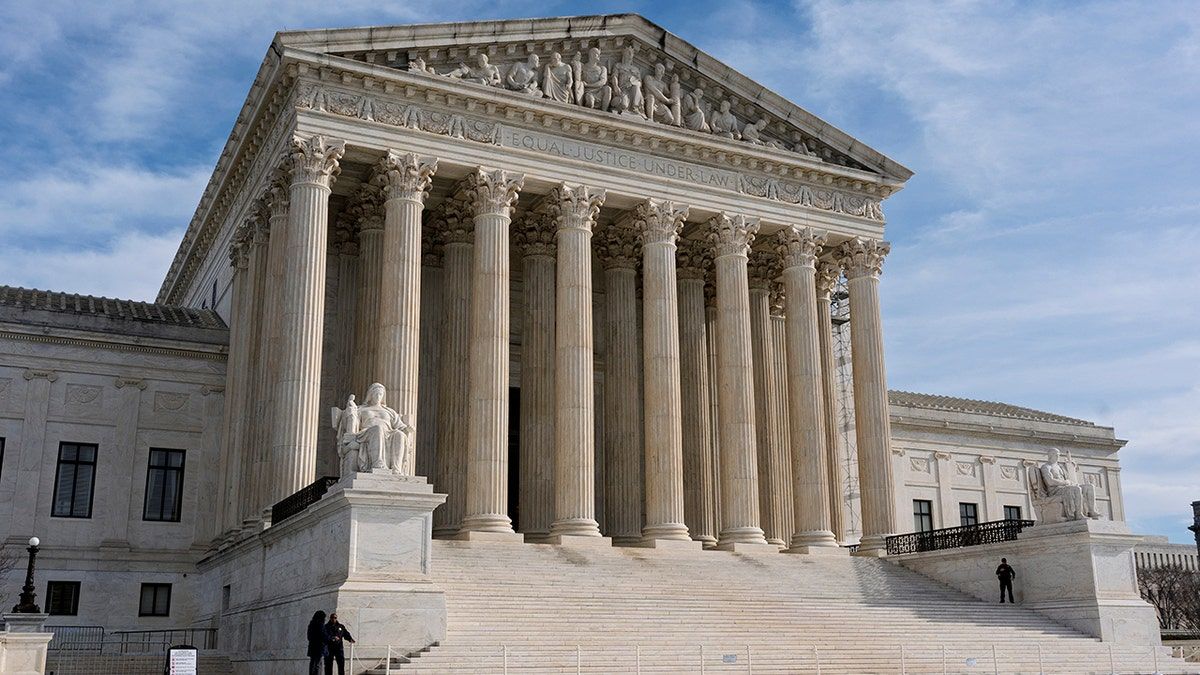
The Supreme Court struck down federal limits on coordinated campaign spending Monday, ruling 6-3 that caps on how much political parties can spend alongside their candidates violate the First Amendment. Fox News reported the decision in *NRSC v. FEC*, authored by Justice Brett Kavanaugh, immediately reshapes how parties and candidates can pool money ahead of the 2026 midterms.
Before the ruling, coordinated spending caps reached roughly $3.95 million for Senate races and $127,200 for House races. Those limits are now gone. CNBC reported the decision follows a long line of conservative-majority rulings that have chipped away at campaign-finance law since *Citizens United* in 2010.
How the Case Reached the Supreme Court
The challenge was filed in November 2022 by the National Republican Senatorial Committee (NRSC) and the National Republican Congressional Committee (NRCC). Then-Senator J.D. Vance and then-Representative Steve Chabot joined as plaintiffs. They argued the caps stopped them from unifying their campaign message with party committees. The Independent noted the Sixth Circuit Court of Appeals had upheld the limits in September 2024, citing the 2001 precedent *Colorado II*.
The Supreme Court agreed to hear the case in June 2025. Oral arguments were held in December 2025. The Trump administration's Justice Department refused to defend the law, so the Court appointed outside lawyer Roman Martinez to argue for the caps. That left the Federal Election Commission, under Trump-era leadership, effectively siding with the challengers.
Kavanaugh's Ruling Breaks With 2001 Precedent
Justice Kavanaugh wrote that the spending limits are
Justice Elena Kagan wrote the dissent, joined by Justices Sotomayor and Jackson. She warned the ruling
Republicans Gain a Clear Advertising Advantage
The ruling hands parties a concrete financial edge. Under federal law, candidates pay the lowest available rate for TV ads. Previously, parties spending on coordinated ads often had to pay higher rates. Now, parties can buy unlimited ads at the cheaper candidate rate by coordinating directly. That means advertising budgets stretch much further, CNBC noted.
Republicans stand to benefit most right now. Sean Cooksey of the BGR Group told The Washington Post that the GOP is
Campaign Finance Guardrails Keep Falling After Citizens United
Congress passed the Federal Election Campaign Act in 1974 after Watergate to limit party fundraising and spending. The new ruling guts a core piece of that law. The Independent reported that critics say parties will now act as a
Total spending for the 2026 midterm cycle is already projected to exceed $10.8 billion, which would make it the most expensive midterm in U.S. history. The NRSC spent $15.5 million and the NRCC spent $8.3 million on coordinated expenditures in the 2021–2022 cycle alone — while still operating under the old caps. Those figures are now set to climb sharply with no legal ceiling in place.
Sentiment
Mostly NegativeNEGATIVENEUTRALPOSITIVE
Publishers
113
Articles
871
Reach
984
A
AnonymousAuthor


