Honoring the Man in the Red Bandana
Trump Awards Posthumous Medal of Freedom to 9/11 Hero Welles Crowther
Anonymous
Key Points
1
Survivor Judy Wein’s 2002 account helped identify Crowther: she recalled a rescuer whose mouth and nose were covered by a red bandana and who directed victims toward a stairwell. Crowther’s mother, Alison, recognized the description because her son had carried a red bandana since childhood.
2
Crowther made three trips from the 78th floor of the South Tower, repeatedly going back into the burning building to reach additional victims who had nearly lost hope of escape.
3
The 21-foot steel beam was transported across the country as part of the Steel Across America initiative before being displayed at the White House ceremony, serving as a traveling reminder of the attacks.
4
The Red Bandana Project grew from the Welles Remy Crowther Charitable Trust and was developed with educators as a social and emotional learning program covering leadership, caring for others, teamwork, bridging divides, forgiveness and “carpe diem.”
5
The broader 25th-anniversary observances include Trump’s planned remarks at the Pentagon and Vice President Vance’s attendance at a Ground Zero memorial service alongside former Presidents Bill Clinton, George W. Bush, Barack Obama and Joe Biden.
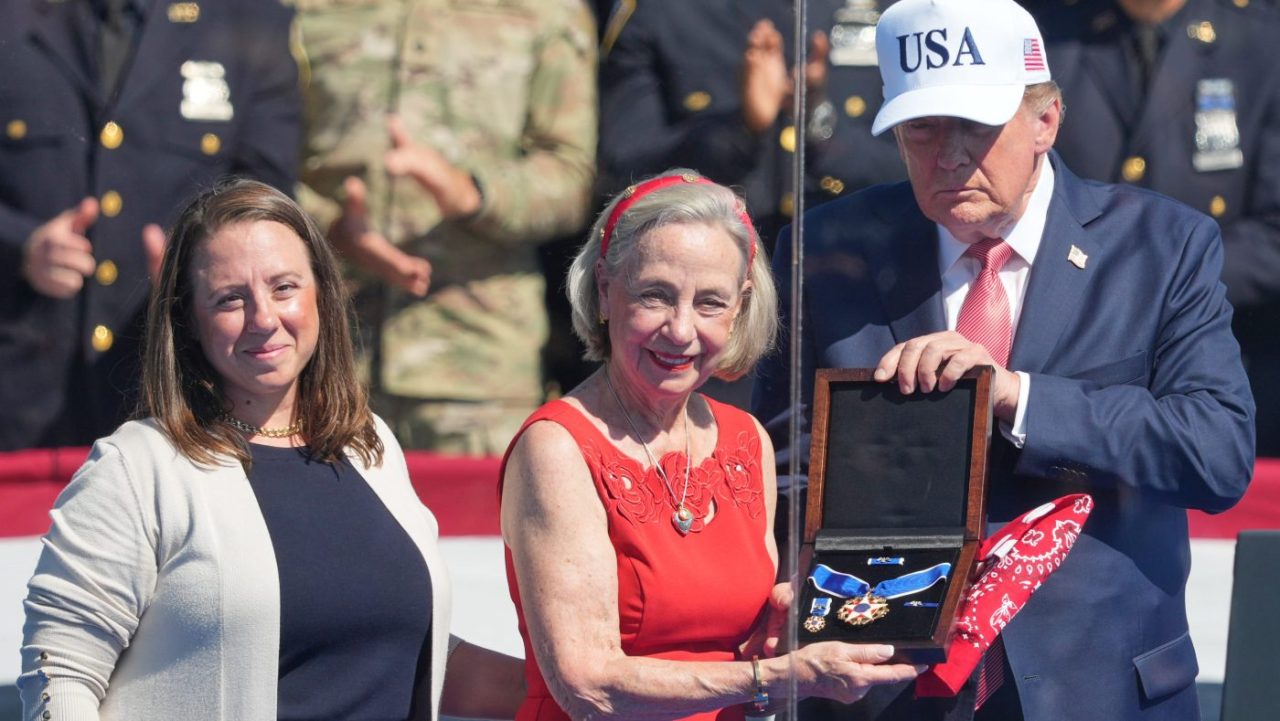
President Trump posthumously awarded the Presidential Medal of Freedom to Welles Crowther, the 24-year-old equities trader and volunteer firefighter known as the "Man in the Red Bandana," during a White House ceremony marking the 25th anniversary of the September 11 attacks. WHDH reported that Crowther made repeated trips through the burning South Tower after it was struck by United Airlines Flight 175, guiding approximately 18 people to safety before the building collapsed. His mother, Allison, and sister, Paige, accepted the nation's highest civilian honor on his behalf.
The ceremony at the White House Ellipse featured a 21-foot steel beam weighing 16,900 pounds, recovered from the World Trade Center rubble and transported across America as part of the "Steel Across America" initiative. Allison said the recognition would be treasured by the family for generations, while Crowther's legacy continues through the Red Bandana Project, an educational program focused on leadership, compassion, and service.
How Crowther Became the Man in the Red Bandana
Survivor Judy Wein's 2002 account first identified Crowther as a mysterious rescuer. Wein recalled a helper whose mouth and nose were covered by a red bandana who directed victims toward a stairwell. Courier Mail reported that Crowther's mother recognized the description immediately—her son had carried a red bandana since childhood, a distinctive marker that solved a long mystery about who saved dozens of lives that day.
Three Trips Into the Burning Tower
Crowther made three separate journeys from the 78th floor of the South Tower, repeatedly entering the burning building to reach additional victims who had nearly lost hope of escape. Each trip required him to navigate thick smoke and intense heat. Daily Telegraph noted that his actions saved lives that would have otherwise been lost when the tower collapsed at 9:59 a.m. His courage under extreme danger defined what it meant to act selflessly in a crisis.
The Red Bandana Project Carries His Legacy Forward
Crowther's family established the Red Bandana Project through the Welles Remy Crowther Charitable Trust to ensure his example shapes future generations. Cairns Post reported that educators developed the program as a social and emotional learning curriculum covering leadership, caring for others, teamwork, bridging divides, forgiveness, and living life fully. The initiative translates one person's act of courage into actionable lessons about responsibility and civic compassion that schools use nationwide.
Remembering 3,000 Through One Hero's Story
The White House ceremony connected Crowther's individual bravery to the broader national ritual of remembering the approximately 3,000 people killed on September 11. By presenting the Medal of Freedom alongside a recovered World Trade Center beam, the ceremony transformed physical evidence of destruction into a shared narrative about service and national resilience. For the roughly one-third of Americans too young to remember 2001, Crowther's red bandana and repeated rescue efforts provide a memorable, actionable example of sacrifice that remains relevant today.
Sentiment
Mostly PositiveNEGATIVENEUTRALPOSITIVE
Publishers
22
Articles
75
Reach
97
Topics
A
AnonymousAuthor


