Kerr's Historic Mile Record
British Runner Josh Kerr Shatters 1999 Mile World Record in London with 3:42.66
Anonymous
Key Points
1
Hyperion 222: Brooks developed Kerr's custom spike under the 'Project 222' initiative using Brooks Run Research Lab work and Finite Element Analysis data to tailor the shoe for Kerr’s biomechanics.
2
Notebook obsession: Kerr kept a daily notebook published in The Telegraph in which he wrote the same sentence dozens of times, including the claim 'I ran the mile in 3:42 at the Diamond League in London, July 18, 2026.'
3
Exact ice-bath routine: As part of his preparation, Kerr stayed in ice baths for exactly 3 minutes and 42 seconds during training blocks leading up to the attempt.
4
Strategic focus on the mile: Kerr said he targeted the mile this year specifically because there were no world races or Olympics scheduled, shaping his preparation around a non-Olympic milestone.
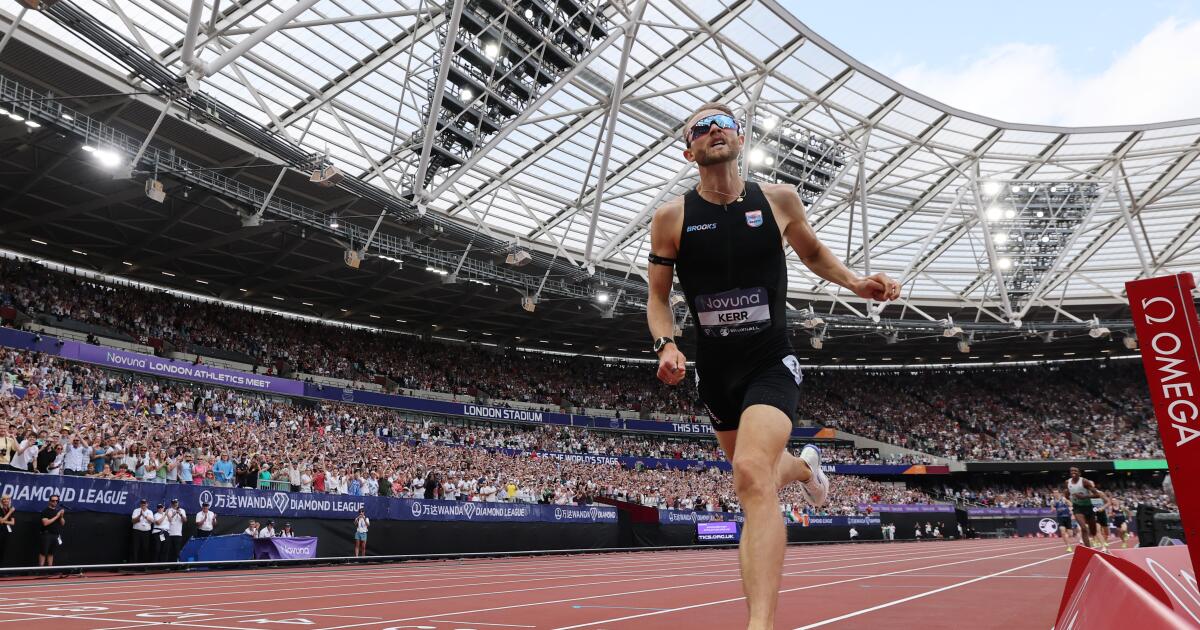
British runner Josh Kerr shattered one of track and field's most storied records on July 18, 2026, running the mile in 3 minutes and 42.66 seconds at the London Diamond League at Olympic Stadium, according to LA Times. That beats Moroccan legend Hicham El Guerrouj's record of 3:43.13, set in Rome in 1999 — a mark that had stood for 27 years.
Kerr won by more than three seconds, finishing ahead of American Yared Nuguse in second and Heyward in third, Morning Journal reported. The victory returned the mile world record to the United Kingdom for the first time in 27 years, making Kerr the seventh British man ever to hold the mark.
Kerr Publicly Pledged This Record Months Ago
Kerr did not treat this record as a surprise. He had openly targeted it all year. He kept a daily notebook, writing the same sentence dozens of times: "I ran the mile in 3:42 at the Diamond League in London, July 18, 2026." The goal was set long before race day.
Kerr chose this year deliberately. He said there were no world championships or Olympics on the calendar, giving him a clear window to chase a non-Olympic milestone. The mile is not an Olympic event, but Kerr called it a prized target. During training, he even stayed in ice baths for exactly 3 minutes and 42 seconds — the time he intended to run.
Pacemakers, Wavelight, and a Purpose-Built Spike
The race setup was built for speed. Two pacemakers helped Kerr hit his target splits. A wavelight system — a light that moves along the track at a set pace — showed runners exactly how fast they needed to go. Both tools are common in record attempts and legal under World Athletics rules, according to News Herald.
Kerr also wore a custom Brooks Hyperion 222 spike and a speed suit, both developed under what Brooks called "Project 222." Brooks engineers used a Run Research Lab and Finite Element Analysis — a computer modeling method — to design the shoe around Kerr's specific biomechanics. The goal was to give him the best possible energy return on every stride.
A Deafening Crowd in the Final 110 Meters
Kerr said the crowd noise was overwhelming near the finish. He described being "deaf" in the last 110 meters as the stadium roared. The London Stadium crowd pushed him through the final stretch as the clock ticked toward history.
London Diamond League reported that the finish made Kerr the seventh British man to hold the men's mile world record. Kerr finished in 3:42.66. Nuguse crossed second, and Heyward took third. The gap between Kerr and El Guerrouj's old mark was 0.47 seconds — small in real life, enormous in track and field history.
Why the Mile Still Matters Without Olympic Status
The mile has never been an Olympic event. It sits outside the standard track program, which uses the 1,500 meters instead. But the mile carries deep history, especially in Britain, home of Roger Bannister's famous four-minute barrier in 1954. For Kerr, that history made it worth chasing on its own terms.
By targeting 2026 specifically — a year without a major global championship — Kerr showed how athletes now plan careers around record windows, not just medals. His success also showed how brands like Brooks are investing in purpose-built gear to help athletes reach times that were once thought unreachable, according to Lucianne.
Sentiment
Mostly PositiveNEGATIVENEUTRALPOSITIVE
Publishers
26
Articles
147
Reach
173
A
AnonymousAuthor


