Hyundai's 2030 Growth Strategy
Hyundai Announces Massive Global Expansion With 100 New Models and EREVs by 2030
Anonymous
Key Points
1
Hyundai's North American expansion includes 58 product actions by 2030, consisting of 36 Hyundai updates and 22 Genesis updates.
2
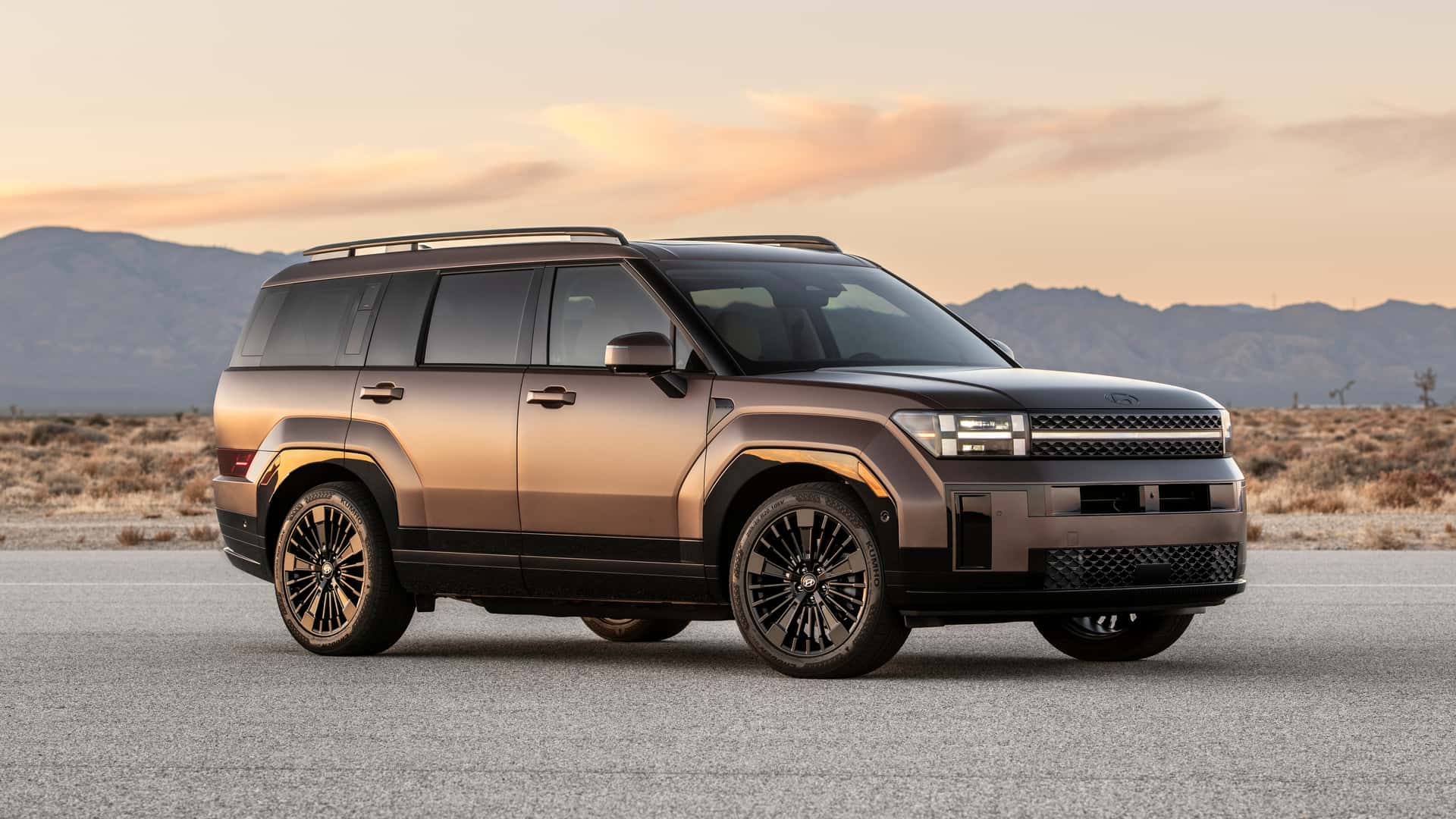
The Santa Fe EREV will be built at Hyundai Motor Manufacturing Alabama with production slated to begin in 2027, using a high-output battery and a dual-motor system where the internal-combustion engine mainly acts as a generator rather than driving the wheels.
3
Genesis’ first extended-range electric vehicle aims for an even higher total range than Hyundai, targeting more than 640 miles for its EREV.
4
Hyundai is pursuing a robust India strategy, with 26 India-specific products planned by 2030, seven new nameplates, and an India-exclusive electric SUV, alongside an 80% SUV sales target for India by 2030 and expanded local production.
5
Hyundai posted record second-quarter revenue, but operating profit fell more than 20% due to higher raw-material costs, signaling margin pressure even as revenue climbs.
Hyundai unveiled its boldest product strategy ever, planning over 100 new or refreshed models globally by 2030, with extended-range electric vehicles and advanced hybrids at the center. Carbuzz reports CEO José Muñoz stated the company's "fundamentals have never been stronger," positioning Hyundai as the second-most profitable automaker globally and ready to invest while competitors pull back.
The Korean automaker targets 5.55 million annual sales and an operating margin above 9% by 2030, up from 5.6% in the first half of 2026. Road and Track notes the expansion includes 58 product launches in North America alone, with hybrids expected to exceed 50% of the region's sales, signaling a shift away from pure electric vehicles toward a mixed electrification strategy.
Santa Fe EREV Offers 600+ Miles on a Single Charge
Hyundai's flagship Santa Fe extended-range electric vehicle will launch in 2027 and deliver over 600 miles of total range. InsideEVs reports the model uses a dual-motor setup where the internal combustion engine acts as a generator rather than driving wheels directly, combining electric power with onboard fuel replenishment. Genesis plans an even longer-range EREV targeting 640+ miles.
The Santa Fe EREV will be manufactured at Hyundai Motor Manufacturing Alabama beginning in 2027. The Torque Report confirms the powertrain eliminates range anxiety while maintaining the responsive driving feel of an electric vehicle, positioning the technology as a bridge solution for North American customers hesitant about battery-only cars.
India Becomes Hyundai's Second-Largest Production Hub
Hyundai is pouring $5.4 billion into India over five years to position the country as its second-largest global manufacturing base. The company plans 26 India-specific products and seven new nameplates by 2030, adding 320,000 units of production capacity. Yahoo Autos notes the strategy targets 80% SUV sales in India by 2030, capturing demand in a fast-growing market.
Local sourcing will exceed 90% for India-built vehicles, cutting costs and strengthening supply-chain resilience. An India-exclusive electric SUV will launch during this period, helping Hyundai capture the emerging premium EV segment in the region while leveraging lower manufacturing costs to compete globally.
North America Drives 58 of 100+ Global Product Launches
Nearly 60% of Hyundai's product expansion targets North America, where the automaker will add 500,000 units of regional capacity by 2030. Carbuzz details the rollout includes 36 Hyundai updates and 22 Genesis refreshes, with entry into 18 new market segments including mid-size pickups. Hybrids will comprise more than half of North American sales.
Rising raw-material costs pressured profitability in the first half of 2026, with operating profit falling over 20% despite record revenue of $71.3 billion. Hyundai aims to recover margins through lifecycle cost innovation and increased local parts sourcing above 80%, reducing dependency on costly imports amid policy and tariff uncertainty.
AI Robotics and Robotaxis Join Hyundai's Long-Term Vision
Beyond vehicles, Hyundai is positioning itself as a "physical AI" company, partnering with Waymo to deploy autonomous Ioniq 5 robotaxis beginning in late 2026. The company also plans to deploy Boston Dynamics' industrial humanoid robot Atlas at its Georgia manufacturing plant in 2028, blending manufacturing automation with mobility services.
These bets signal Hyundai's ambition to evolve beyond traditional automaking into software-defined vehicles, autonomous fleets, and robotic manufacturing. While some investors remain cautious—Hyundai shares dropped 3.3% following the announcement due to heavy capital spending—executives argue the timing is optimal to gain share while competitors retrench.
Sentiment
Mostly PositiveNEGATIVENEUTRALPOSITIVE
Publishers
40
Articles
125
Reach
165
A
AnonymousAuthor


