OpenAI's AI Coding Macropad
OpenAI Launches Codex Micro, Its First Hardware, Streamlining AI Coding Workflows
Anonymous
Key Points
1
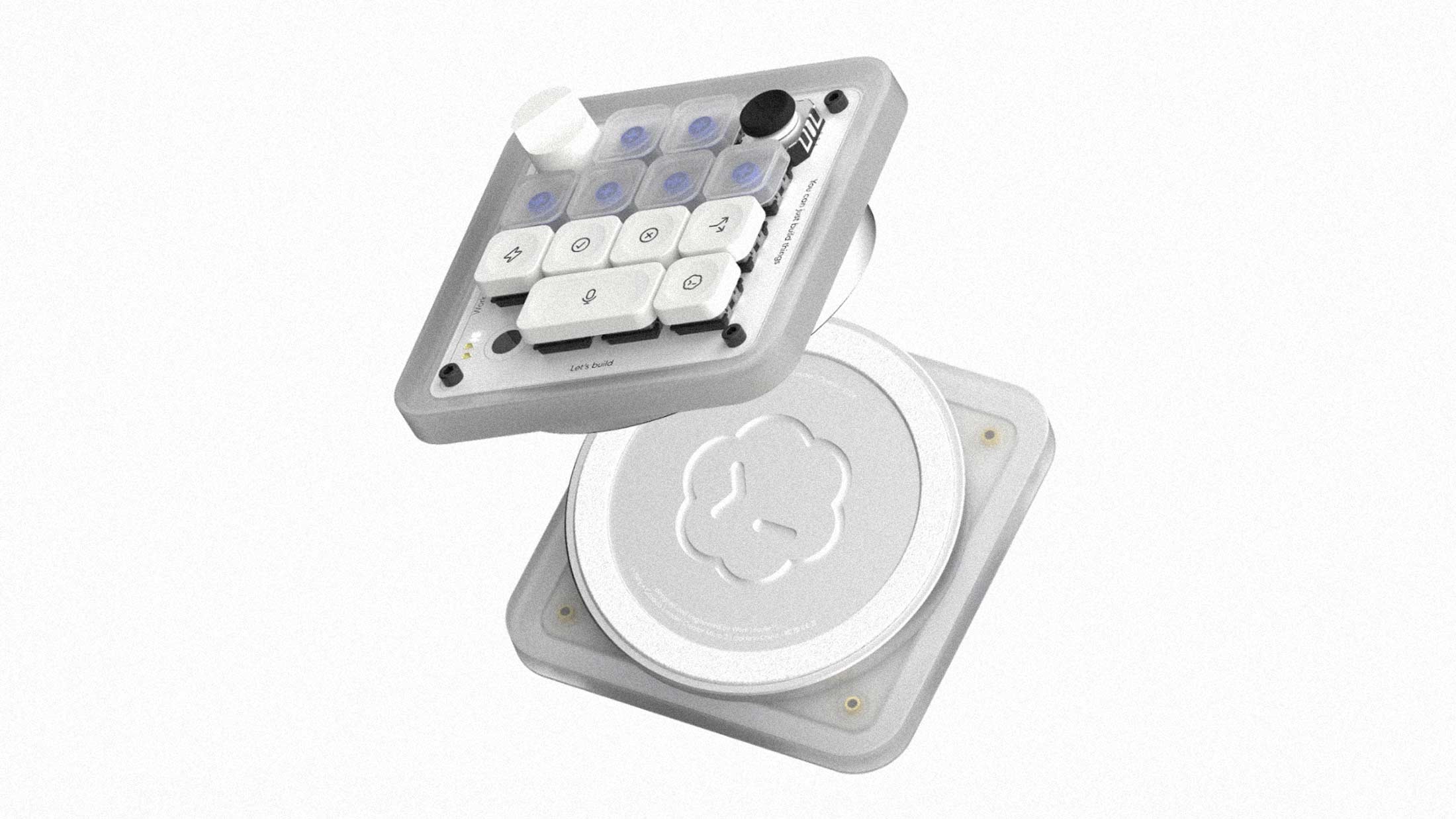
Codex Micro's hardware layout comprises 13 mechanical keys plus a joystick, a rotary dial, and a touch sensor, with six top keys delivering live Codex agent status at a glance.
2
Codex Micro is effectively a reskin of Work Louder's Creator Micro 2 design rather than OpenAI's forthcoming Jony Ive–designed consumer device.
3
Agent-status keys use color codes to show state (idle, thinking, finished, error), with single-tap selecting an agent and a double-tap bringing the agent to the foreground.
4
Users can map the six agent keys to specific Codex actions or workflows—pinned tasks, most recent tasks, or priority tasks—via Work Louder's Input tool.
OpenAI has entered the hardware business with Codex Micro, a $230 programmable macropad built for developers who run multiple AI coding agents at once. The device, made in partnership with keyboard company Work Louder, went on sale this week in limited quantities, according to Glitchwire and Crypto Briefing.
The compact pad sits on a desk and gives developers live, color-coded feedback on up to six Codex agents at a glance. It is OpenAI's first branded physical product — though analysts note it is a far cry from the high-profile consumer device the company is reportedly building with designer Jony Ive.
Thirteen Keys, One Dial, Six Live Agent Windows
Codex Micro packs 13 mechanical keys, a joystick, a rotary dial, and a touch sensor into a small footprint. The six keys along the top row are the headline feature. Each one lights up in a different color to show what a Codex agent is doing right now, according to TechBooky.
The color code is simple: white means idle, blue means thinking, green means done, and red means error. A single tap switches to that agent. A double-tap pulls it to the front of the screen. The rotary dial adjusts reasoning power — turning it up makes the agent think harder and longer.
A Work Louder Keyboard With an OpenAI Badge
Codex Micro is built on Work Louder's existing Creator Micro 2 design. OpenAI did not build new hardware from scratch — it co-branded and customized the device for Codex workflows, according to Glitchwire. Buyers can choose between two switch types: clicky or silent.
The pad connects via USB-C or Bluetooth. Users set it up through Work Louder's Input software tool, where they can map each of the six agent keys to pinned tasks, recent tasks, or priority tasks. OpenAI calls it a "focused productivity tool" meant to cut down on tab-switching.
Aimed at Power Users, Not the Mainstream
OpenAI is marketing Codex Micro squarely at developers who juggle many agents at once. The joystick can trigger new agent tasks without touching the keyboard. The shortcut keys handle core Codex actions in one press. OpenAI says the goal is to keep agent workspaces always within reach, according to Newsy Today.
At $230, the device is not cheap. OpenAI is selling it in limited supply while stock lasts. Crypto Briefing notes the launch is a deliberate, narrow release — not the mass-market consumer push OpenAI is rumored to be planning with Jony Ive. That project remains unannounced and separate.
OpenAI's Broader Bet on Codex and Multi-Agent Work
Codex Micro signals that OpenAI sees multi-agent coding as a core growth area. The company has been pushing Codex — its AI coding platform — as a tool for automating software tasks. A physical device tied to Codex suggests OpenAI wants developers deeply locked into that workflow, according to TechBooky.
Analysts view the launch as a small but telling step. OpenAI is showing it will sell hardware when it supports a specific use case — even if that hardware is a reskinned third-party product. Whether the company follows with more devices depends on how well Codex Micro sells during its limited run.
Sentiment
Mostly PositiveNEGATIVENEUTRALPOSITIVE
Publishers
22
Articles
13
Reach
35
Topics
A
AnonymousAuthor


