UK Prime Minister Transition
Keir Starmer Resigns; Andy Burnham to Become UK Prime Minister After Palace Meeting
Anonymous
Key Points
1
Burnham will become the seventh UK prime minister since 2016, underscoring the decade of rapid leadership turnover as he is formally invited to form a government after his palace meeting.
2
The transfer includes a ceremonial royal protocol, with the monarch's role described as largely ceremonial today; Burnham will proceed to Downing Street after the palace meeting, and the moment is commonly referred to as the transition to government—no hand-kissing is involved.
3
Immigration levels are reported to have fallen under Starmer’s tenure, alongside claimed improvements in defence and national security and broader public-service performance such as healthcare waiting times.
4
In his farewell, Starmer praised frontline public servants and expressed that it has been the privilege of his life to serve, underscoring the narrative of a stronger, fairer Britain and citing the support of the armed forces, NHS workers, volunteers and community leaders.
Keir Starmer has resigned as UK prime minister, handing power to Andy Burnham after a meeting with King Charles III at Buckingham Palace. Burnham is now Britain's new prime minister, making him the seventh person to hold the role since 2016, according to Sky News Australia.
Starmer said his work is done and gave Burnham his full support. Burnham, who recently returned to Westminster after serving as Greater Manchester mayor, will now address Downing Street for the first time as prime minister, according to Yahoo News UK.
Burnham Meets the King and Takes the Keys
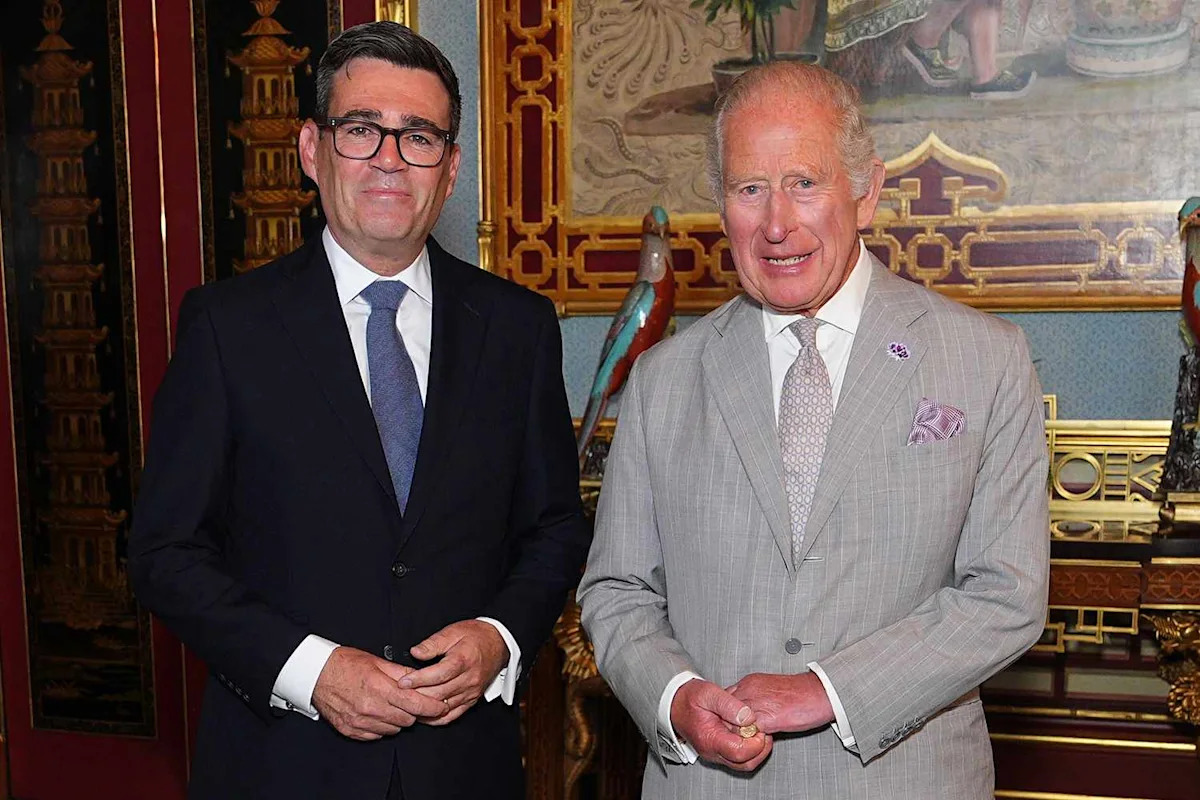
Burnham's path to power followed the standard British process. He met King Charles III at Buckingham Palace, where the monarch gave his blessing for Burnham to form a government. The King's role in this process is largely ceremonial. No hand-kissing takes place. After the palace meeting, Burnham headed straight to Downing Street, according to Cambridge News.
King Charles has now welcomed four prime ministers in under four years, according to Yahoo News Canada. That pace of leadership turnover is extraordinary by modern British standards. Before 2016, the UK had just two prime ministers over a 13-year stretch.
Starmer Claims a Stronger Britain in His Farewell
In his resignation speech, Starmer said it had been "the privilege of his life" to serve. He pointed to a list of achievements: a stronger economy, shorter NHS waiting times, lower child poverty, and improved national security. He also said immigration levels fell during his time in office.
Starmer praised frontline workers including NHS staff, armed forces personnel, volunteers, and community leaders. He warned that global adversaries are trying to exploit divisions in democracies. He called for resilience and unity as the country moves forward under new leadership.
Burnham Walks Into a Long List of Hard Problems
Burnham does not get an easy start. He inherits rising welfare costs, pressure to spend more on defence, and a housing shortfall that has frustrated governments for years. These challenges have built up over the decade of rapid leadership changes Britain has seen since 2016.
Burnham is also expected to steer Labour in a new ideological direction. The next general election does not have to happen until 2029, giving him time to settle in. But he can call a vote sooner if he chooses, according to KIVI TV.
A Decade of Revolving-Door Leadership Continues
Britain has cycled through prime ministers at a pace that few other democracies can match. Since 2016, the country has had seven leaders: David Cameron, Theresa May, Boris Johnson, Liz Truss, Rishi Sunak, Keir Starmer, and now Andy Burnham. Truss lasted just 45 days in office.
Each handover has used the same royal protocol. The outgoing prime minister resigns. The monarch invites the new party leader to form a government. The new prime minister then speaks outside 10 Downing Street. Burnham's transition was described as orderly, according to Cambridge News.
Sentiment
Mostly NegativeNEGATIVENEUTRALPOSITIVE
Publishers
259
Articles
982
Reach
1.2K
A
AnonymousAuthor


