Likweli: New Species Discovered
Distinctive Likweli Monkey Species Discovered in DRC Faces Immediate Threat
Anonymous
Key Points
1
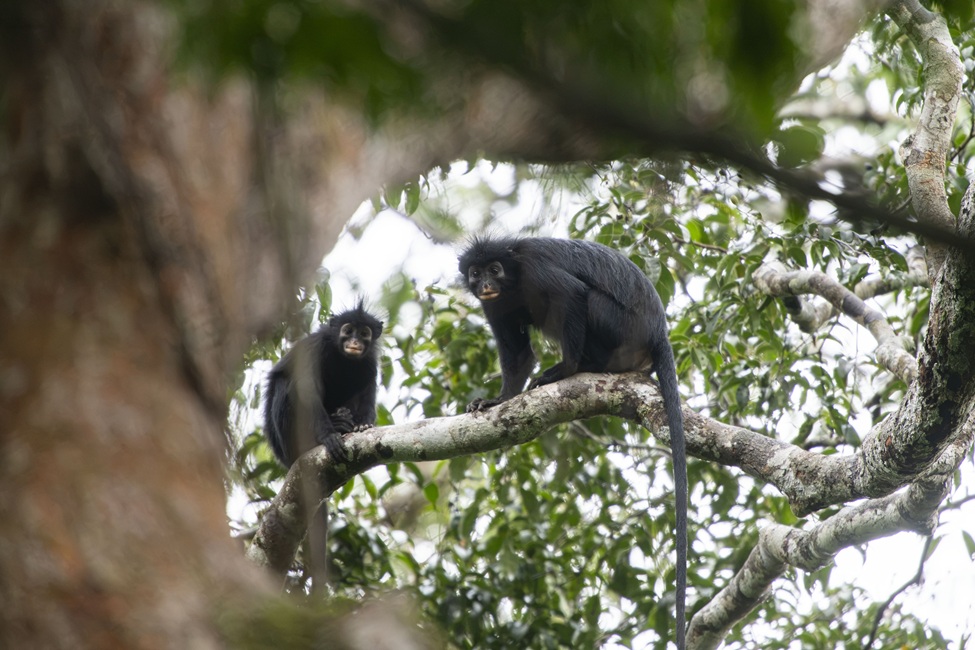
The likweli has a distinctive mask-like facial pattern with light skin around the mouth and nose, a feature researchers say may reflect ancestral traits retained before the African-Asian colobine split more than 8 million years ago.
2
Adults are reported to be about 1.3 meters long and weigh roughly 7 kilograms (about 15 pounds).
3
Local communities know the monkey as likweli; researchers surveyed 52 villages around Lomami National Park to gauge knowledge, with some groups calling it ‘kasaba nkoni’ meaning ‘branch shaker’.
4
The species’ range is believed to be only a fraction of that of most other colobus monkeys, suggesting it may be highly sensitive to habitat quality and monitoring challenges.
5
Access to its remote interfluve habitat requires a multi-step, multi-mode expedition—often including a flight, motorcycle ride, two days of hiking, and travel by dugout canoe to reach the range.
Scientists have named a new African monkey species found deep in the rainforests of the Democratic Republic of Congo, calling it Colobus congoensis — or likweli, as local communities have long known it. The largely black monkey sports vivid orange patches around its face and lets out a frog-like roar, making it unlike any other known colobus species, according to Florida Atlantic University.
The discovery marks only the fifth new African monkey species identified in the past 75 years. Researchers warn the animal may already be endangered, with a range far smaller than most of its relatives and a remote habitat under growing threat from hunting and deforestation, Science reported.
An Orange-Faced Monkey Hidden in Plain Sight
Hunters and villagers in the Congo Basin had known about likweli for generations. Scientists first spotted it in 2008, but clearer footage did not emerge until 2018. International teams from Florida Atlantic University, Yale, CUNY, Lukuru, and Lomami National Park then launched formal fieldwork in the region, according to Florida Atlantic University.
Researchers surveyed 52 villages around Lomami National Park. Some communities called the monkey 'kasaba nkoni,' meaning 'branch shaker.' Adults grow to about 1.3 meters long and weigh roughly 7 kilograms — about 15 pounds. Its light skin around the mouth and nose forms a mask-like pattern that researchers say may be an ancient trait, possibly predating the split between African and Asian colobine monkeys more than 8 million years ago, Mirage News reported.
Genetics Confirm a Four-Million-Year-Old Split
Looks alone did not seal the case. Scientists ran genetic, anatomical, and acoustic tests on the animal. The results showed likweli split from its closest relative about 4 to 5 million years ago — making it a fully distinct evolutionary lineage, Science reported.
Its frog-like roar was one key clue. Researchers recorded and compared calls across colobus species. The sound, combined with the orange facial patches and a distinctive odor, set likweli apart. Each of these traits alone might be dismissed — together, they build an airtight case for a new species.
Tiny Range and Heavy Hunting Put Likweli at Risk
Likweli's known range sits in a narrow stretch of forest between the Lomami and Congo rivers. That range is a fraction of what most other colobus monkeys occupy. A smaller range means fewer animals, less room to recover from threats, and higher sensitivity to habitat loss, according to Florida Atlantic University.
Hunting adds to the pressure. Bushmeat trade is active in the region. Habitat destruction continues to shrink Congo Basin forests. Researchers say the species may already qualify as endangered, though a full assessment is still needed, Bradenton reported.
Getting There Requires a Multi-Day Jungle Expedition
Reaching likweli's habitat is no easy task. Scientists must fly into the region, then take a motorcycle, hike for two days, and finally travel by dugout canoe just to reach the monkey's range. The area has no roads. That isolation has kept likweli hidden — but it also makes monitoring and conservation planning extremely difficult, Elkhart Truth reported.
The discovery highlights how much life remains undocumented in the Congo Basin, one of the world's most biodiverse regions. Researchers say protecting what little habitat likweli has left must begin now — before scientists even finish learning what they have found.
Sentiment
Mostly NegativeNEGATIVENEUTRALPOSITIVE
Publishers
14
Articles
69
Reach
83
A
AnonymousAuthor


