Space's New X-Ray Vision
SpaceX Fram2 Mission Performs First In-Orbit Diagnostic X-Rays, Advancing Space Medicine
Anonymous
Key Points
1
Portable X-ray devices can run on solar power and be operated by individuals with no medical expertise, expanding use in space and in low-resource Earth settings.
2
Fram2 used a commercial off-the-shelf portable radiography system on a 3.5-day polar orbital flight, illustrating the viability of using commercial hardware for in-orbit imaging.
3
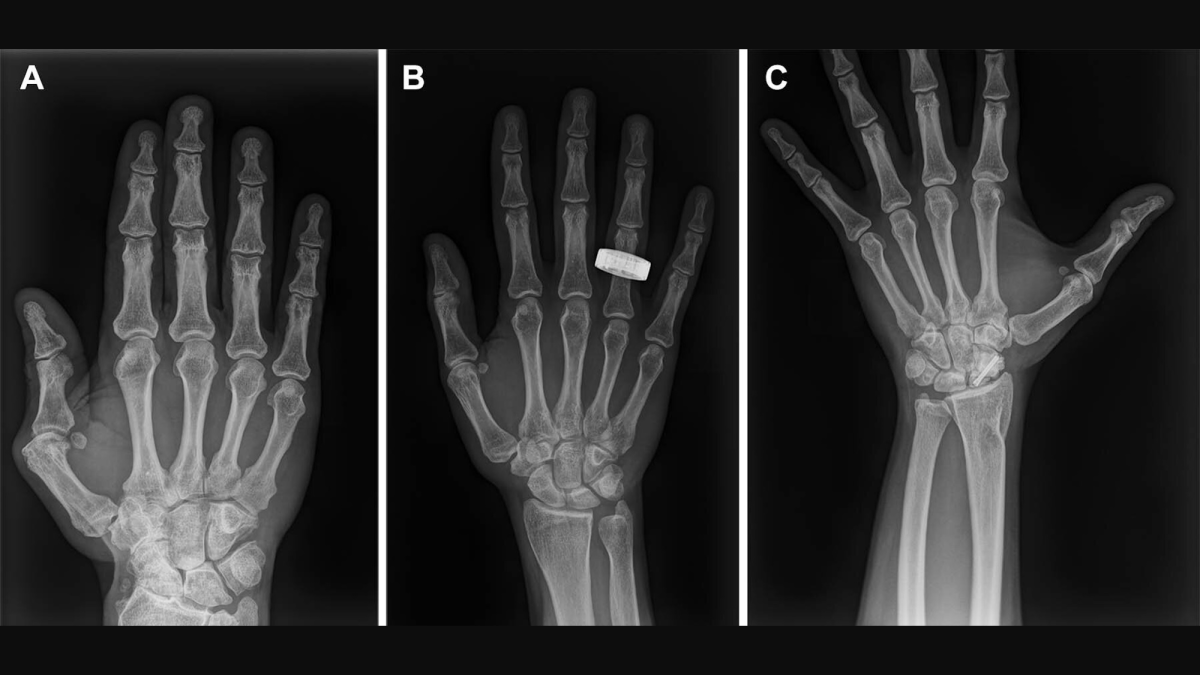
In-flight X-ray scans included multiple body regions—hand, forearm, abdomen, pelvis, and chest—and were transmitted to an onboard computer for crew review.
4
Researchers envision spectral X-ray systems to address suit integrity, equipment stress, and mineral analysis, broadening the use of in-space radiography beyond medical imaging.
Astronauts aboard SpaceX's Fram2 mission took the first diagnostic X-rays ever captured in orbit, marking a turning point for space medicine. The crew used a portable, battery-powered device to scan five body areas — hand, forearm, abdomen, pelvis, and chest — and reviewed the images onboard without help from the ground, according to News Medical.
The findings were published in the journal Radiology. They show that portable X-ray systems can work in microgravity and could reshape how doctors care for astronauts on long missions to the moon and beyond, Bioengineer.org reported.
A 3.5-Day Polar Flight That Changed Space Medicine
The Fram2 mission launched on March 31, 2025, aboard a SpaceX Falcon 9 rocket. Four amateur astronauts completed a 3.5-day polar orbital flight, according to Newsy Today. During that time, the crew performed X-ray scans using a commercial off-the-shelf device — the kind already used on Earth.
Space medicine has relied on ultrasound for decades. Ultrasound needs a sound-transmitting medium and trained operators. X-rays skip those limits. They work faster and can image more body parts, Popular Science reported. The Fram2 crew showed that even people without medical training can run the equipment.
Portable X-Ray Hardware Proves Ready for Microgravity
The team used the MinXray TR90BH, a portable radiography unit built for field use on Earth. Popular Science noted the device is heavy and normally requires extensive training to operate. But the Fram2 crew used it successfully with minimal preparation.
Researchers grounded the project in 2022 parabolic-flight tests before ever flying it in orbit. Those tests showed the hardware could handle microgravity conditions. The successful orbital run confirmed that commercial, off-the-shelf X-ray gear is viable in space, according to News Medical.
Lunar Missions and Rural Earth Both Stand to Benefit
Researchers see this technology going far beyond low-Earth orbit. Space.com reported that the same portable X-ray systems could be used on lunar missions, where getting a sick astronaut home quickly is not an option. Having onboard imaging could save lives during long stays on the moon.
The benefits could also reach remote areas on Earth. Portable X-ray devices can run on solar power and be used by people with no medical training. That means small towns and rural communities far from hospitals could one day access diagnostic imaging, Space.com noted.
Spectral X-Rays Could Expand Uses Beyond Human Health
The team envisions future upgrades beyond basic imaging. Researchers want to test spectral X-ray systems — tools that can analyze materials, not just bodies. These could check spacesuit integrity, spot equipment stress, and even measure bone mineral density, according to Bioengineer.org.
The study was a collaboration between Mayo Clinic researchers and SpaceX. Its publication in Radiology signals that aerospace medicine is moving fast. What started as a proof-of-concept on a short polar orbit could define how crews stay healthy on missions lasting months or years.
Sentiment
Mostly PositiveNEGATIVENEUTRALPOSITIVE
Publishers
11
Articles
142
Reach
153
Topics
A
AnonymousAuthor


