Line 5 Tunnel Standoff
Enbridge's Line 5 Tunnel Secures Federal Permit Amid Michigan State and Tribal Legal Challenges
Key Points
The federal permit covers work in federally regulated waters and wetlands but does not address the pipeline's operation or the substances transported through it; operation remains regulated by the Pipeline and Hazardous Materials Safety Administration (PHMSA).
Enbridge's Line 5 tunnel is about 3.6 miles long and is planned to sit roughly 240 to 250 feet below the lakebed, with the project estimated to cost about $800 million to replace the aging pipelines.
The Michigan Supreme Court vacated a 2023 Public Service Commission approval to relocate Line 5 into the tunnel, ordering a broader review of potential environmental risks and tribal public trust rights.
The federal permit was issued amid the Trump administration's accelerated infrastructure initiative aimed at expediting critical energy projects by reducing regulatory delays.
Opponents have signaled they will file new lawsuits and challenge related state-level permits, indicating that legal battles over Line 5 are far from over despite federal clearance.
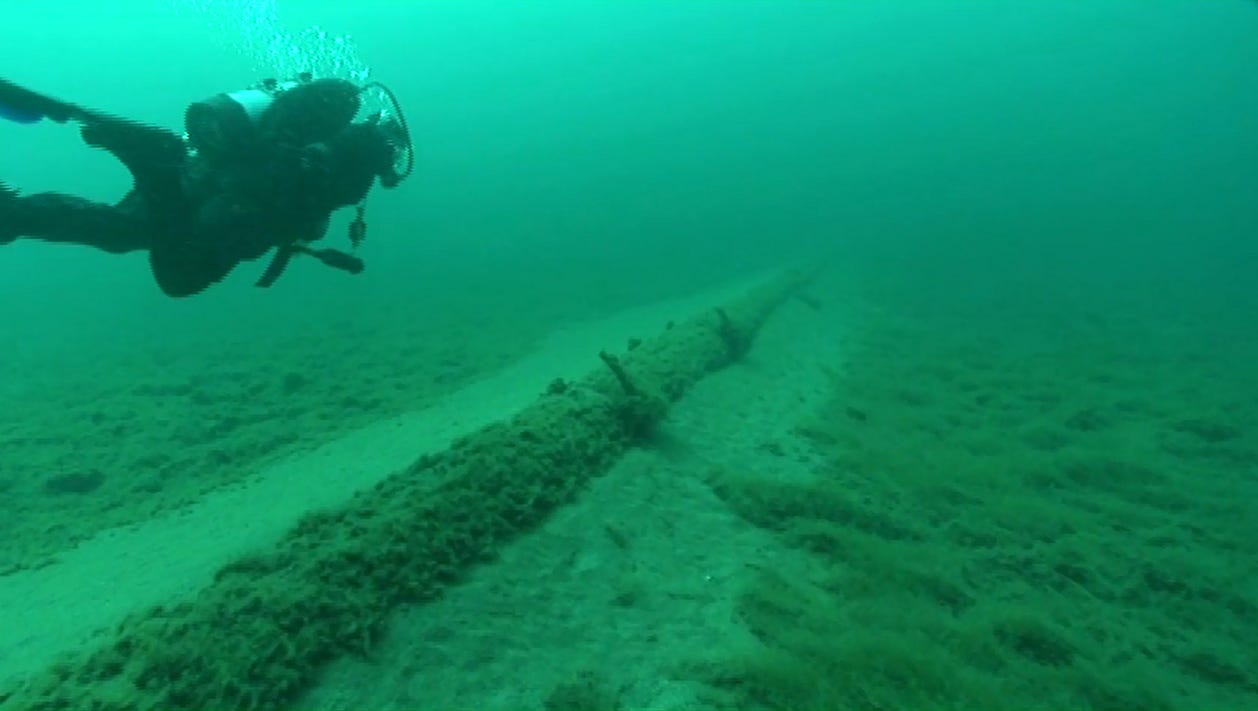
The U.S. Army Corps of Engineers has approved a federal permit for Enbridge's proposed tunnel beneath the Straits of Mackinac, clearing the last major federal hurdle for the $800 million project, according to Detroit Free Press and Click On Detroit. The 3.6-mile tunnel would sit roughly 240 to 250 feet below the lakebed and replace the aging Line 5 pipeline that currently rests on the lake floor.
But the approval does not mean construction starts soon. State permits remain unresolved, and the Michigan Supreme Court recently threw out a key 2023 state approval — signaling more legal battles ahead.
What the Army Corps Permit Actually Covers
The Corps permit covers work in federally regulated waters and wetlands only. It does not govern what flows through the pipeline. That falls under the Pipeline and Hazardous Materials Safety Administration, a separate federal agency. The Corps said its plan was "not contrary" to environmental standards, according to Market Screener.
The review included input from federal and state resource agencies, Native tribes, and Enbridge itself. Michigan's environmental and natural resources agencies also evaluated related assessments. Supporters say the process was thorough and meets high environmental standards. Critics say it was rushed and ignored key alternatives.
Michigan Supreme Court Throws a Wrench in State Approvals
Even with federal clearance, Enbridge cannot break ground yet. The Michigan Supreme Court recently vacated a 2023 Public Service Commission decision that had approved relocating Line 5 into the tunnel. The court ordered a broader review — one that must weigh environmental risks and tribal public trust rights more carefully.
That ruling puts the project in a holding pattern at the state level. Until Michigan completes its review and issues new approvals, construction is off the table. Opponents have already signaled they plan to file additional lawsuits, according to Detroit Free Press.
Tribes and Environmentalists Warn of Great Lakes Threat
Native tribes and environmental groups are among the loudest critics. They argue the tunnel threatens the Great Lakes, which hold roughly 20 percent of the world's fresh surface water. They also say the project could harm sacred sites and violate treaty rights that predate Michigan statehood.
Critics also warn that a pipeline spill — even inside a tunnel — could devastate water quality and ecosystems across the region. They argue that regulators did not fully consider alternatives to keeping Line 5 in operation at all, according to ABC 12.
Trump Administration's Push to Speed Up Energy Projects
The federal permit came as the Trump administration has pushed to fast-track energy infrastructure across the country. The White House has directed agencies to cut regulatory delays on projects it considers critical to energy security. Enbridge and pipeline supporters say the tunnel is exactly that kind of project — a safer, modern replacement for aging infrastructure.
Enbridge argues the tunnel will protect the Great Lakes better than the existing lakebed pipeline, which has operated since 1953. The company puts the project cost at about $800 million, according to Yahoo News. But with state courts and regulators still in play, a construction timeline remains unclear.
Sentiment
Mostly NegativePublishers
16
Articles
18
Reach
34


