Trump Xi Washington Summit
Trump Welcomes Chinese President Xi Jinping for High-Stakes Washington Summit Talks
Anonymous
Key Points
1
The Smithsonian tour included the Peacock Room, an immersive 19th-century work by James McNeill Whistler whose blue, green and gold design drew on Chinese porcelain and Japanese design.
2
Melania Trump and Peng Liyuan also viewed an 18th-century Qianlong-period Chinese porcelain vase made in Jingdezhen, decorated with famille rose enamels, gold and iron-red accents.
3
Xi urged the two countries to avoid what he called the “Thucydides Trap”—the risk of conflict between a rising power and an established one—and said competition should be a “race of catching up with one another,” not a contest in which one side wins and the other loses.
4
The White House continued to bar Politico, CNN and MS NOW from the visit, despite a judge ordering the administration to reinstate the outlets’ credentials.
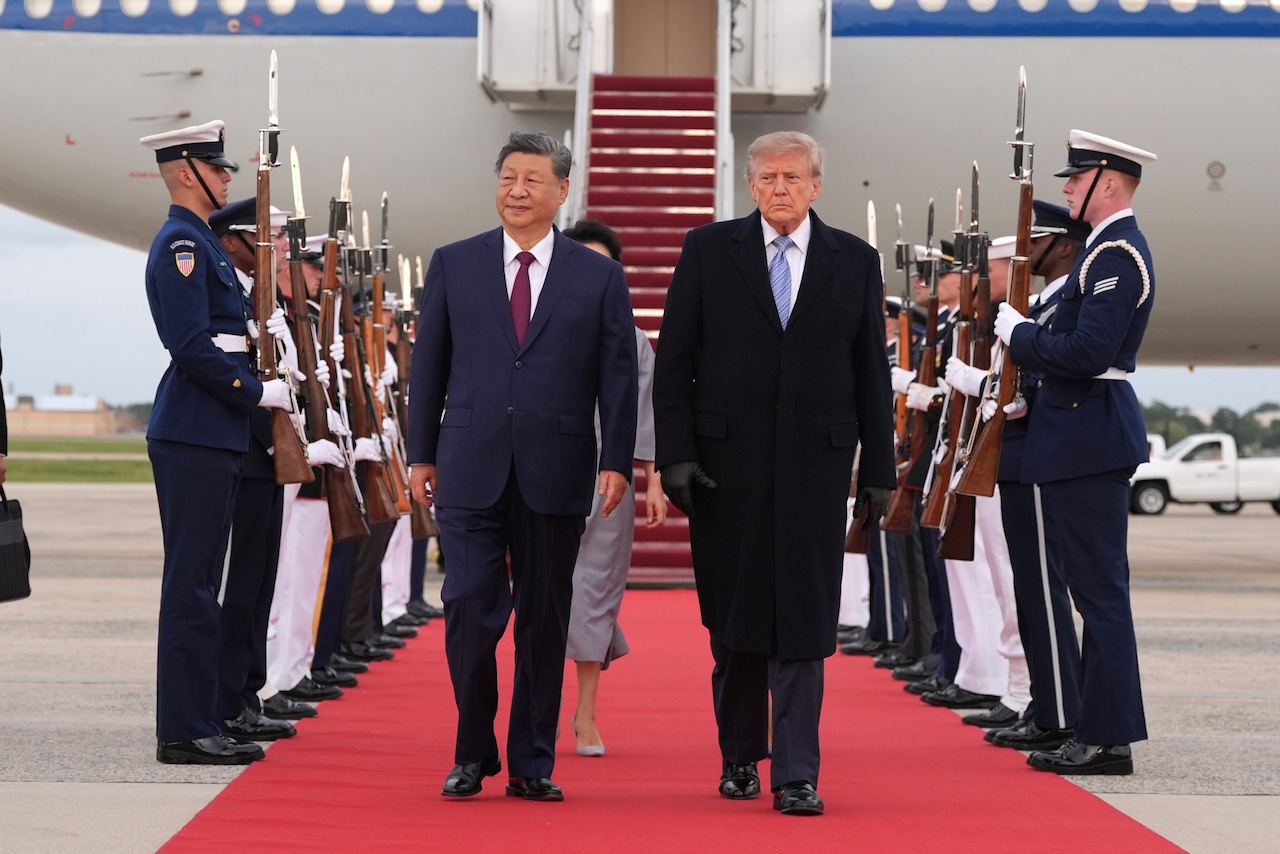
President Donald Trump welcomed Chinese President Xi Jinping to Washington for a three-day state visit, featuring a military ceremony at Joint Base Andrews and the announcement of two giant pandas arriving at Zoo Atlanta. The Australian reported that the leaders planned to discuss trade, artificial intelligence, Iranian oil exports, imprisoned Americans, and fentanyl precursor chemicals amid ongoing strategic rivalry between the two powers.
Xi urged both nations to avoid the "Thucydides Trap"—the risk of conflict between a rising power and an established one—calling for competition as a "race of catching up with one another" rather than a zero-sum contest. Trump, by contrast, described AI leadership as a competition the United States must win, signaling divergent visions for U.S.-China relations.
First Ladies Celebrate Cultural Exchange at Smithsonian
Melania Trump and Peng Liyuan toured the Smithsonian's National Museum of Asian Art, viewing pieces that reflected centuries of cultural ties between the nations. Xinhua reported they examined an 18th-century Qianlong-period Chinese porcelain vase from Jingdezhen, decorated with famille rose enamels and gold accents, alongside works showcasing artistic exchange.
The tour highlighted the museum's Peacock Room, an immersive 19th-century masterpiece by American artist James McNeill Whistler. The blue, green, and gold design drew inspiration from Chinese porcelain and Japanese aesthetics, embodying the cross-cultural influences that shaped Western and Asian art during the era.
Xi Warns Against Confrontation, Urges Cooperation
During high-level meetings, Xi Jinping emphasized that confrontation would harm both countries and called for "healthy competition and cooperation." He specifically referenced the historical Thucydides Trap, arguing that rising powers and established ones need not clash but instead should engage in mutual advancement.
Trump's framing differed sharply. He called AI leadership a competition America must win, reflecting Washington's concern about Chinese technological advancement. The divergence underscores fundamental disagreements over how the two superpowers should interact in critical sectors like artificial intelligence and technology.
Congressional Critics Demand Tougher China Stance on AI
U.S. lawmakers, including Senator Elizabeth Warren, criticized the warm welcome and pushed Trump to restrict sales of advanced AI chips to China. Critics argued the visit lacked sufficient pressure on Beijing to address core American concerns about technology transfer and national security.
The criticism reflects broader bipartisan anxiety about Chinese technological competition. Lawmakers want stronger safeguards protecting American intellectual property and limits on exports of semiconductors and AI systems that could enhance Chinese military capabilities.
White House Continues Press Credential Restrictions
The White House barred Politico, CNN, and MS NOW from covering the state visit, despite a federal judge ordering the administration to reinstate the outlets' press credentials. The decision continues Trump's contentious relationship with major news organizations and raises questions about media access to significant diplomatic events.
Sentiment
Mostly PositiveNEGATIVENEUTRALPOSITIVE
Publishers
23
Articles
122
Reach
145
Topics
A
AnonymousAuthor


