China Imposes US Firm Restrictions
China Retaliates Against US, Barring 46 Firms and Restricting Exports to 10 Defense Companies
Anonymous
Key Points
1
China’s commerce ministry said the export-control action was taken under China’s “Export Control Law” and “regulations on dual-use item export controls,” alongside its national-security/nonproliferation rationale.
2
The dual-use export-control list included specific drone/defense firms—such as AVOX, Red Cat Holdings, Teal Drones, IMSAR, Zaiya Robotics, Ball Aerospace and Technology, Oshkosh Defense, and L3Harris Ocean Systems—along with rare-earth companies MP Materials and USA Rare Earth.
3
China highlighted Oshkosh Defense, describing it as a producer of “US military vehicle fleets,” when announcing the export controls.
4
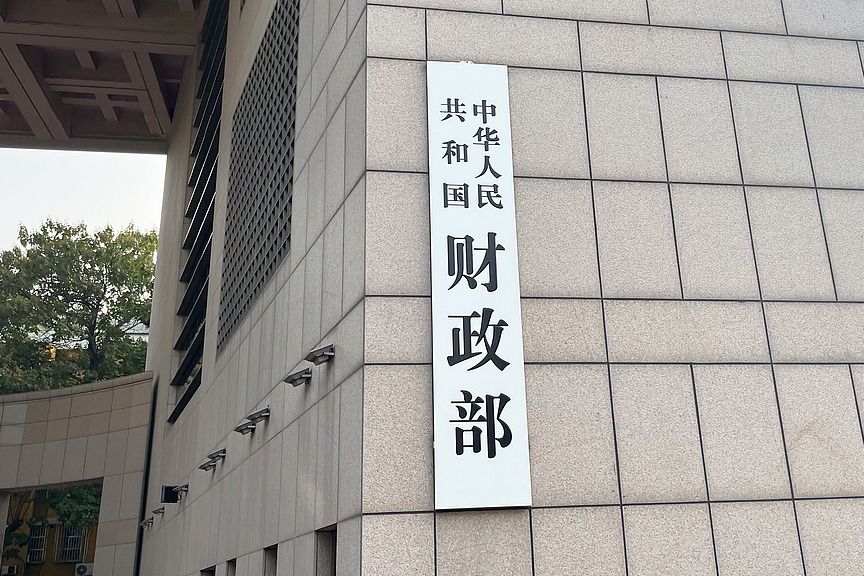
China’s finance ministry said the procurement restrictions include an exception: “Companies with US investments in China are excluded,” according to its statement.
5
The retaliation was framed as reaction to a prior Pentagon update of the list of Chinese businesses aiding Beijing’s military; one report noted that “around two dozen companies were added,” including Alibaba Group and Baidu, which it said limited their operations in America.
China hit back at the United States on June 22, placing 10 American defense and rare-earth firms on a dual-use export control list and barring 46 U.S. companies — including Lockheed Martin, Raytheon, and Boeing's defense unit — from Chinese government contracts, according to Xinhua. The moves took effect immediately, forcing Chinese exporters to stop all shipments to the listed firms unless they apply for special licenses.
Beijing said the steps were needed to "safeguard national security" and fulfill "non-proliferation" duties, framing them as a direct response to the Pentagon's recent expansion of its list of Chinese firms allegedly aiding the People's Liberation Army, MarketScreener reported. That earlier U.S. action added roughly two dozen Chinese companies — including Alibaba and Baidu — restricting their ability to operate in America.
Ten U.S. Firms Cut Off From Chinese Dual-Use Supplies
China's Commerce Ministry invoked its Export Control Law to name 10 firms to the dual-use list, according to Xinhua. The list includes drone and defense companies: Aveox, Red Cat Holdings, Teal Drones, IMSAR, Zaiya Robotics, Ball Aerospace and Technology, Oshkosh Defense, and L3Harris Ocean Systems. Beijing specifically called out Oshkosh Defense as a maker of "US military vehicle fleets."
Also targeted are rare-earth producers MP Materials and USA Rare Earth. MP Materials runs Mountain Pass in California — the only active rare-earth mine in the U.S. The Pentagon bought $400 million in MP Materials stock in 2025, making it the company's largest shareholder. USA Rare Earth received a $1.6 billion government package to build a magnet plant in Oklahoma. Analysts say China is targeting these firms to slow U.S. efforts to build a minerals supply chain independent of China, according to MarketScreener.
46 Defense Giants Locked Out of Chinese Procurement Market
China's Finance Ministry issued a separate notice banning purchases from 46 U.S. companies in all Chinese government contracts, according to China Daily. The list sweeps in the biggest names in American defense: Lockheed Martin, Raytheon Missiles and Defense, and Boeing's defense division. The ministry noted one key exception: U.S. companies that have existing investments inside China are excluded from the ban.
Analysts say the procurement ban is largely symbolic for firms like Lockheed Martin, which already sells little to Chinese state buyers. But the dual-use export controls are more of a "surgical strike," targeting companies that depend on Chinese-made components — like specialty motors, drone sensors, and radar parts — to fill U.S. military orders. Firms like Teal Drones and Red Cat Holdings could face sudden parts shortages and production delays.
Rare Earth Dominance Gives Beijing Real Leverage
China controls 91% of global refined rare-earth output as of 2024. That grip gives Beijing real power over companies trying to build U.S. alternatives. Even if MP Materials mines ore at home, it may still need Chinese-made chemicals or processing equipment to refine it. Blocking those "dual-use" inputs could stall the entire U.S. rare-earth supply chain before it matures, according to analysts cited by MarketScreener.
The U.S. government had tried to shield MP Materials from Chinese price pressure by guaranteeing a floor price of $110 per kilogram for its neodymium-praseodymium output — nearly double the current Chinese market price. But that financial cushion does not help if Chinese suppliers cut off the inputs the company needs to operate. Beijing's move signals it sees rare-earth supply chains as a direct pressure point in the broader trade war.
Tit-for-Tat Spiral Threatens to Deepen Trade War
The sequence is now clear: the Pentagon added Chinese tech giants like Alibaba and Baidu to its military-linked company list in early June. China responded on June 22 with its own entity lists and procurement bans. Experts warn the next U.S. move — possibly financial sanctions on Chinese banks handling restricted trade — could trigger another round of retaliation, according to Xinhua.
Chinese state media framed the moves as "defensive" and "lawful," arguing Beijing is simply using the same entity-list tactics the U.S. pioneered. Washington views the targeting of MP Materials and USA Rare Earth differently — as an attempt to choke off the nascent U.S. critical minerals industry before it can break free from Chinese supply chains, according to China Daily.
Sentiment
Mostly NegativeNEGATIVENEUTRALPOSITIVE
Publishers
148
Articles
418
Reach
566
A
AnonymousAuthor


