Allegheny Health Board Revises Paid Leave Proposal
Allegheny Health Board Revises Paid Leave Proposal
Anonymous
Key Points
1
Public feedback was generally favorable but divided: a review of the comments found roughly 56% supported the original proposal, 26% opposed it outright, and the remainder offered mixed views or requested changes.
2
If enacted, the mandate would be the first in the nation adopted by an individual municipality in a state without a comparable statewide paid-leave law.
3
The revised proposal expands qualifying events beyond births and adoptions to include miscarriages, with eligibility subject to specified requirements and provisions.
4
Board members postponed the vote partly to examine whether the mandate could face legal challenges, in addition to reviewing the substantive changes.
5
County Council member Lissa Geiger Shulman said lawmakers are trying to develop a policy that can be implemented, understood by employers and parents, enforced and kept consistent, while noting questions about the role of non-birthing parents and how employers would administer the benefit.
Allegheny County's health board scaled back its paid parental leave mandate after hearing from more than 1,400 residents. The revised plan cuts benefits from 18 weeks to 12 weeks and exempts small businesses with fewer than 15 eligible employees. West Hills Gazette reported that roughly 56% of public comments supported the original proposal, while 26% opposed it outright.
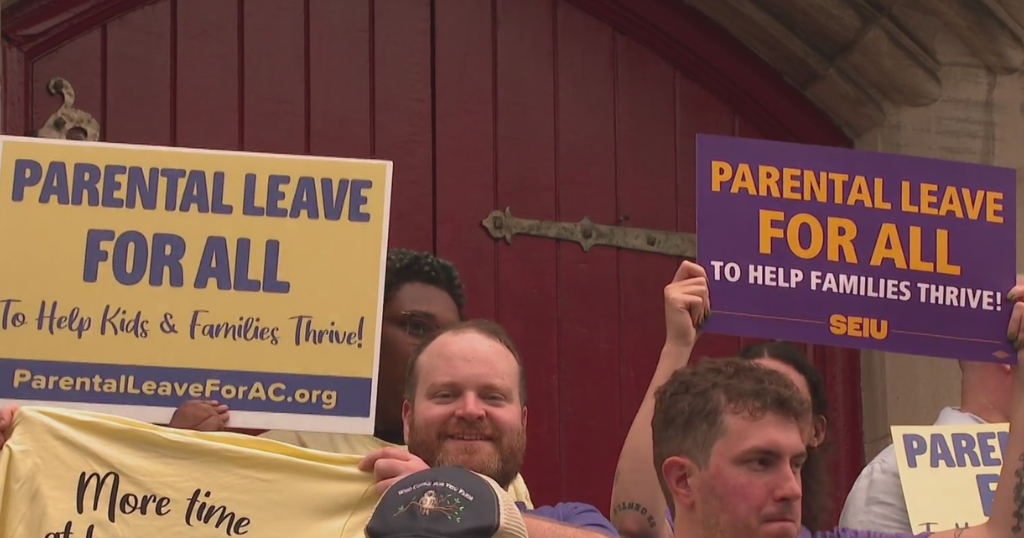
The updated proposal would cover miscarriages and stillbirths alongside births and adoptions. Workers would receive full wages up to $4,200 per week after meeting service requirements. CBS News noted that union leaders and community members rallied behind the measure, which would be the first municipal paid-leave mandate in a state without its own statewide law.
How the Revised Benefit Works
Eligible workers need six months of service to qualify. Part-time workers must complete 625 hours instead. Employees receive their full salary, capped at $4,200 weekly, during their leave period. Employers can self-insure, buy private insurance, or use a third-party administrator to manage claims and payments.
Businesses get up to one year to comply with the new rules. The mandate covers miscarriages, stillbirths, and other pregnancy-related losses in addition to births and adoptions. Philadelphia Burbs reported that the board delayed its vote to examine the revised changes and check for potential legal challenges.
Support Centers on Worker Health and Finances
Health officials and supporters argue the policy addresses postpartum recovery, prevents financial hardship, and eases the return to work. Workers without adequate leave often face stress and health risks. Unions and community groups rallied behind the proposal as a critical worker protection measure.
Lawmakers are drafting language that protects both parents and employers. County Council member Lissa Geiger Shulman noted the challenge of creating a policy that can be implemented, understood, enforced, and kept consistent across employers and workers.
Business Groups Push Back on Employer Burden
Over 400 business leaders submitted comments opposing the mandate. They argue that requiring employers to fund the benefit creates excessive financial and administrative costs. Business groups prefer a state insurance-based system instead, similar to models in other states.
The board reduced the benefit length from 18 to 12 weeks and exempted small businesses with fewer than 15 eligible employees to address some cost concerns. Still, critics question how employers will track hours, process claims, and calculate benefits across diverse workforces.
What Happens Next
The health board postponed its vote to review the substantive changes and assess legal risks. Another public comment period is scheduled before the proposal moves to County Council for final approval. If enacted, Allegheny County would become the first municipality in a state without statewide paid leave to adopt such a mandate.
Sentiment
Mostly NegativeNEGATIVENEUTRALPOSITIVE
Publishers
13
Articles
13
Reach
26
Topics
A
AnonymousAuthor


