Real-Life Cinderella Story
New Historical Novel Explores the Real-Life Inspiration Behind the Cinderella Fairy Tale
Anonymous
Key Points
1
The novel draws a direct historical link between Germaine Cousin and Charles Perrault’s 1697 Cinderella story, presenting Germaine as the real-life figure who inspired the familiar fairy tale.
2
Germaine’s childhood reportedly included the loss of her mother, abuse by a stepmother and three stepsisters, and rejection by her father, who regarded her physical deformities as a burden.
3
Andrew St. James argues that Cinderella’s reliance on magic offers only temporary relief: “The tragedy surrounding the fable of Cinderella is that her story conveys, in the end, that there is no hope awaiting us, since the allure of magic eventually fades.”
4
The author says he used archival documents from the Saint Germaine shrine to reconstruct undocumented periods of Germaine’s life, describing the book as a researched novel rather than a simple retelling of the fairy tale.
5
The book was announced as a recent publication in Houston on September 7, 2026, with the author portraying Germaine’s faith as a source of enduring joy and hope for people facing suffering.
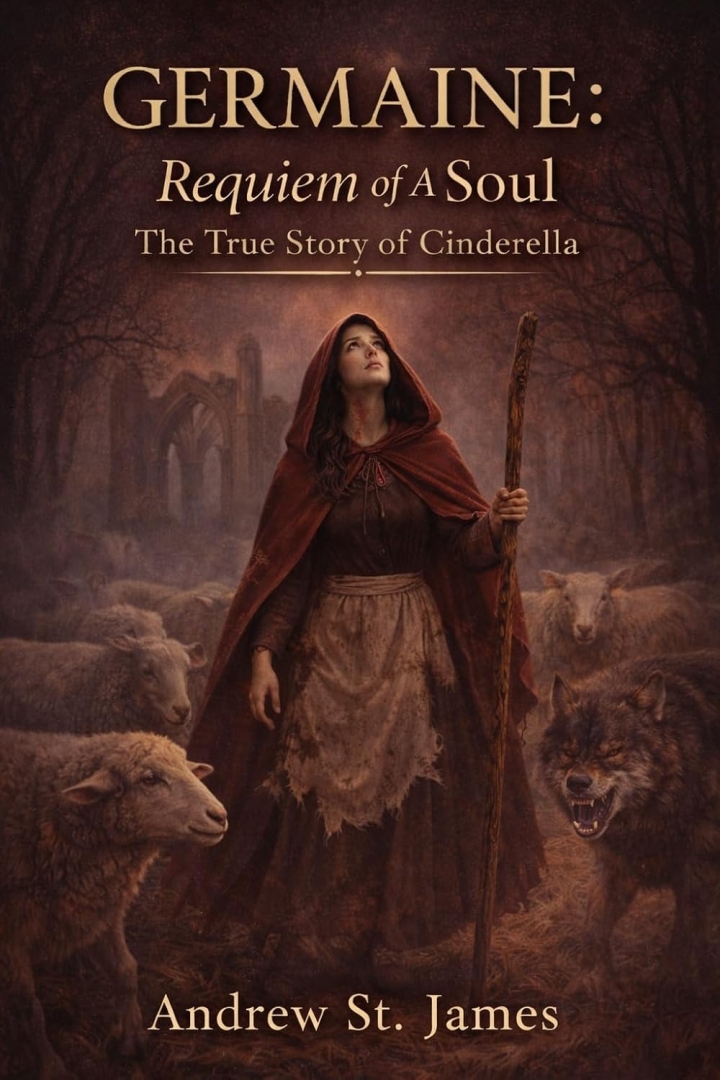
Andrew St. James has published a historical novel that connects a 16th-century French shepherdess to one of the world's most famous fairy tales. The book, titled "Germaine: Requiem of a Soul, The True Story of Cinderella," retells the life of Germaine Cousin, a poor girl who endured poverty, abuse, and illness while tending sheep in France Press Release CC.
St. James argues that Germaine's real story of faith and forgiveness offers a sharper message than Charles Perrault's 1697 Cinderella tale. While the fairy tale shows magic as temporary relief, St. James presents Germaine's Christian faith as an enduring source of hope. "The tragedy surrounding the fable of Cinderella is that her story conveys, in the end, that there is no hope awaiting us, since the allure of magic eventually fades," the author writes Press Release CC.
A Shepherdess Facing Rejection and Hardship
Germaine Cousin grew up in 16th-century France as a poor shepherdess. Her childhood was marked by loss—her mother died, and her father rejected her after she developed physical deformities. He sent her to live among sheep and rarely acknowledged her Press Release CC.
She also faced abuse from a stepmother and three stepsisters who treated her as an outsider in her own family. These elements mirror the familiar Cinderella story, but St. James uses archival materials from the Saint Germaine shrine in Pibrac, France, to portray her actual struggles Press Release CC.
Connecting History to the Cinderella Legend
St. James draws a direct link between Germaine Cousin's life and Charles Perrault's famous 1697 Cinderella story. The author presents Germaine as the real-life figure who may have inspired the fairy tale that endures today Press Release CC.
The novel uses archival documents to fill gaps in Germaine's documented history. St. James describes his work as a researched novel rather than a simple retelling, grounding the story in historical evidence while exploring undocumented periods of her life Press Release CC.
Faith as a Path to Lasting Hope
St. James frames Germaine's unwavering Christian faith as the core message of his novel. Unlike Cinderella's temporary magical transformation, Germaine's spiritual strength offers enduring comfort and hope to people facing their own suffering Press Release CC.
The book was announced in Houston on September 7, 2026, as St. James promotes a narrative centered on forgiveness and resilience. His portrayal suggests that Germaine's faith, not circumstance or magic, became the source of her peace and joy Press Release CC.
Sentiment
Mostly NegativeNEGATIVENEUTRALPOSITIVE
Publishers
13
Articles
5
Reach
18
A
AnonymousAuthor


