Snake, bike, dry bite.
NSW Cyclist Recovers After Eastern Brown Snake Entangled in Bike Chain Delivers Dry Bite.
Anonymous
Key Points
1
The bite did not inject venom; it was described as a 'dry bite' in which venom did not enter the rider's bloodstream.
2
The snake's upper body remained free inside the chain, with its head not in the chain, meaning the top half could still strike the rider — making removal particularly dangerous.
3
Snake rescuer Sarah Mailey pinned the snake's head to prevent bites while police and bystanders helped disentangle the chain.
4
The snake was euthanised due to the extent of its injuries, rather than relocated or released back into the wild.
5
Experts note snakes are often drawn to the rail trail for winter habitat, using the underside of the concrete path for burrows and rodents, and can still be active in cooler months.
A woman in her 60s was bitten by a two-metre eastern brown snake after it became tangled in her bike chain on the Northern Rivers Rail Trail near Burringbar, NSW, according to 7News. Paramedics took her to Tweed Valley Hospital in stable condition, and she was later discharged. Fortunately, the bite was a "dry bite" — meaning no venom entered her bloodstream.
The eastern brown snake is Australia's second-most venomous snake. The incident has put locals and cyclists on alert about snake encounters on one of the region's most popular riding trails, Head Topics reported.
How a Bike Ride Turned Into a Snake Crisis
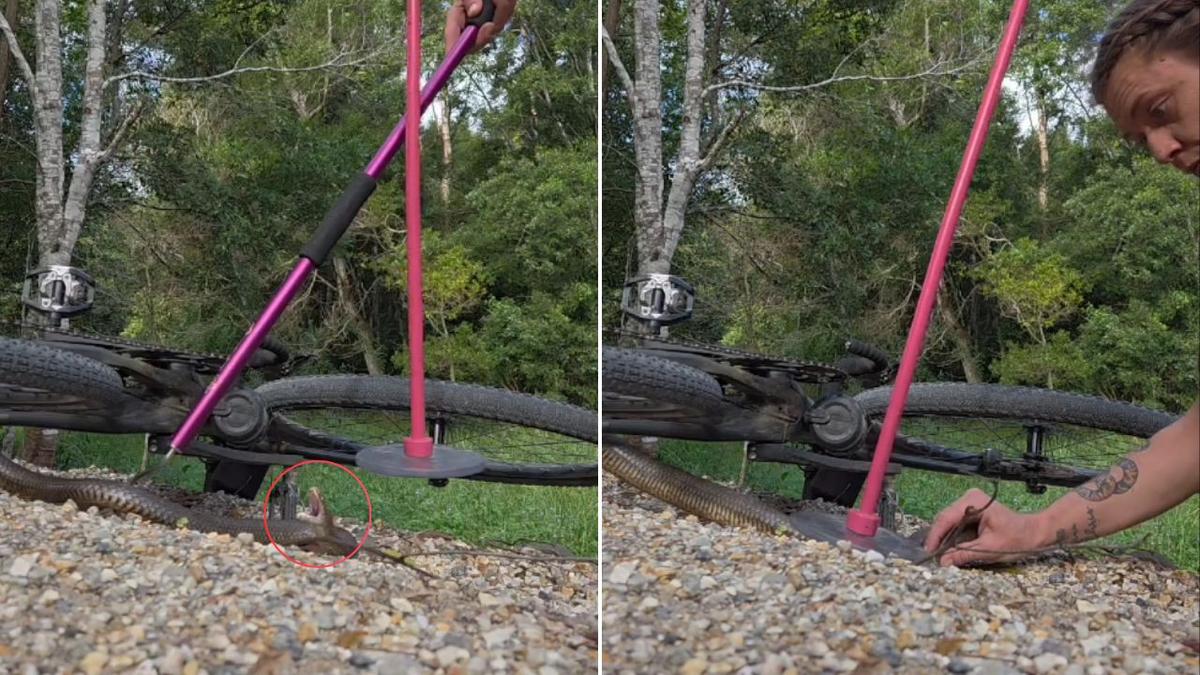
The woman was riding along the Northern Rivers Rail Trail when she accidentally rode over the two-metre snake, according to Newsy Today. The snake became trapped in her bike chain by its mid-section. Its upper body — including its head — stayed free outside the chain. That meant the snake could still strike while stuck.
The woman was bitten before anyone could intervene. But the bite turned out to be a dry bite. That means the snake did not inject venom. Dry bites still carry risk, and paramedics took no chances — she was rushed to Tweed Valley Hospital for observation before being discharged, 7News reported.
Snake Catcher Pins Head While Police Free the Chain
Snake catcher Sarah Mailey was called to the scene to handle the removal. She described it as an extremely dangerous situation. The snake's head was not trapped, which meant it could strike at any moment. Mailey pinned the snake's head down while police and bystanders carefully worked to free the chain from its body, Head Topics reported.
The injuries to the snake were too severe to allow release back into the wild. Mailey made the decision to euthanise it. "The extent of its injuries" left no other option, she said, according to News SSB Crack.
Why Snakes Keep Appearing on the Rail Trail
Mailey explained that snakes are regularly drawn to the Northern Rivers Rail Trail. The underside of the concrete path creates ideal shelter for burrows. Rodents also gather there, giving snakes a ready food source. Together, these factors make the trail prime habitat, according to Newsy Today.
Many people assume snakes go dormant in cooler months, but Mailey warned that is not always true. Snakes can stay active through winter in this region. She urged cyclists to stay alert year-round and be prepared for sudden encounters on the trail, Head Topics reported.
Locals Urge Caution on a Popular Cycling Route
The Northern Rivers Rail Trail is a popular route for riders across the Tweed Shire region of northern NSW. Local authorities and bystanders at the scene stressed the need for caution, according to News SSB Crack. The trail's warm, sheltered conditions make it a year-round hotspot for snake activity.
Mailey's key message was simple: slow down and watch the path ahead. Snakes on trails are not rare events. Riders who spot one should stop, keep their distance, and call a professional snake catcher rather than try to handle the situation themselves, 7News reported.
Sentiment
Mostly NegativeNEGATIVENEUTRALPOSITIVE
Publishers
18
Articles
45
Reach
63
A
AnonymousAuthor


