Dhaka's Green Energy Future
Prime Minister Directs Fast-Tracking of Dhaka Waste-to-Energy Projects for 2028 Completion
Anonymous
Key Points
1
There are conflicting methane production projections for the Matuail project: some reports cite about 15,000 tonnes of methane annually, while others cite about 105,000 tonnes annually.
2
The Aminbazar WTE plant is to be developed under Dhaka North City Corporation (DNCC) and the Matuail project under Dhaka South City Corporation (DSCC).
3
The cabinet review meeting was attended by Local Government Minister Mirza Fakhrul Islam Alamgir, State Minister Mir Shahe Alam, and administrators of DNCC and DSCC, among other senior officials.
4
To expedite delivery, the PM ordered an inter-ministerial meeting involving the Local Government, Power, and Environment ministries to resolve coordination issues.
5
The Matuail project is slated to generate about 81,000 MWh of electricity per year (roughly 221 MWh per day) from methane, in addition to outputs like solar power, fertilizer, animal feed, and eco-bricks.
Bangladesh's Prime Minister Tarique Rahman has ordered authorities to fast-track two major waste-to-energy plants in Dhaka, with one set to pump 42.5 megawatts into the national grid by August 2028. The projects, backed by Chinese and South Korean firms, will together process up to 6,500 tonnes of city waste every day, according to BD Pratidin and Daily New Nation.
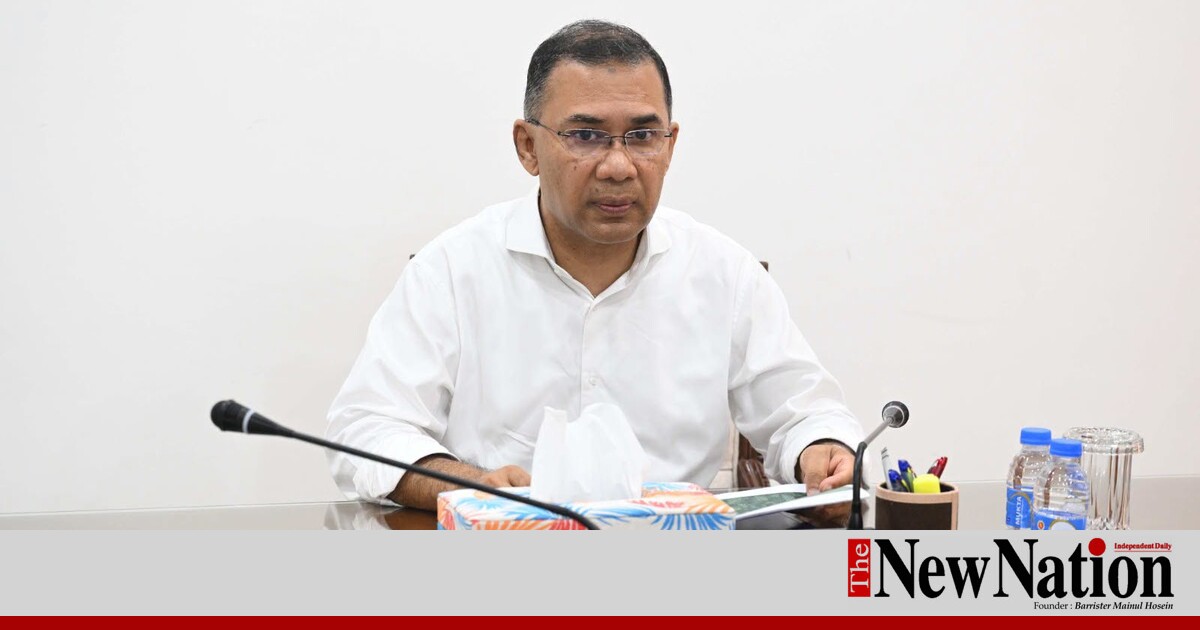
Rahman made the announcement during a cabinet-level review at the Bangladesh Secretariat. He told officials to use the best available environment-friendly technologies and finish on time. The push signals a major shift in how Dhaka — one of Asia's most densely populated cities — handles its growing mountains of garbage.
Aminbazar Plant: China-Funded, Grid-Ready by 2028
The Aminbazar project falls under Dhaka North City Corporation (DNCC). China's CMEC Group is funding and building it. The plant will take in roughly 3,000 tonnes of municipal waste each day. It will turn that waste into 42.5 megawatts of electricity. Once running, it must feed the national grid for at least 25 years, according to Bangladesh Post.
Operations are slated to start in August 2028. That timeline is tight, and Rahman made clear he wants no delays. He ordered an inter-ministerial meeting — pulling together the Local Government, Power, and Environment ministries — to iron out any coordination problems before they slow things down.
Matuail Plant: South Korea's Methane-to-Power Approach
The second plant sits in Matuail and is managed by Dhaka South City Corporation (DSCC). South Korea's B&F Company is behind it. The plant will process between 3,000 and 3,500 tonnes of waste per day. It converts that waste into methane gas, then burns the gas to generate around 81,000 megawatt-hours of electricity each year — about 221 MWh every single day, according to Daily Tribune 24.
The Matuail plant goes further than just electricity. It will also produce solar power, fertilizer, animal feed, and eco-friendly bricks from the same waste stream. Note: there is some disagreement in early reports about how much methane it will produce — figures range from 15,000 tonnes to 105,000 tonnes per year. Officials have not yet clarified the final number.
High-Level Meeting Orders Faster Action
The cabinet review drew senior officials from across government. Local Government Minister Mirza Fakhrul Islam Alamgir attended, along with State Minister Mir Shahe Alam and the administrators of both DNCC and DSCC, according to Daily Tribune 24. Their presence signals that Dhaka's waste crisis is now a top political priority.
Rahman specifically ordered the inter-ministerial meeting to resolve any gaps between the Local Government, Power, and Environment ministries. Getting three ministries to move together is often where big infrastructure projects stall in Bangladesh. The PM's direct intervention is meant to prevent exactly that.
Why Dhaka's Waste Problem Makes These Plants Urgent
Dhaka generates thousands of tonnes of solid waste every day, and existing landfills are running out of space. Burning or burying that waste creates methane, a greenhouse gas far more potent than carbon dioxide. Converting the waste into power instead cuts emissions and reduces the city's climate footprint at the same time, according to Bangladesh Post.
Together, the two plants could handle up to 6,500 tonnes of Dhaka's daily waste. That is a significant chunk of the city's total output. If both projects finish on schedule, they would mark the largest shift in Bangladesh's urban waste management in decades — and add clean megawatts to a grid that still struggles with shortages.
Sentiment
Mostly PositiveNEGATIVENEUTRALPOSITIVE
Publishers
10
Articles
5
Reach
15
A
AnonymousAuthor


