Korean Market Safeguards Activated
Korean Exchanges Activate Sell-Side Sidecars Amid Major KOSPI, KOSDAQ Plunges
Anonymous
Key Points
1
KOSPI opened at 6,643.58, down 2.60% from the previous session, while the KOSDAQ opened at 773.21, down 2.35%.
2
By 11:20 a.m., the KOSPI had fallen to 6,536.93, with losses continuing to widen as the session progressed.
3
The KOSDAQ opened at 773.21 and later trended toward the 750s as losses persisted.
4
The KOSPI sell-side sidecar was activated at 11:21:26 a.m., suspending program selling for five minutes.
5
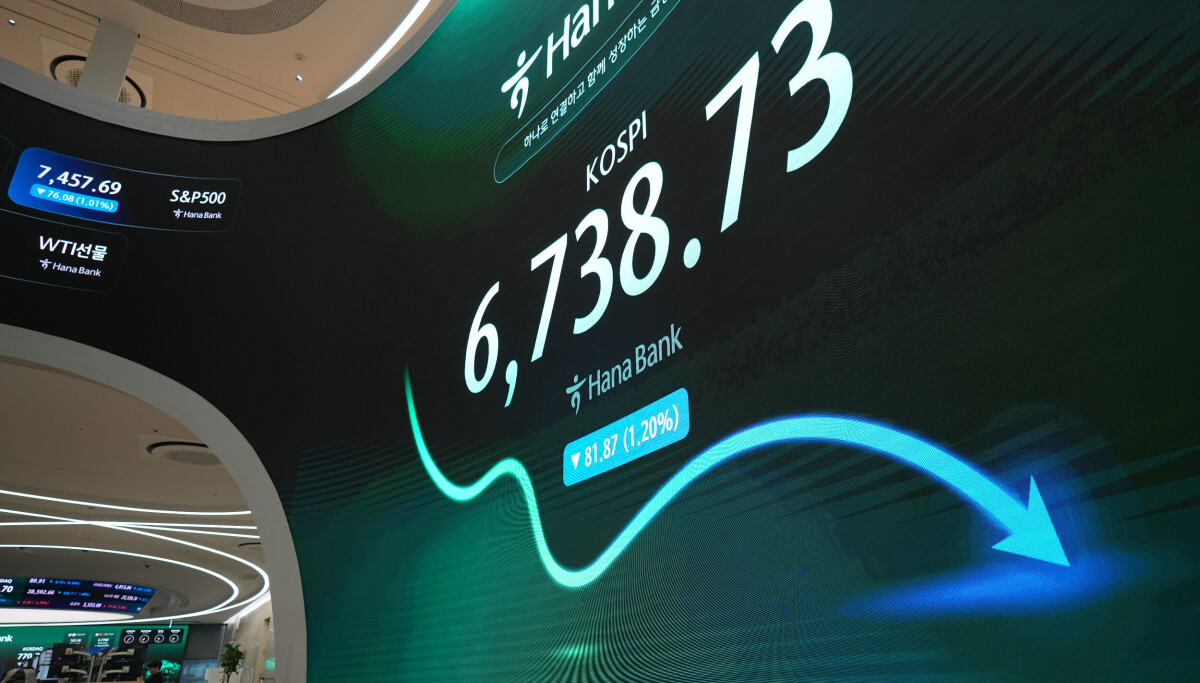
Observers at Hana Bank’s dealing room in Seoul were monitoring the market as the session unfolded.
South Korean stocks tumbled sharply on Monday, forcing regulators to hit the brakes twice in one session. The Korea Exchange activated sell-side sidecars — automatic five-minute halts on program selling — on both the KOSDAQ and KOSPI after each index plunged more than 4%, according to Korea JoongAng Daily.
The KOSPI closed at 6,516.27, down 4.5% on the day and at its lowest point since April, GuruFocus reported. It marked the 20th time this year that a sell-side sidecar has been triggered on the KOSPI — a sign of just how volatile South Korean markets have become.
KOSDAQ Fires First as Losses Hit 6%
The first circuit breaker hit the KOSDAQ at 10:52 a.m. The trigger: KOSDAQ150 futures had fallen more than 6%, while the KOSDAQ150 index itself dropped over 3%, according to Seoul Economic Daily. That combination automatically suspends program sell orders for five minutes under Korean exchange rules.
The KOSDAQ had opened at 773.21, already down 2.35% from the prior session. Losses kept widening through the morning, pulling the index toward the 750s as selling pressure refused to ease.
KOSPI Sidecar Follows 30 Minutes Later
The KOSPI sidecar fired at exactly 11:21:26 a.m., Seoul Economic Daily reported. It was triggered when KOSPI200 futures fell 5% or more and held that level for at least one full minute — the threshold set by Korean exchange rules for activating the halt.
The KOSPI had opened at 6,643.58, down 2.60% from the previous close. By 11:20 a.m. — just before the sidecar fired — it had already slid further to 6,536.93. Observers at Hana Bank's dealing room in Seoul watched as losses kept mounting through the session, according to Korea JoongAng Daily.
AI Stock Sell-Off Drives the Broader Rout
The sharp drop was tied to a broader sell-off in AI-related stocks, GuruFocus reported. South Korean equities have heavy exposure to tech and chip companies that are closely linked to global AI investment trends. When sentiment turns, the losses tend to be fast and steep.
Monday's close of 6,516.27 on the KOSPI was the index's worst finish since April. The day's move wiped out weeks of gains and put the market back in defensive territory.
What a Sidecar Is and Why It Matters
A sell-side sidecar is not a full market shutdown. It only pauses program sell orders — automated trades placed by institutions — for five minutes. The goal is to slow a cascade of computer-driven selling before it spirals out of control.
Triggering sidecars 20 times on the KOSPI in a single year is a notable figure. It points to sustained, repeated waves of heavy selling hitting Korean markets throughout 2026. Each activation is a signal that automated systems are amplifying downward pressure fast enough to warrant a pause, according to Korea JoongAng Daily.
Sentiment
Mostly NegativeNEGATIVENEUTRALPOSITIVE
Publishers
10
Articles
2
Reach
12
A
AnonymousAuthor


