Cerebras Europe AI Expansion
Cerebras Systems to Launch First European AI Data Centers by 2026, Scaling to 200 MW
Anonymous
Key Points
1
OpenAI has a multi-year contract with Cerebras valued at about $20 billion to deploy 750 MW of Cerebras chips for ChatGPT inference, with OpenAI providing credit to expand data-center capacity and an option to scale up to 2 GW.
2
Cerebras’ initial public offering in the United States was valued at about $5.5 billion, marking a standout IPO and placing the company among top-debut listings in Wall Street history.
3
AWS is a key partner, with Cerebras marketing a combined solution that integrates Trainium and Cerebras systems to support cloud-based AI inference workloads.
4
Beyond France and the Nordics, Cerebras plans to open data centers in Israel, the UAE, Australia, Singapore, and India as part of its broader European and regional rollout.
5
Cerebras emphasizes wafer-scale architecture for high memory bandwidth and rapid AI inference, with executives highlighting its distinctive, large-format chip design (the 'dinner plate' analogy) as a performance edge.
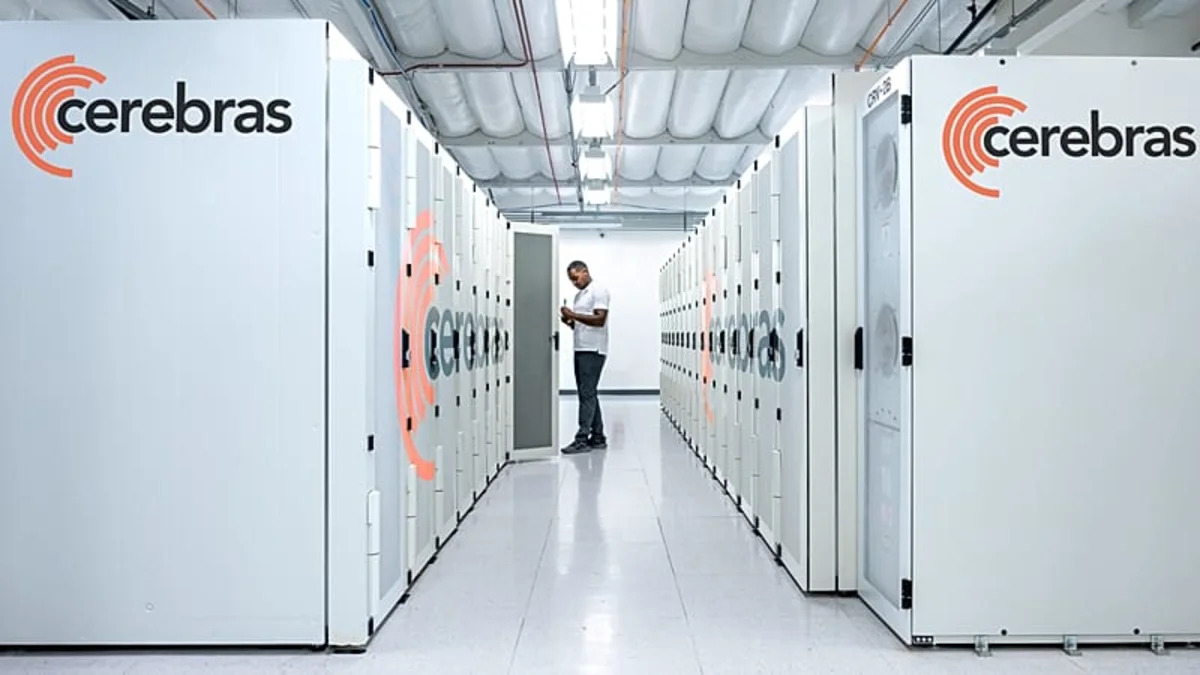
Cerebras Systems plans to bring its first European data center online by the end of 2026 and scale to 200 megawatts of AI compute capacity by 2027, according to Yahoo Finance. The multibillion-dollar build-out will span France and the Nordic region — Norway and Finland — as the US chip maker pushes to compete with Nvidia on European turf.
A portion of that capacity is earmarked for OpenAI, which already has a multi-year deal with Cerebras worth roughly $20 billion to deploy 750 MW of Cerebras chips for ChatGPT inference, Yahoo Finance reports. OpenAI is also providing credit to help expand Cerebras' data-center footprint, with an option to scale that agreement up to 2 gigawatts.
A Multibillion-Dollar Bet on European AI Demand
Cerebras framed the European expansion as essential to meeting fast-growing demand for local, low-latency AI compute. European enterprises, research institutions, and governments have been pushing for AI infrastructure hosted on the continent — not routed through distant data centers. Cerebras says its build-out directly answers that call.
The investment runs to several billion dollars, per executives, though an exact figure has not been disclosed. TipRanks noted that Cerebras stock jumped on the announcement, reflecting investor confidence in the company's European strategy. Beyond Europe, Cerebras also plans data centers in Israel, the UAE, Australia, Singapore, and India.
Wafer-Scale Chips Give Cerebras a Speed Edge
Cerebras built its reputation on a distinctive chip design. Its processors are wafer-scale — roughly the size of a dinner plate, executives have said. That large format delivers high memory bandwidth and very fast AI inference, the process of running a trained AI model to generate answers.
That speed advantage is central to Cerebras' pitch to European clients. The company argues that local, low-latency inference — responses generated nearby rather than across an ocean — is a hard requirement for many enterprise and government use cases. Wafer-scale architecture, the company says, makes that possible at scale.
OpenAI Deal and AWS Partnership Anchor the Business
The OpenAI contract is the centerpiece of Cerebras' near-term revenue story. The $20 billion, multi-year agreement covers 750 MW of chip deployments for ChatGPT inference workloads, according to Yahoo Finance. OpenAI has also agreed to provide credit that helps fund Cerebras' data-center expansion, with a clause allowing the deal to grow to 2 GW.
Cerebras also works with AWS, marketing a combined solution that pairs Amazon's Trainium chips with Cerebras systems for cloud-based AI inference. That partnership gives Cerebras a route into enterprise customers who already run workloads on AWS, broadening its reach beyond its own data centers.
A High-Profile IPO Sets the Stage for Global Growth
Cerebras went public in the United States at a valuation of about $5.5 billion, TipRanks reported. The listing ranked among the top debut IPOs in Wall Street history, giving the company fresh capital and a higher profile as it accelerates its international build-out.
The European expansion is the most visible piece of Cerebras' broader global push. With data centers planned across five continents and a flagship OpenAI partnership backing its inference business, the company is positioning itself as the primary alternative to Nvidia for high-speed AI compute — starting with a continent that wants its AI infrastructure at home.
Sentiment
Mostly PositiveNEGATIVENEUTRALPOSITIVE
Publishers
23
Articles
55
Reach
78
A
AnonymousAuthor


