Kennedy Center Dismantles Blue Sculpture Amid Detours
Kennedy Center Dismantles Blue Sculpture Amid Detours
Anonymous
Key Points
1
The removal prompted a northbound lane closure on Rock Creek and Potomac Parkway NW through about 1 p.m., with road barricades at the E Street on-ramp to Ohio Dr SW and at the intersections of Rock Creek and Potomac Parkway with Parkway Dr NW and with F St NW.
2
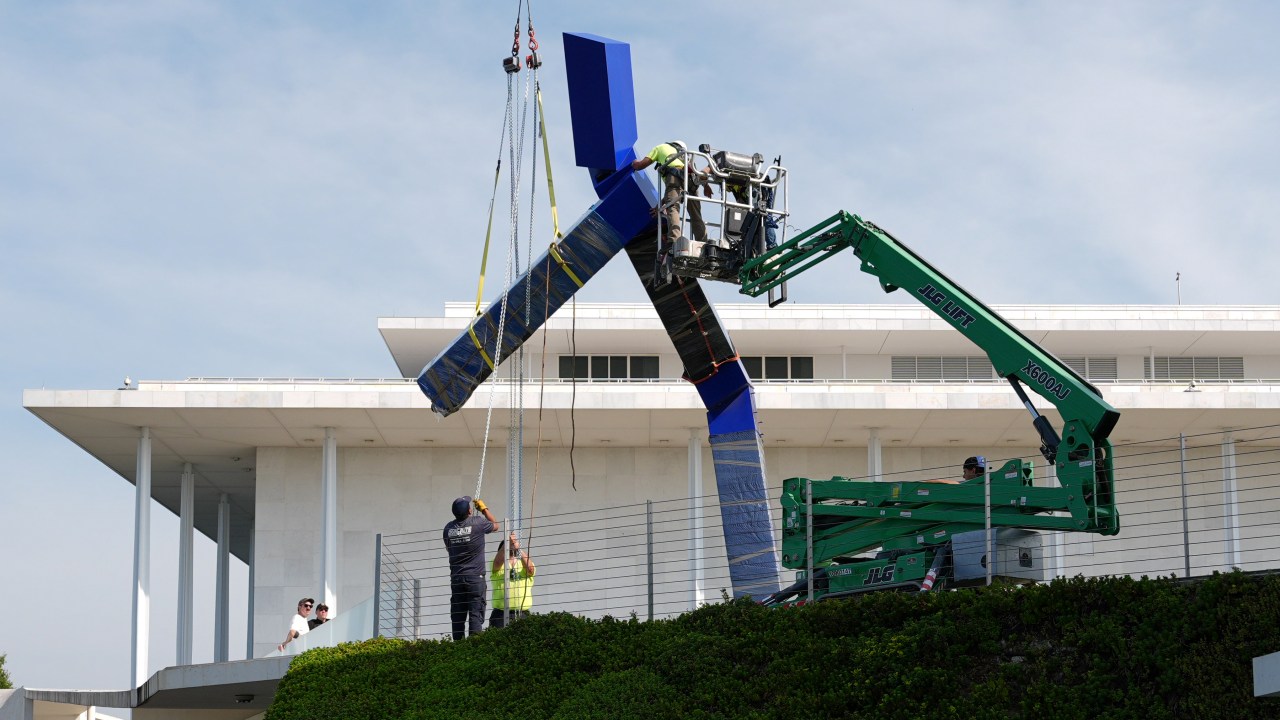
A crane was used to dismantle Blue, with the sculpture’s arms and legs detached and wrapped for removal as workers in hi-visibility vests carried out the operation.
3
The Kennedy Center framed the removal as stewardship of Joel Shapiro’s work, thanking him and saying it was honored to have been stewards of his vibrant work and enduring legacy.
4
The action occurs within a broader political context, described as part of Trump-era reshaping of the Kennedy Center, including a legal fight over whether the president’s name can be placed on the building.
5
Public reaction captured on-site included comments from visitors describing the removal as disappointing or 'shameful,' reflecting the controversy over Blue’s place on the campus.
The Kennedy Center removed Joel Shapiro's 24-foot blue aluminum sculpture early Wednesday morning, shutting down northbound lanes on Rock Creek and Potomac Parkway NW for nearly six hours. The New York Times revealed that internal Kennedy Center documents show Blue was targeted for removal following President Trump's administrative overhaul of the institution. The sculpture, installed in 2019 as part of the REACH campus expansion, embodied what Shapiro called "action and risk and performance and energy."
The Kennedy Center framed the removal as routine stewardship of Shapiro's work, saying the piece would relocate to a new venue through the artist's foundation. But critics viewed the move as politically motivated, with former Kennedy Center curator Josef Palermo warning that the institution holds these works "in trust for the American people, and there should be a lot more transparency." Shapiro died in 2025 at age 83.
A Crane Lifts Blue From Its Seven-Year Home
Workers using a heavy crane began dismantling Blue before dawn on Wednesday, unbolting and wrapping the sculpture's rectangular limbs for removal. Crews in hi-visibility vests carried out the operation as traffic barricades blocked the E Street on-ramp and intersections near the Kennedy Center. USA Today reported that the entire operation concluded around 1 p.m., clearing the roadway after nearly six hours of closures. The National Park Service implemented the street shutdown under federal regulations to accommodate the heavy machinery.
Blue stood 24 feet tall and dominated the REACH campus since its installation in September 2019. The cobalt-painted work was one of 10 inaugural artworks that opened with the Kennedy Center's 4.6-acre expansion. Fox40 noted that the sculpture had become a defining feature of the campus, making its sudden removal striking to longtime visitors and art advocates.
Trump Administration Reshapes Kennedy Center Amid Board Changes
The removal comes as part of a broader Trump-era reshaping of the nation's cultural institutions. Detroit News reported that the Kennedy Center board voted to inscribe President Trump's name on the marble facade and initiated a planned two-year facility closure for renovations. Internal documents reviewed by The New York Times show Blue was "targeted early on" for elimination as the new administration took control of the institution's governance.
The White House declined to comment on the sculpture's removal. The Kennedy Center maintained that removing loaned or donated artworks aligns with standard museum asset management practices. But the lack of public notice and community consultation sparked frustration among arts advocates, who described the move as politically petty and destructive to the nation's artistic landscape.
Public and Critical Reaction: Disappoint and Accusation
Visitors on-site described the removal as disappointing and "shameful," with some criticizing the decision to eliminate a beloved landmark without advance warning. Art critics and community advocates questioned why a gift from a deceased artist should be suddenly deaccessioned. Hawaii Tribune-Herald noted that the sculpture was originally gifted as part of the REACH campus's inaugural public art program, making its removal feel like a betrayal of that artistic vision.
Former curator Josef Palermo, fired in March 2026, publicly warned that the Kennedy Center holds these works "in trust for the American people." He stressed that major deaccessioning decisions should involve transparency and public input. The Joel Shapiro and Ellen Phelan Foundation now holds the sculpture and will determine its next permanent home, whether at another museum or public space.
Shapiro's Legacy and the Sculpture's Next Chapter
Joel Shapiro, who died at 83 in 2025, designed Blue to celebrate possibility and human engagement. The artist described the work as embodying "celebration of possibility"—a vibrant symbol intended to animate public spaces and connect visitors to art. The Kennedy Center released a statement thanking Shapiro and saying it was "honored to have been stewards of his vibrant work and enduring legacy," even as it removed the piece from display.
The sculpture's future remains open. The Joel Shapiro and Ellen Phelan Foundation controls the work and will seek a new permanent location where it can resume its role as a symbol of artistic freedom and creative possibility. Where Blue will land next—whether at another major museum, a public plaza, or a cultural institution aligned with Shapiro's values—remains to be seen.
Sentiment
Mostly NegativeNEGATIVENEUTRALPOSITIVE
Publishers
33
Articles
281
Reach
314
A
AnonymousAuthor


