Satellite Mobile Connectivity
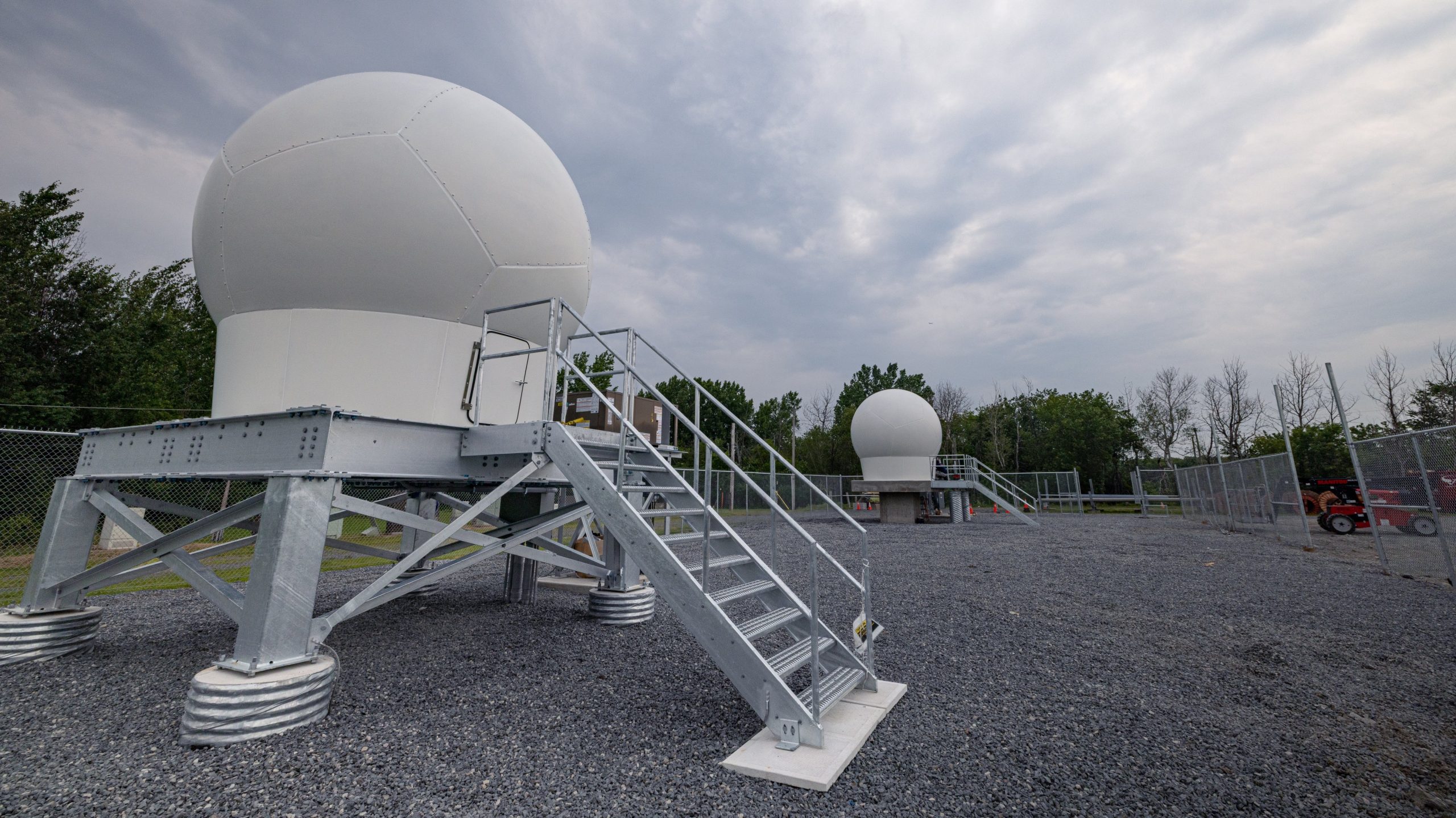
Bell completes Quebec satellite ground station, begins testing for nationwide direct-to-device service.
Anonymous
Key Points
1
Bell's official release describes the Quebec ground station as a transition from trial activities to permanent network infrastructure, signaling progression toward a nationwide direct-to-device satellite service.
2
The rollout is framed as enabling a broad range of applications beyond basic connectivity, specifically citing emergency response and environmental monitoring as potential use cases.
3
Bell notes that additional ground stations are under construction in Ontario, Alberta and Newfoundland & Labrador as part of its Canada-wide deployment plan.
4
Competitor activity in Canada is already underway, with Rogers launching a satellite-to-mobile service via a SpaceX Starlink partnership, highlighting ongoing market competition.
Bell Canada has finished building its first direct-to-device satellite ground station in Quebec, moving one step closer to nationwide satellite-to-mobile service, according to SpaceQ. The facility connects Bell's terrestrial network with AST SpaceMobile's satellite constellation, allowing standard smartphones to send texts, make voice calls, and stream video without a cell tower nearby.
Testing at the Quebec site is already underway. Richmond News reported that Bell has confirmed the station is already handling text, data, voice, and video calls. Bell plans to validate video streaming, IoT connectivity, and public emergency alerts in the coming weeks.
Quebec Station Marks Shift From Trial to Real Infrastructure
Bell calls the Quebec build a transition from trial activities to permanent network infrastructure. That is a meaningful distinction. Trials are temporary. Permanent stations mean Bell is committing capital and resources to a long-term rollout. SpaceQ noted the facility is designed to push Bell's mobile network into remote regions that cell towers have never reached.
The use cases Bell is highlighting go beyond basic connectivity. The company specifically cited emergency response and environmental monitoring as target applications. Those are areas where satellite coverage could matter most — think wildfire zones, flood-hit regions, or Arctic communities far from the nearest tower.
Three More Ground Stations Under Construction Across Canada
Quebec is just the start. Bell says ground stations are now under construction in Ontario, Alberta, and Newfoundland and Labrador, according to Richmond News. That four-province footprint suggests Bell is serious about building a coast-to-coast satellite network, not just a regional pilot.
Bell is targeting a Canada-wide launch early next year. That timeline depends on continued testing going smoothly and on AST SpaceMobile's satellite constellation being ready to support commercial traffic at scale. A satellite launch originally planned for April 2026 had raised concerns about possible delays, but Bell has not publicly shifted its launch target.
Rogers Already Live With Starlink as Competition Heats Up
Bell is not alone in this race. Rogers has already launched a satellite-to-mobile service in Canada through a partnership with SpaceX's Starlink, according to iPhone in Canada. That means Bell is playing catch-up in at least one respect — Rogers customers can already connect via satellite on standard phones today.
The two companies are betting on different satellite partners. Rogers chose SpaceX's Starlink network. Bell chose AST SpaceMobile. Both approaches aim at the same goal: eliminating dead zones for everyday smartphone users. The competition could accelerate how fast Canadians in rural and remote areas get reliable coverage.
What Direct-to-Device Satellite Service Actually Means
Direct-to-device satellite service means your regular phone — the one already in your pocket — connects directly to a satellite overhead. No special hardware needed. No separate satellite phone. The satellite acts like a cell tower in space. AST SpaceMobile's constellation is built specifically for this, using large antenna arrays on each satellite to pick up weak signals from ordinary smartphones.
Ground stations like the one Bell just completed in Quebec are the link between those satellites and Bell's core network on the ground. Without them, a satellite call has nowhere to land. More stations mean more capacity and better reliability. Bell's four-province build-out is designed to give that system enough backbone to go national.
Sentiment
Mostly PositiveNEGATIVENEUTRALPOSITIVE
Publishers
14
Articles
43
Reach
57
A
AnonymousAuthor


