Google Selfie Verification
Google Introduces Optional Selfie-Video Verification to Enhance Account Recovery for Users
Anonymous
Key Points
1
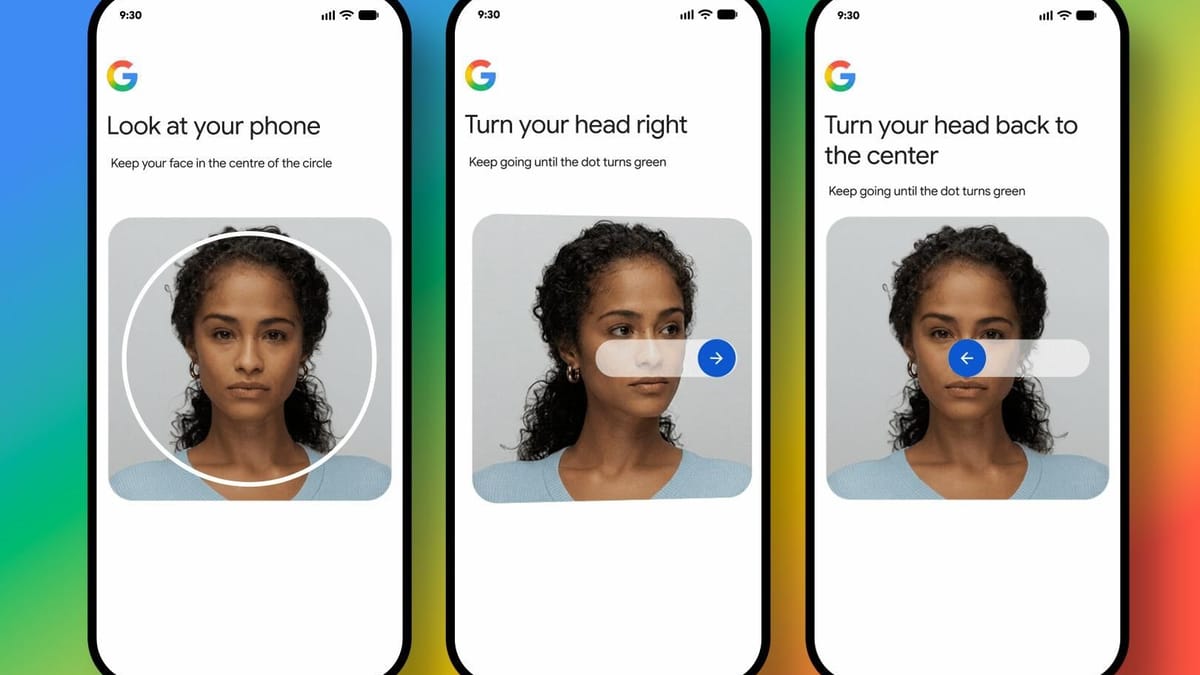
Selfie-based sign-in setup does not rely on infrared (IR) light like some facial-recognition systems; Google uses a standard camera and guided head movements to capture multi-angle video.
2
If a device lacks a camera, setup can be completed by scanning a QR code with a smartphone, enabling enrollment without a camera on the device.
3
The enrolled reference selfie is stored in the cloud with encryption and can be deleted by the user; Google stores it beyond the local device for sign-in verification.
4
During setup, Google advises removing glasses or masks and avoiding busy backgrounds to ensure the facial video captures only the user; lighting and background guidelines are provided.
5
Selfie sign-in is not available for Workspace accounts, child accounts, or Google Advanced Protection Program users at the current rollout.
Google is rolling out a new optional feature called "Selfie for sign-in," letting users record a short face video to help recover their account when they get locked out. Digital Trends reported that the feature acts as a secure backup login option for situations where users can't access their usual device or password.
The feature is live now for eligible accounts, with rollout happening gradually. Users can check if they qualify at g.co/signin-selfie. Workspace accounts, child accounts, and Google Advanced Protection Program users are not yet included.
How the Selfie Sign-In Enrollment Actually Works
Setting up selfie sign-in means recording a guided, multi-angle face video. Google uses a standard camera — not infrared light like some face-unlock systems. During the recording, users follow on-screen prompts that require head movements. Those movements confirm that a real, live person is present, not a photo or deepfake.
Google advises removing glasses or masks before recording. A plain, uncluttered background helps the system focus on your face. If a device has no camera, users can scan a QR code with a smartphone to complete setup. TechBuzz AI noted the feature is part of Google's broader push to modernize account recovery options.
Your Selfie Data Is Encrypted and Deletable Anytime
The recorded face video is encrypted and stored in the cloud, not just on the user's device. Google only stores it with the user's consent. Users can delete it at any time directly from their Google account settings. Google says it uses the video solely for sign-in verification.
Head Topics reported that this control framework means users decide whether and how their biometric data is used. The stored video serves as a reference point. Each future sign-in attempt compares a new recording against it to confirm identity.
Deepfake Resistance and Liveness Checks Keep Fakes Out
Google built several anti-impersonation layers into the feature. The guided head-movement prompts act as a "liveness check" — a test that confirms a real person is in front of the camera. The system is designed to block fake photos, printed images, and AI-generated deepfakes from fooling it.
Beyond the video comparison itself, Google also scans for suspicious sign-in activity as an added security layer. TechBuzz AI noted that the multi-angle capture makes it much harder for bad actors to spoof the system compared to a simple front-facing photo check.
Selfie Sign-In Adds to Recovery Options, Not Replaces Them
Google is clear that selfie sign-in is not a replacement for passwords, passkeys, or recovery contacts. It is one more tool in the recovery toolkit. It is most useful when a user loses a device, forgets a password, or needs to sign in from a borrowed phone.
Digital Trends reported that Google is rolling out access in phases. Not everyone will see the option right away. Those who do get access will find it under account security settings, and eligibility can be confirmed at g.co/signin-selfie.
Sentiment
Mostly PositiveNEGATIVENEUTRALPOSITIVE
Publishers
50
Articles
62
Reach
112
A
AnonymousAuthor


