Advancing Cellular Healthcare
India Invests Heavily in Nanomedicine While Global Researchers Reveal Breakthroughs
Anonymous
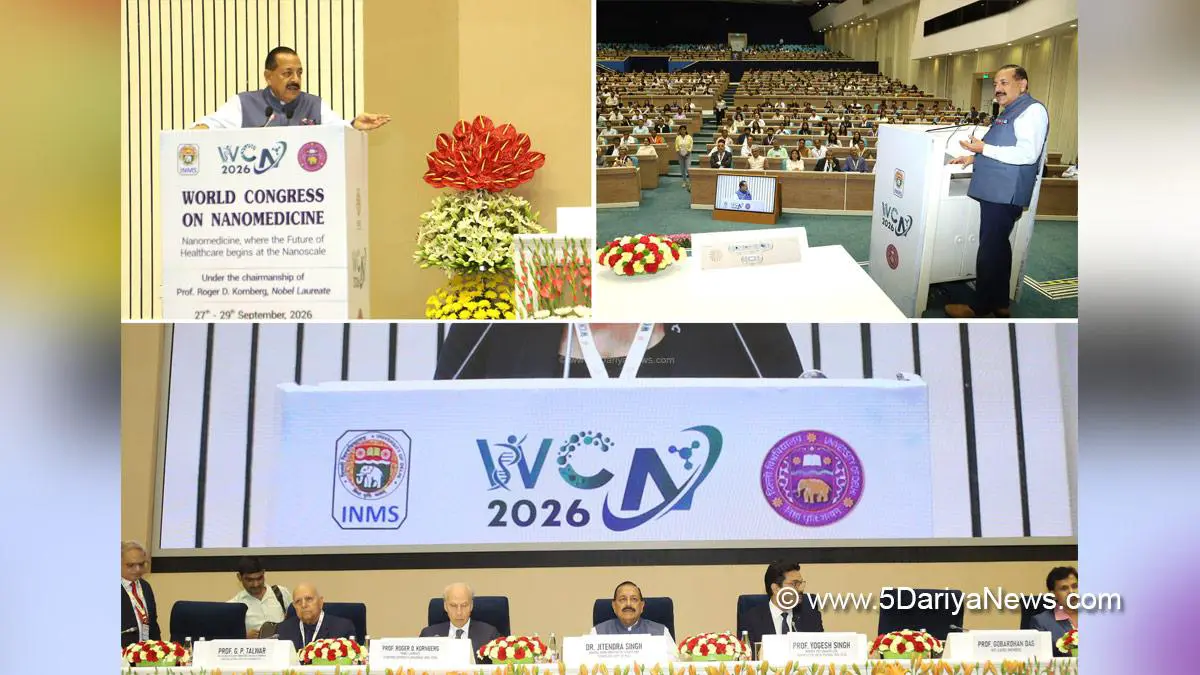
Researchers at Italy’s Istituto Italiano di Tecnologia have developed 500-nanometer organic nanoparticles that combine piezoelectric stimulation, infrared-triggered heating and antioxidant activity, a combination they say could eventually help modulate cells in cancer and neurodegenerative-disease research. Separately, at the World Congress on Nanomedicine 2026 in New Delhi, India’s science minister said nanomedicine could advance precision and personalized healthcare by enabling treatments tailored to patients and delivered at the cellular level. India’s Department of Biotechnology is funding 210 nanomedicine research projects worth ₹174 crore, spanning areas such as targeted drug delivery, cancer treatment, diagnostics and vaccine delivery. The two developments illustrate both experimental nanomaterial research and growing government investment in nanomedicine, though the Italian nanoparticles’ potential clinical uses remain prospective.
Key Points
1
The IIT nanoparticle study was conducted under the institute’s “Technologies for Healthy Living” flagship programme, with contributions from IIT PhD students at the Sant’Anna School of Advanced Studies and researchers at Italy’s National Institute of Metrological Research.
2
India’s funded projects also cover nanomedicine for infectious diseases, nucleic-acid delivery, imaging, regenerative medicine and wound healing, as well as nanotoxicology and regulatory science.
3
Jitendra Singh pointed to oral-insulin nanoparticles, nanobots for breast cancer, precision nano-injection and targeted breast-cancer nanomedicine as examples of emerging Indian research.
4
The New Delhi congress, hosted by the University of Delhi’s Institute of Nano Medical Sciences, brought together more than 2,000 participants, including scientists and young researchers.
Sentiment
Mostly PositiveNEGATIVENEUTRALPOSITIVE
Publishers
6
Articles
17
Reach
23
A
AnonymousAuthor


