West Java Baby Trafficking Convictions
West Java Court Convicts 19 in Baby-Trafficking Ring; Mastermind Sentenced to Seven Years
Anonymous
Key Points
1
The investigation into the ring began after a parent reported a baby kidnapping, leading to the group’s arrest last year and subsequent trial at Bandung District Court.
2
The 19 defendants include 18 women and 1 man, highlighting a gender-skewed leadership and recruitment structure within the trafficking operation.
3
Lie Siu Luan has aliases 'Popo' and 'Lily' that were used in the case, reflecting how organizers operated under multiple identities.
4
Lie and fellow recruiter Astri Fitrinika admitted to most offences during the trial but maintained that no children were abducted, saying they were voluntarily given up by their parents.
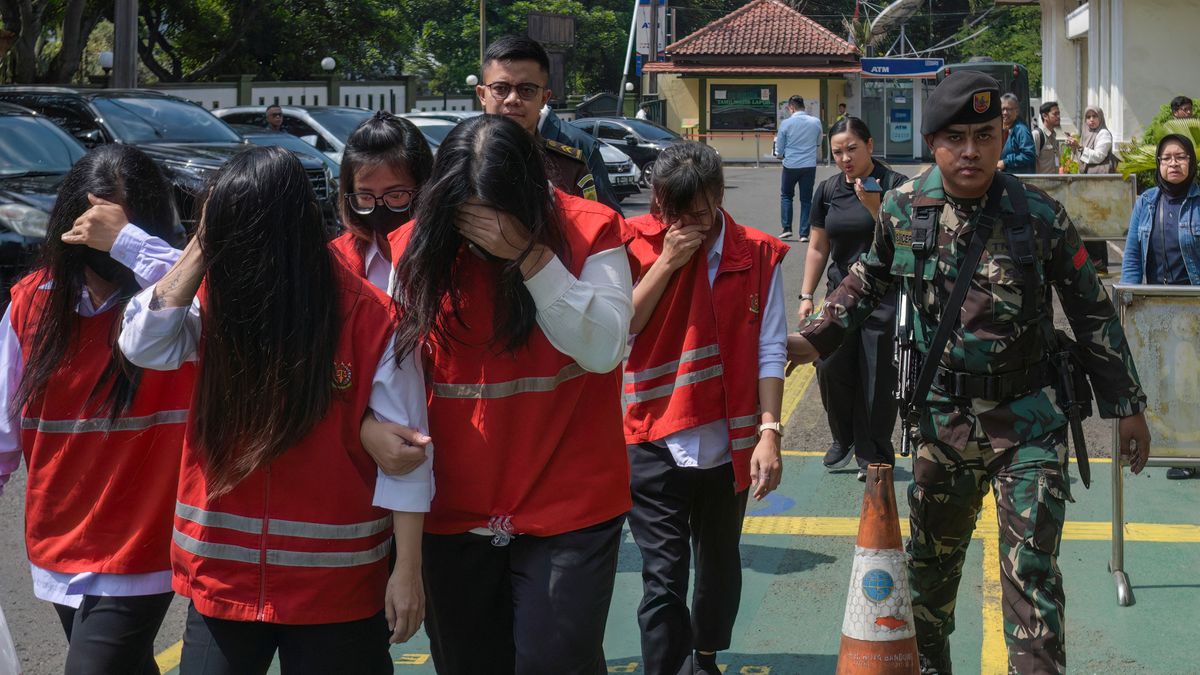
A West Java court has convicted 19 people — 18 women and one man — for running a baby trafficking ring that sold at least 34 infants between 2023 and 2025, according to BBC. Ringleader Lie Siu Luan, 70, also known as 'Popo' and 'Lily,' was sentenced to seven years in prison. Each baby sold for an estimated 200 to 250 million rupiah.
The syndicate sent at least 12 babies — and possibly as many as 20 — to Singapore, using forged adoption documents to disguise the trafficking as legal adoptions, Mirror reported. The verdicts were handed down at Bandung District Court in Indonesia's West Java province.
How a Kidnapping Report Brought Down the Ring
The case broke open after a parent reported a baby kidnapping, triggering arrests last year, BBC reported. Investigators quickly found a wider network. The syndicate recruited families under the impression that giving up their babies was a lawful adoption process.
Lie and fellow recruiter Astri Fitrinika admitted to most offences during the trial. However, both insisted no children were abducted. They claimed all babies were voluntarily surrendered by their parents, according to AOL.
Seven Years for the Mastermind, Shorter Terms for Others
Lie Siu Luan received the heaviest sentence: seven years in prison. Astri Fitrinika and other recruiters were sentenced to around six years and seven months. Prosecutors had sought terms ranging from five to ten years, Head Topics reported.
The remaining 14 defendants were caregivers. They received shorter sentences of around three years and four months. The court also ordered eight babies to be placed in an orphanage, according to Mirror.
Forged Papers and a Cross-Border Adoption Market
The ring relied on fake adoption documents to move babies across borders. Families in Singapore believed they were completing a legal adoption. The network had a clear structure: recruiters found birth parents, caregivers housed the infants, and organizers arranged the transfers, Head Topics reported.
Each baby fetched between 200 and 250 million rupiah — roughly $12,000 to $15,000 USD. The cross-border demand for infants, combined with forged paperwork and multiple false identities, allowed the ring to operate for at least two years before being caught.
Adoptive Families Left Searching for Answers
The case has shaken families in both Indonesia and Singapore. Some adoptive parents only learned their children may have been trafficked after the arrests made headlines, BBC reported. For those families, the verdicts offer little closure.
Investigators say the wider network may not be fully dismantled. The 19 convictions mark a major step, but authorities have not ruled out links to other suspects. The case remains one of the largest baby-trafficking prosecutions in Indonesia's recent history.
Sentiment
Mostly NegativeNEGATIVENEUTRALPOSITIVE
Publishers
19
Articles
15
Reach
34
Topics
A
AnonymousAuthor